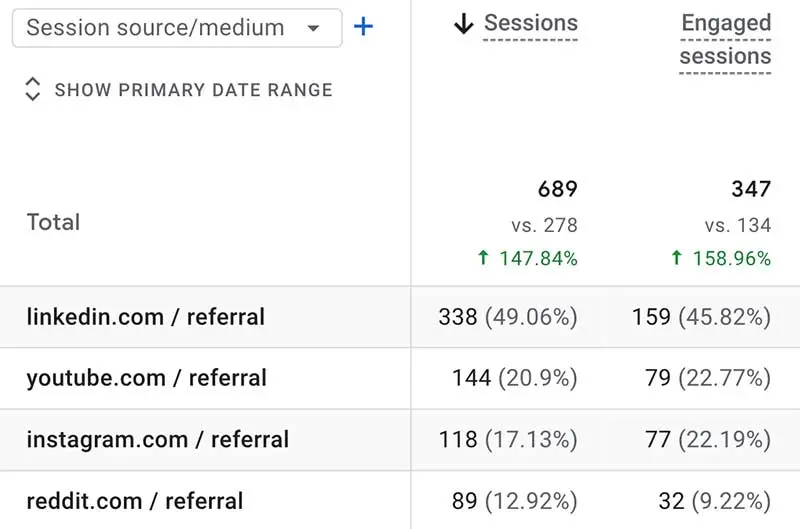
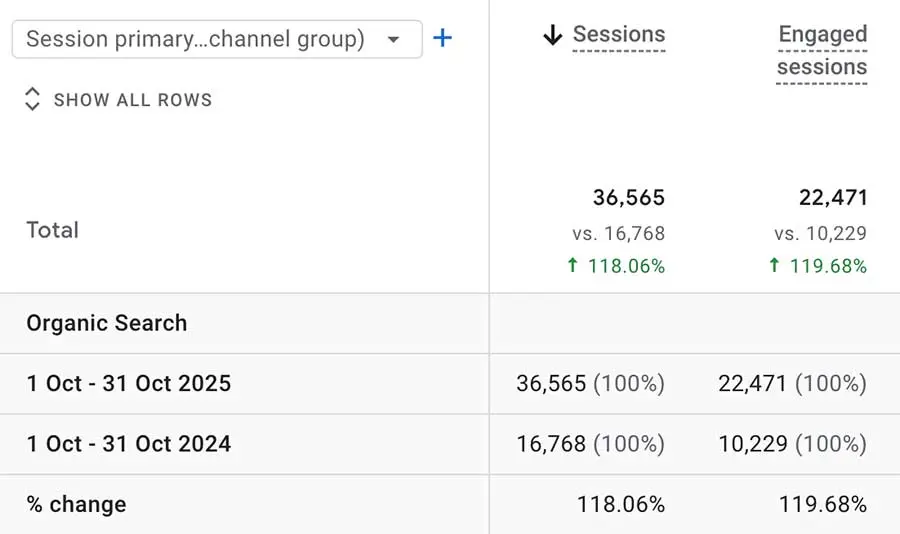
 The Objective
The client's content was strong, but it wasn't showing up where their audience had shifted attention, across AI search, LinkedIn, YouTube, and other discovery channels.
Our objective was to map where their buyers were actually searching, then adapt their highest-value content into the right formats for those platforms.
The goal was to regain visibility and drive referral traffic growth without creating net-new content from scratch.
The Website History
The client is a technology company specializing in real estate data and analytics.
The Issues
- Search behavior shifted beyond Google: Their audience were using AI tools and platforms like YouTube, TikTok, and LinkedIn to discover answers.
- Strong content, shrinking reach: Even though they published authoritative insights, those pieces weren't being found in the channels where buyers now spend time.
- Traffic and visibility stalled: As discovery paths changed, referral traffic plateaued and overall visibility declined, causing their expertise to be overlooked.
- Competitors were out-distributing them: Rivals who repackaged and distributed content across multiple platforms gained more attention, appeared more often in AI-generated answers, and captured a greater share of voice.
- Format and channel mismatch: The core problem wasn't quality, but rather that their insights weren't adapted into the formats and placements (short video, social updates, AI-friendly content) that matched modern consumption habits.
Course Of Action
Below is a detailed breakdown of the strategy used for this campaign.
Understanding Multi-Platform Search Behavior
Our first step was to map the new discovery habits so we could focus efforts on the channels and formats most likely to drive visibility and referrals.
Why Multi-Platform Search Matters Today
Search is now split across classic engines, AI-driven answers, and feed-based platforms that behave like search. Because AI systems increasingly pull information from a wide mix of sources, being visible on your website alone is no longer enough. A channel-first approach creates more entry points for people and increases the odds that your insights get referenced by AI results.
Using SparkToro to Map Audience Habits
To ground our strategy in real audience behavior, we used SparkToro to analyze where the client's buyers spend time, who they follow, and how they consume information.
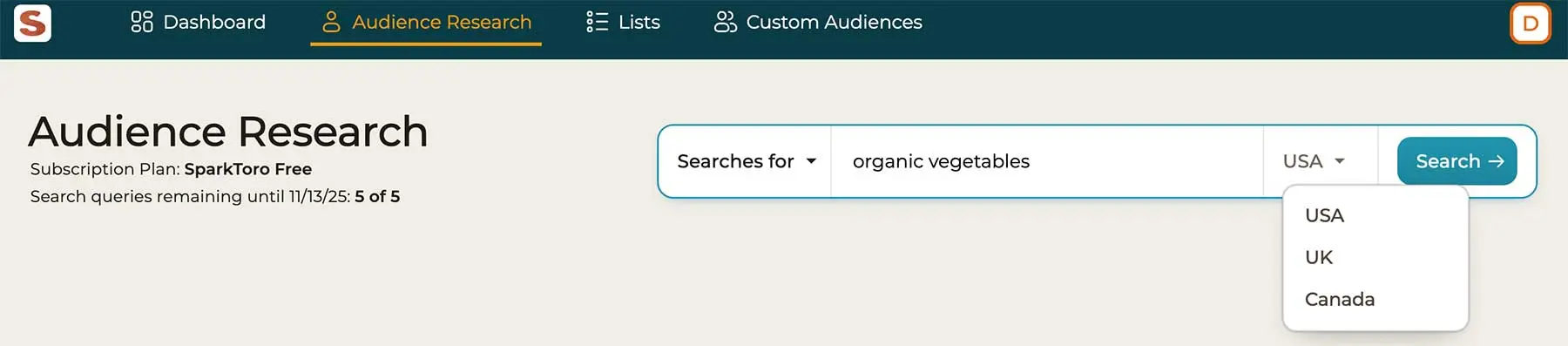
Using SparkToro's audience research reports, we analyzed:
- The social networks and AI tools where buyers actively search for information
- The websites, podcasts, and creators they engage with most
- The communities and discussion spaces shaping opinions
- Platform-level engagement patterns and audience affinity scores
This produced a clear shortlist of channels worth investing in and helped us avoid spreading effort across places unlikely to move the needle. From there, we mapped content formats to platform intent:
- Educational insights for video-first environments
- Scan-friendly summaries for professional and social feeds
- Discussion-led formats for community platforms
- Structured content optimized for AI discovery
Repurposing Content Across Formats
With channel priorities set, we focused on converting proven content into platform-ready formats. The goal was speed and efficiency: expand reach using what already worked, rather than creating new themes from scratch.
Why Format Expansion Drives Reach
Repurposing content that already performs well multiplies the number of surfaces where your expertise can be found. It also creates additional signals that help both people and AI systems recognize authority and context. One core piece can become short-form clips, a professional post, a community discussion, or a visual summary, each designed for a different discovery behavior.
The Repurposing Workflow We Used
Step 1: Select Assets With Proven Value
We started with content that already demonstrated traction, pages that consistently drove visits, or had a strong performance history. Priority went to evergreen topics that stay relevant over time and can be reused repeatedly.
Blog Post → YouTube Video
A simple Google search for "what do I need to know when buying my diamond jewellery" returns results that feature both a blog article and a YouTube video answering the same underlying question. That overlap is a useful signal.
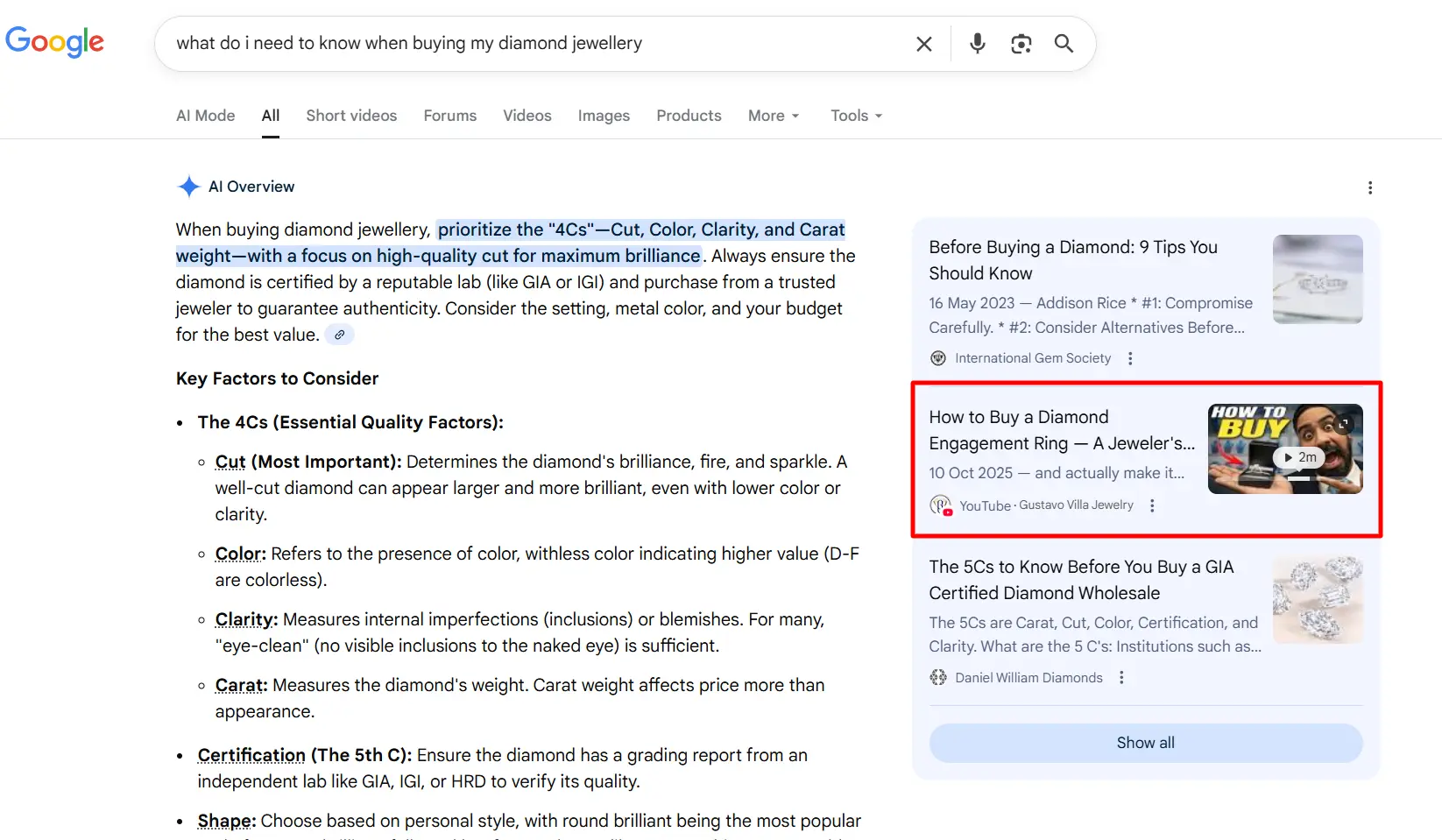
By repurposing a strong blog post into a YouTube video, you can cover more of the visible search real estate for the same topic, across both web results and video results.
Podcast → TikTok Clips
Podcast episodes can be repurposed into TikTok clips. This strategy is used by THE 505 PODCAST, which takes the same core conversation from a podcast episode and repackages it into short TikTok clips.
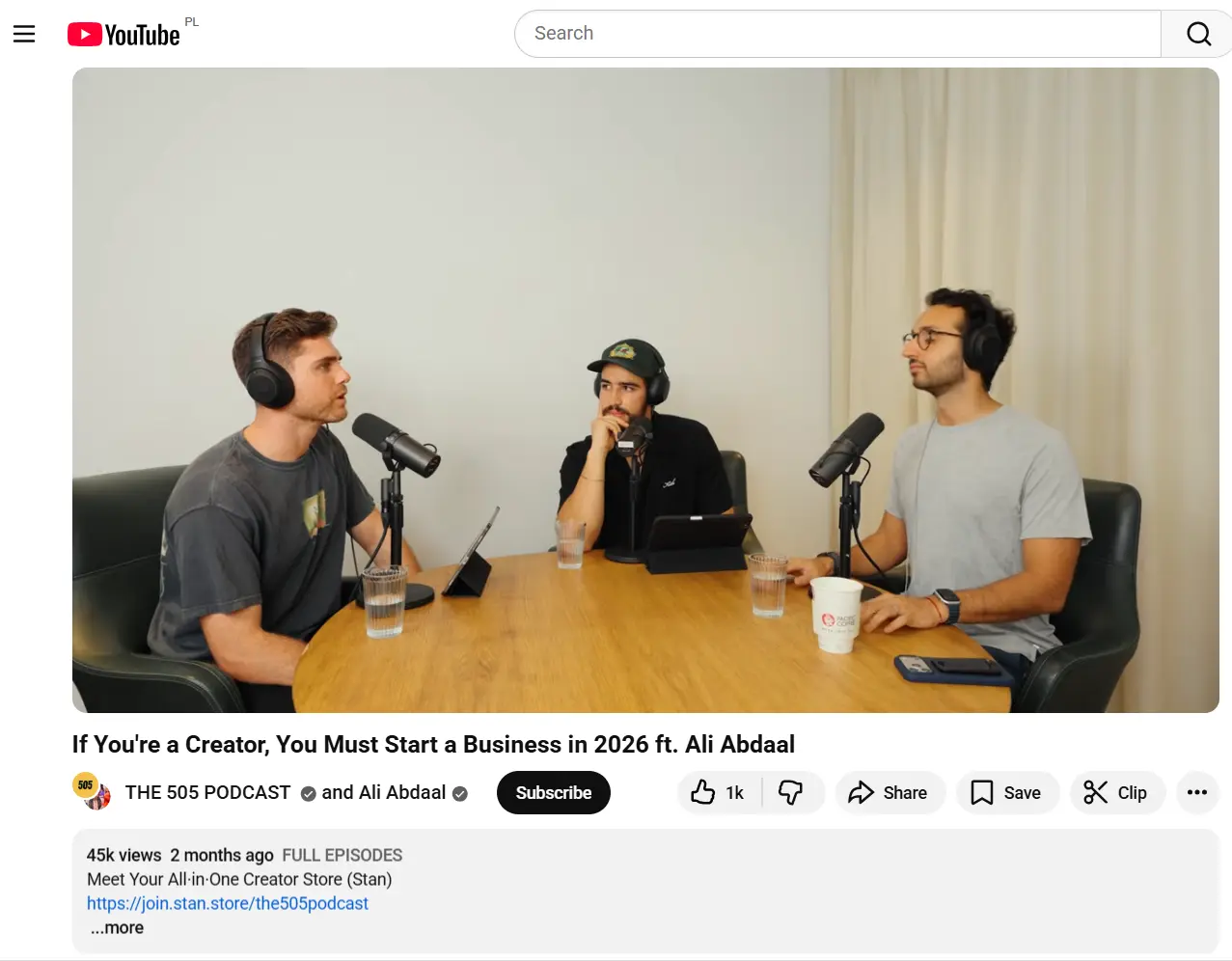
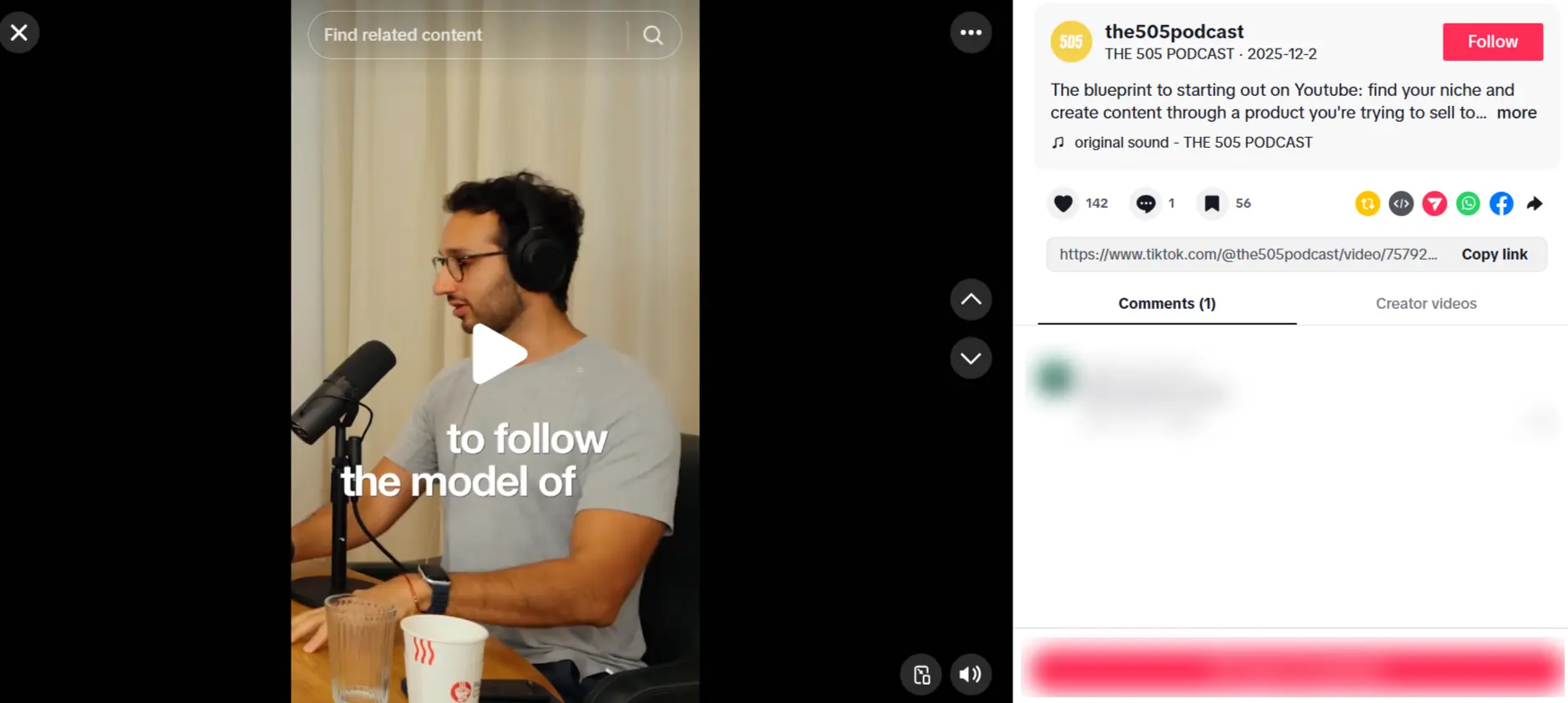
Instead of asking TikTok users to commit to a full episode, they pull out the most shareable moments, such as a strong opinion, a surprising insight, or a tight takeaway, and deliver them in a format that matches how TikTok is consumed.
Guides/Reviews → Social Media Posts
We also included higher-trust assets like guides and case studies that clearly demonstrate expertise and outcomes.
An example of this would be turning authoritative rankings into short-form social proof.
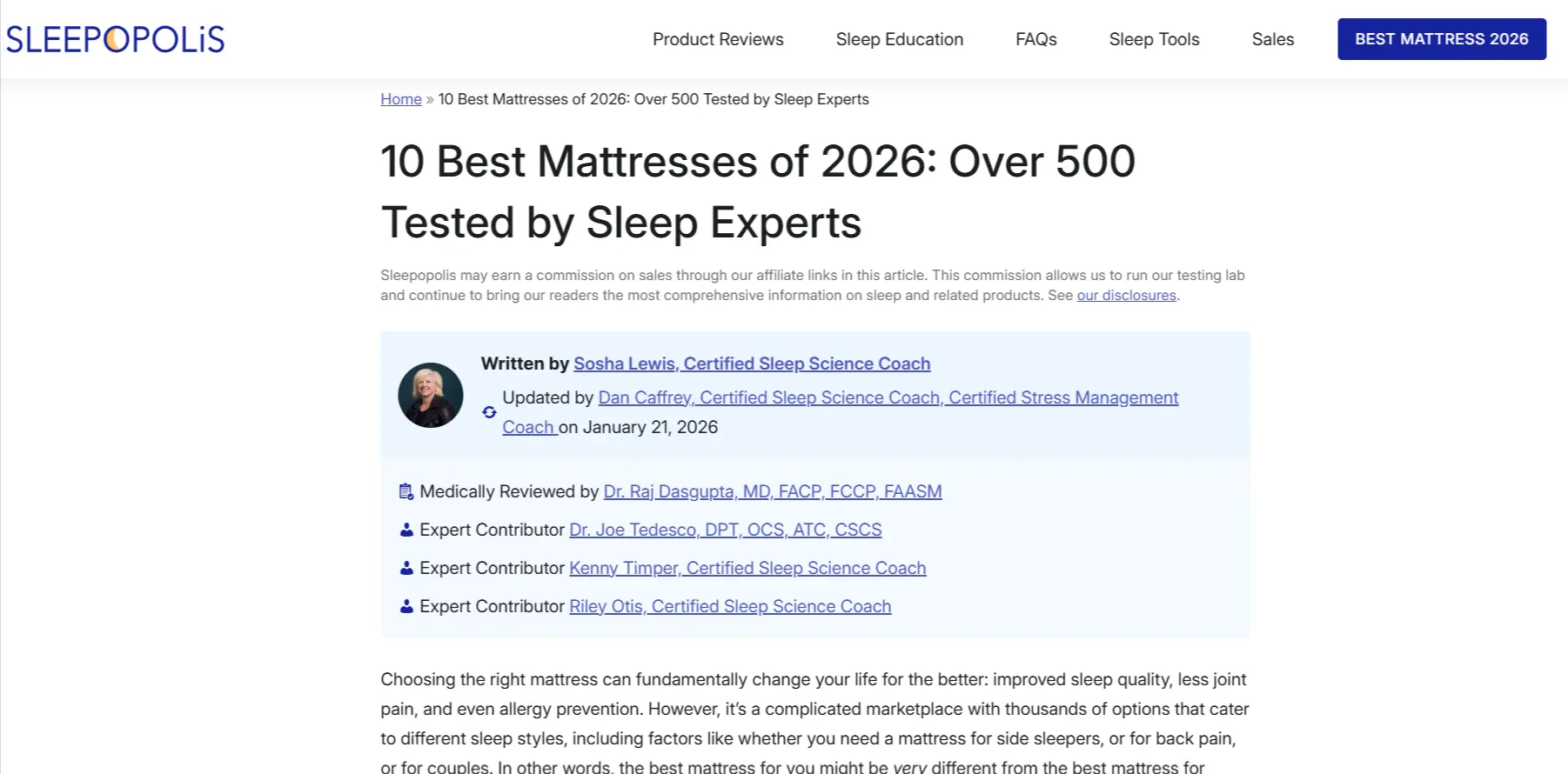
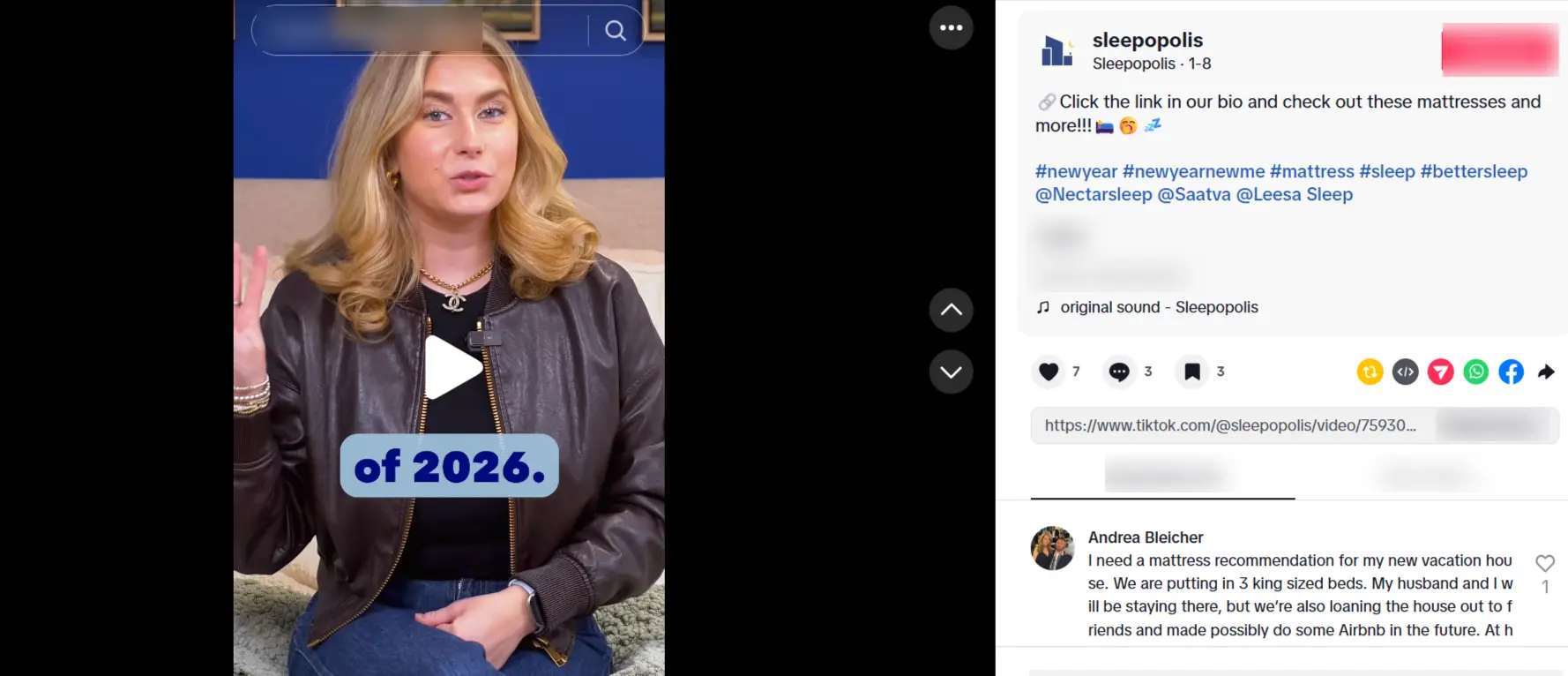
Blog Post Images → Social Media Posts
We reused charts and infographics as cross-platform portable insights. When you reuse high-value visuals across platforms, you can extend the lifespan of the original research and multiply distribution without creating new ideas from scratch.
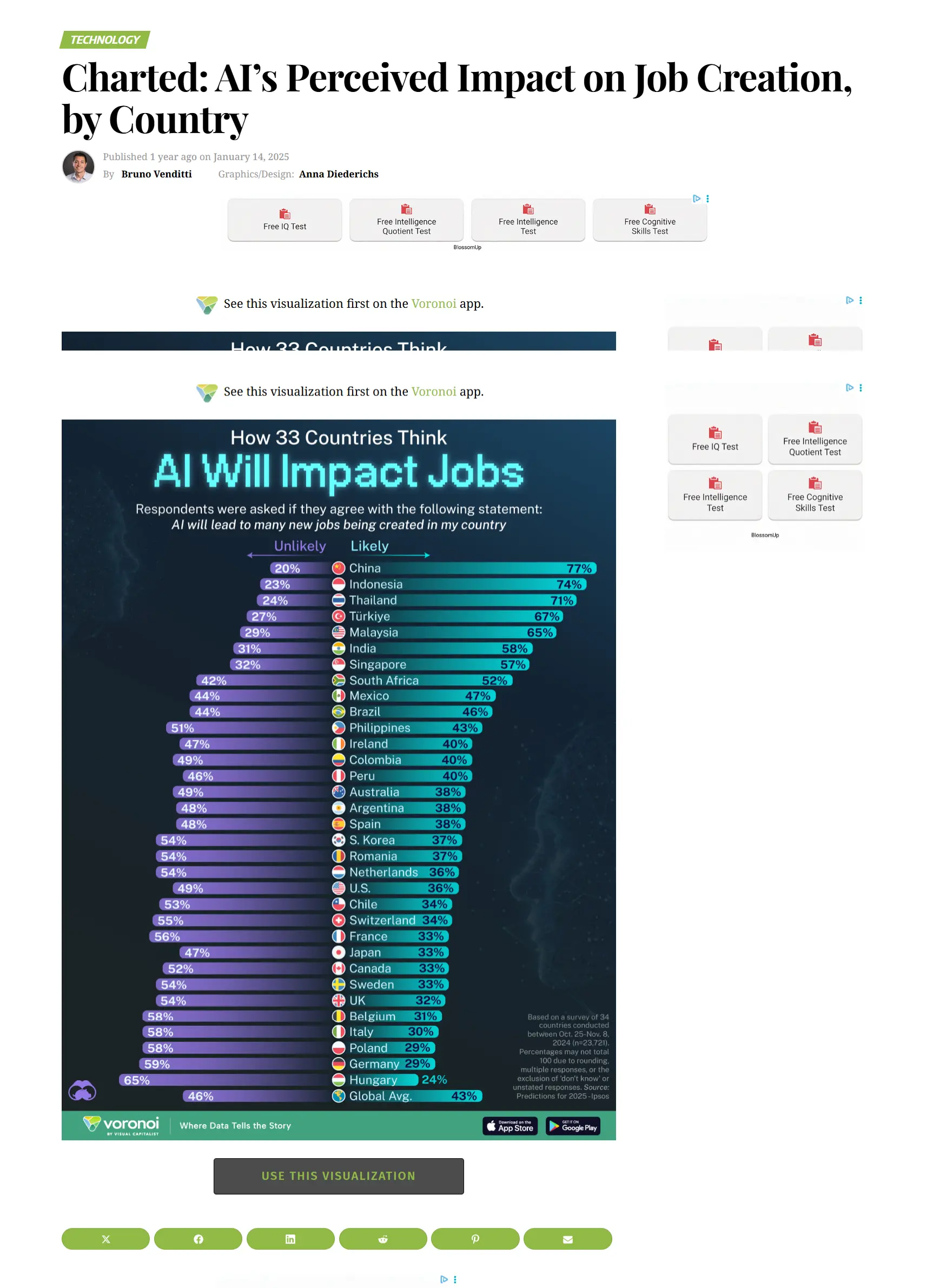
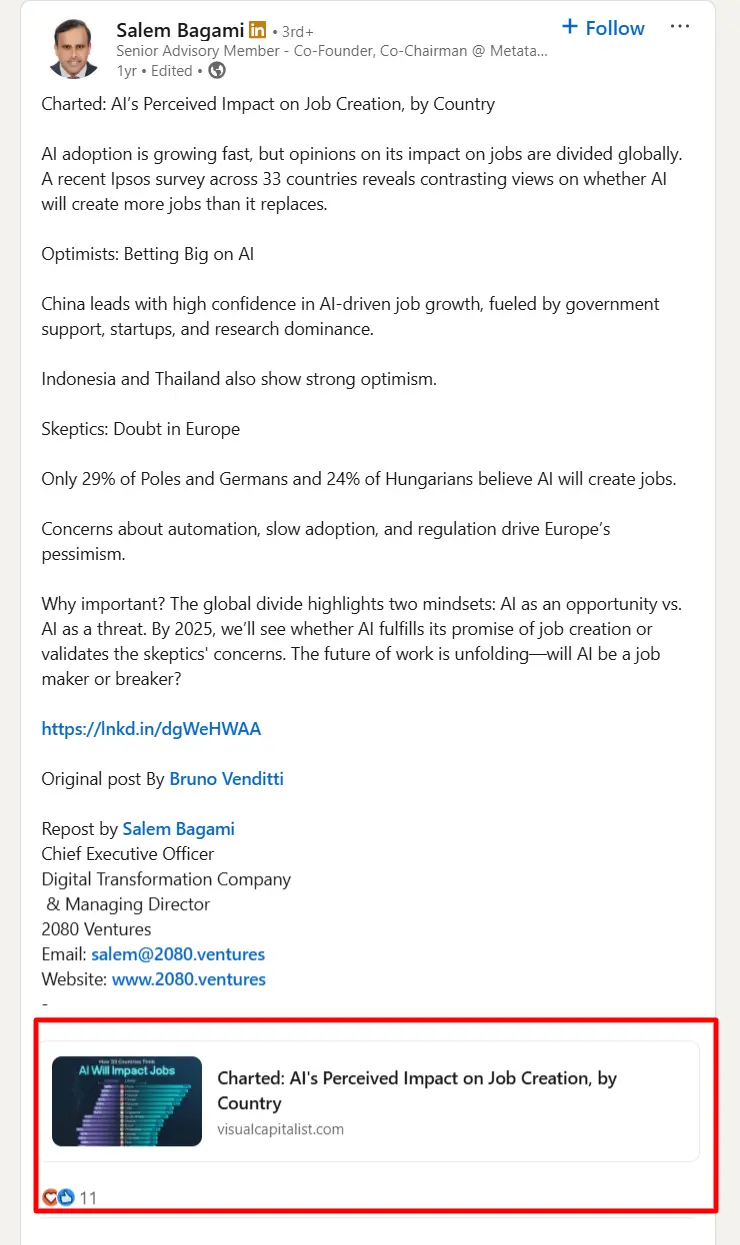
You can find the full list of repurposing opportunities in the full case study here.
Step 2: Match Content to the Best-Fit Channels
Instead of pushing everything everywhere, align your content with the channels most likely to reward it. For example, text-led insights can be adapted for platforms where quick scanning and professional takeaways perform well, while educational topics work well for video-first environments.
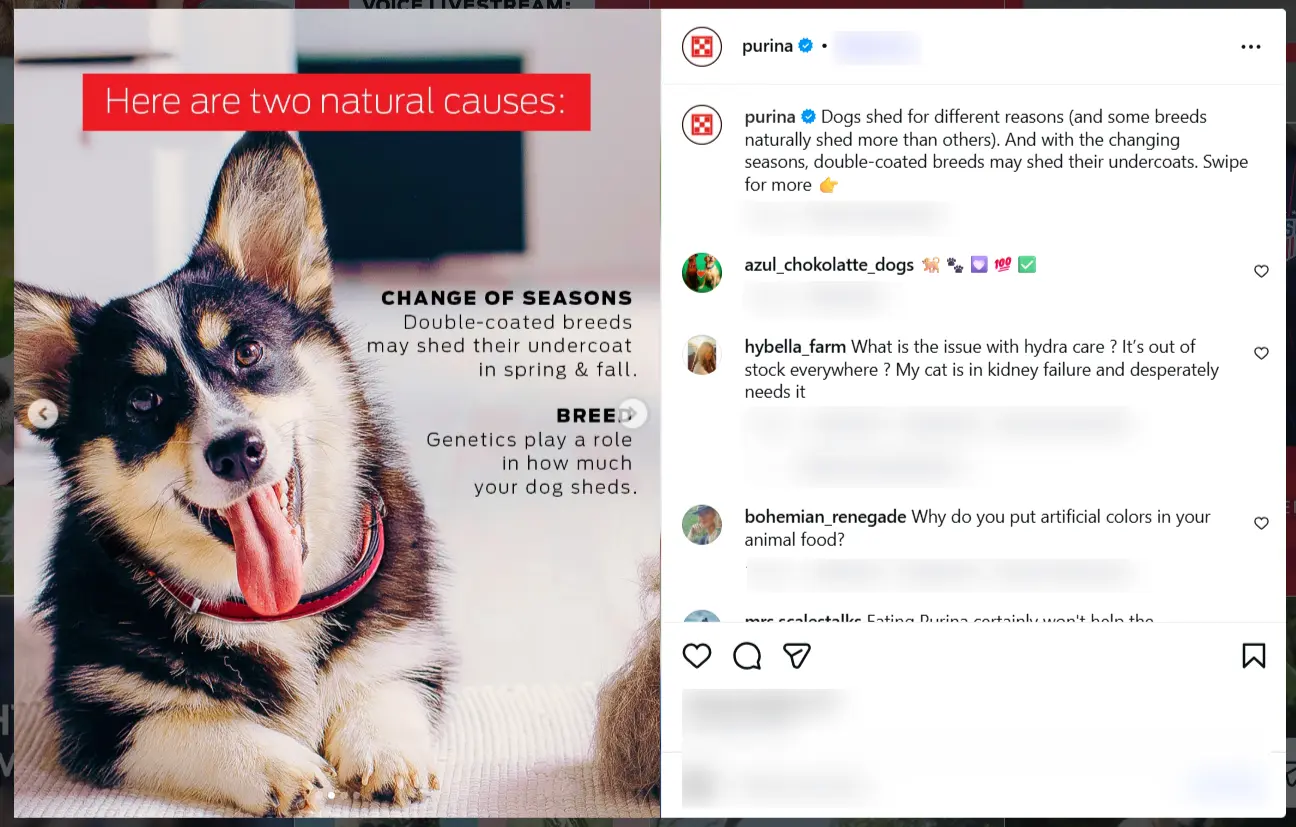
Blog Article → Scan-Friendly Instagram Carousel
Purina reused blog content and converted it into an easy-to-read Instagram post. Rather than reposting the article link, they translated the core points into a graphic-first format with minimal text, strong visual hierarchy, and clear bite-sized takeaways.
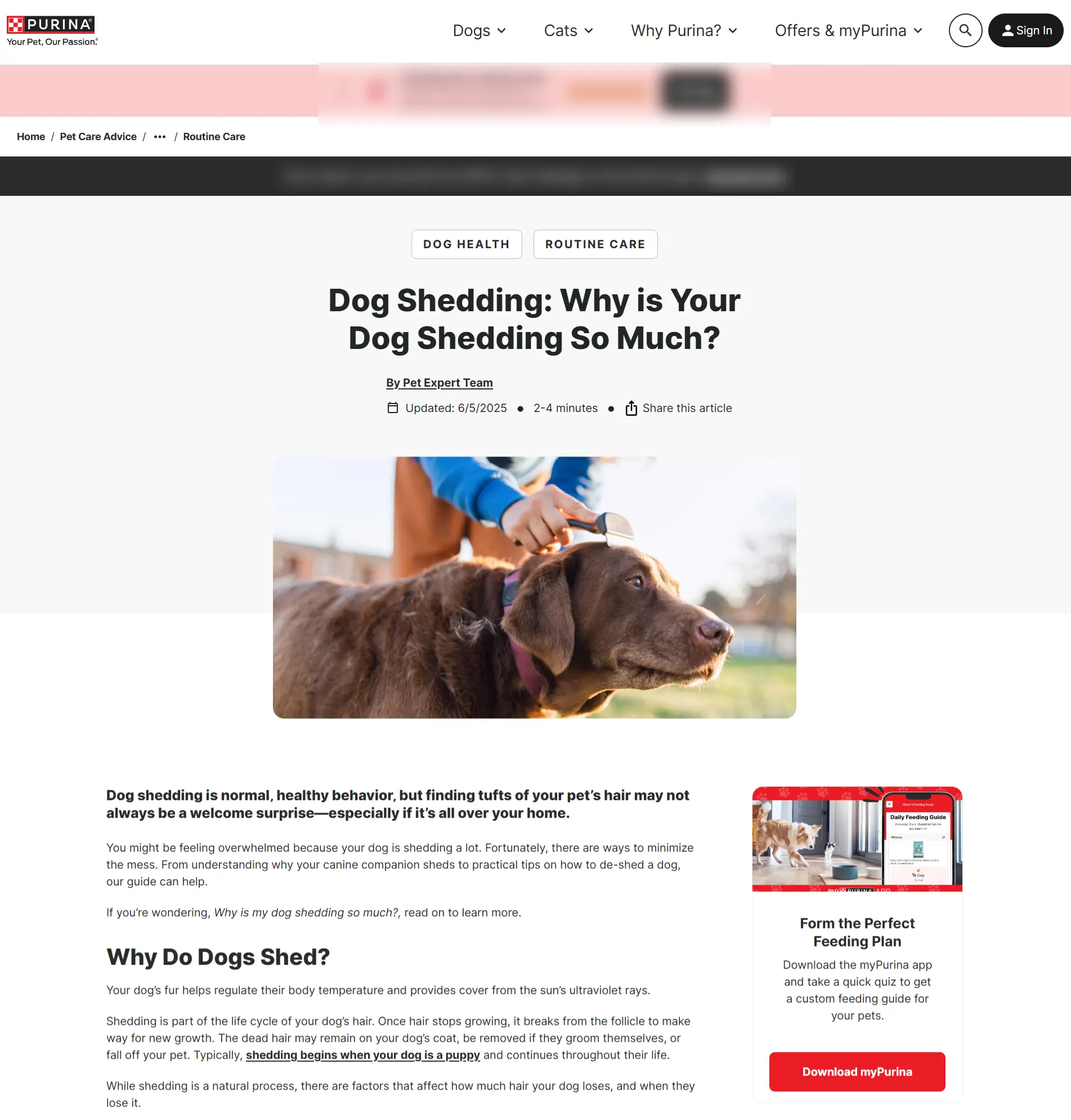
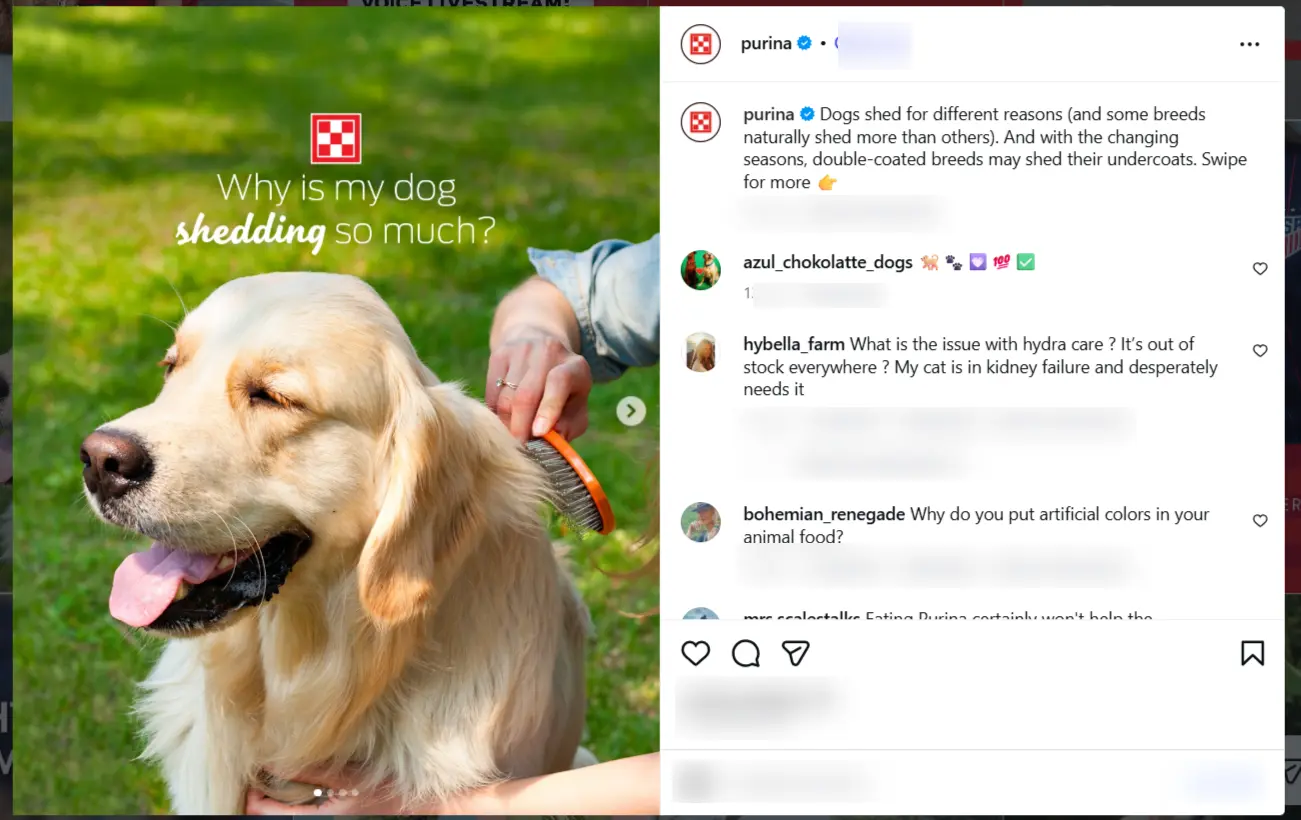
Q&A or FAQ content can easily be repurposed on community platforms and discussion formats where the content can be expanded through dialogue.
Step 3: Rebuild Each Asset for Platform Expectations
Instead of simply reposting the exact same content, each asset is restructured so that it aligns with platform and audience expectations. Adjust pacing, hook, length, visuals, and delivery based on the platform. Where needed, refresh older pieces before redistributing by tightening the narrative, updating examples, and improving clarity, then share the updated versions across your chosen channels.