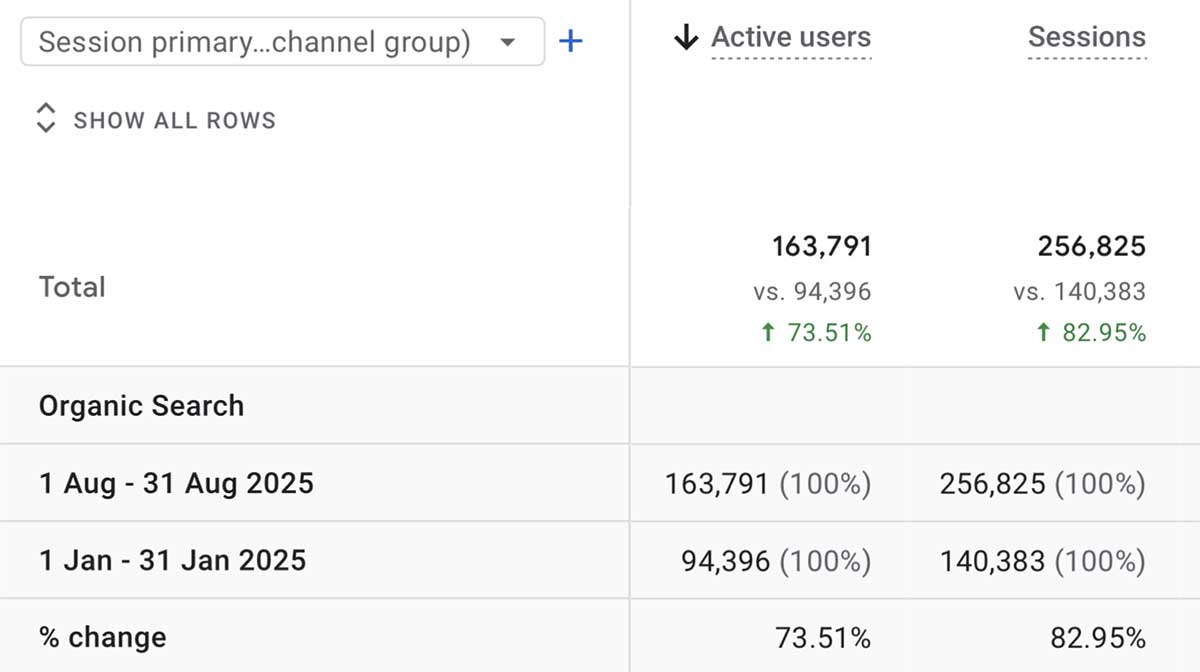
 The Objective
The objective was to rebuild the client's search presence by aligning their local SEO and content strategy with AI-driven discovery.
This was especially important as competitors had a stronger presence in AI search results, taking up valuable visibility and traffic.
The Website History
The client runs a well-established home services business in the U.S., with a strong reputation in their local area.
The Issues
Several critical issues prevented the client from appearing in AI Overviews and limited their overall search visibility:
- Incomplete business information: The client's Google Business Profile contained missing and inconsistent details, preventing Google from fully trusting or featuring their listing.
- Weak local authority: The business was absent from major third-party directories and review sites, reducing its credibility and online footprint.
- Unoptimized content for AI search: Existing site content failed to address the informational queries commonly surfaced in Google's AI Overviews, limiting visibility in emerging search results.
Course Of Action
Below, you'll find a detailed breakdown of our strategy for this local AI SEO campaign.
Why AI Overviews Matter for Local Businesses
AI Overviews are showing up more often in search, sitting right at the top of the page and giving users quick answers without needing to click. For local businesses, this shift is huge. If your business isn't mentioned or cited in these summaries, you're missing out.
That top placement grabs attention, builds trust, and can drive traffic even without the traditional #1 ranking. But getting featured isn't random.
How to Get Your Local Business Featured in AI Overviews
Google's AI doesn't just pull random businesses into those summaries; it looks for trustworthy, well-structured, and relevant sources. If your site and listings aren't sending the right signals, you'll stay invisible.
In this case study, we'll show you how to:
- Optimize your Google Business Profile
- Build citations and third-party listings
- Target informational queries with helpful content
These focus areas can help improve your chances of being included in AI Overviews by building credibility and making your business easier for AI systems to understand and trust.
Optimize Your Google Business Profile
To appear in AI Overviews, your Google Business Profile must be accurate, consistent, and fully completed. This is one of the first places Google checks when deciding which businesses to feature in AI-driven results.
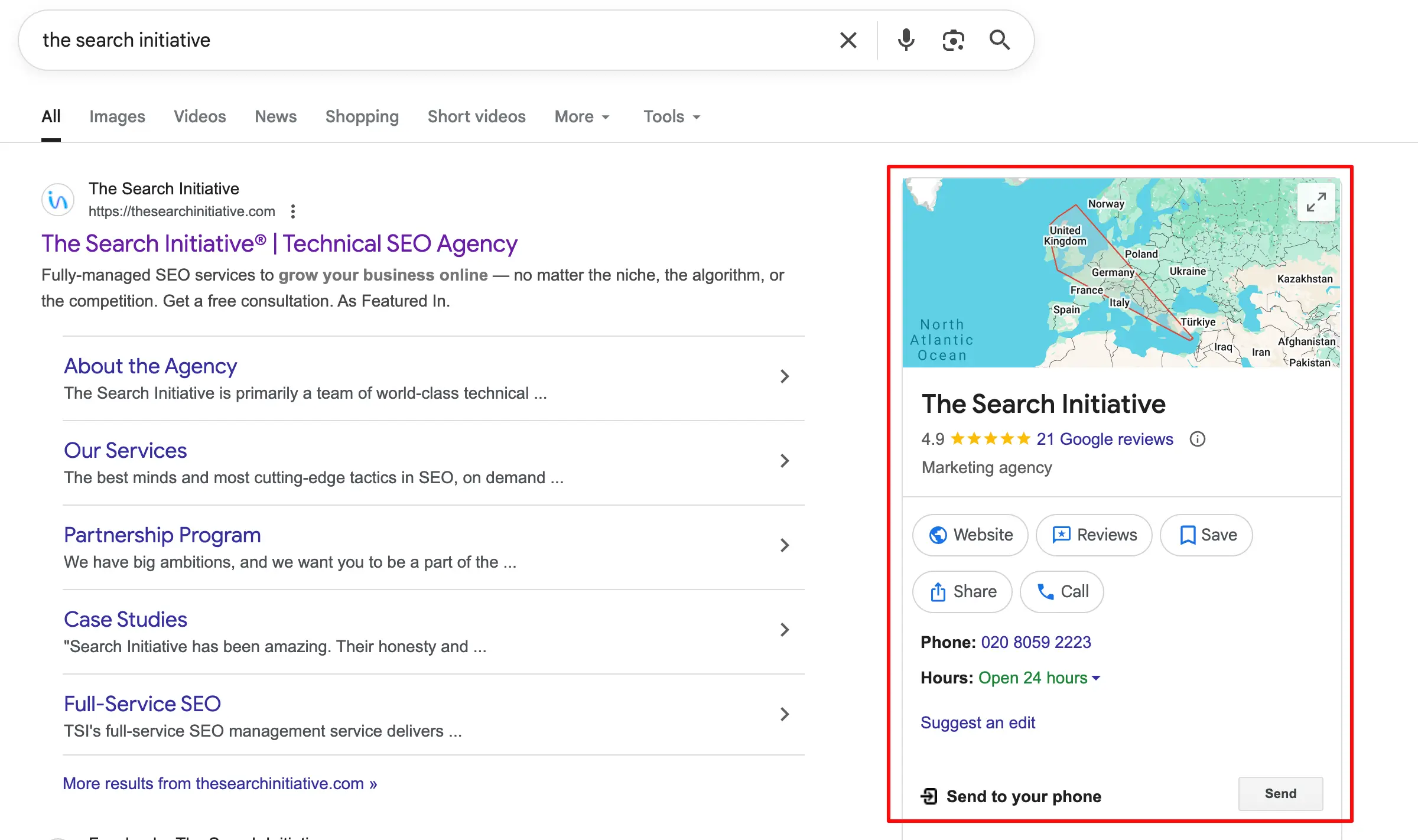
What Is a Google Business Profile?
A Google Business Profile (formerly Google My Business) is a free listing that helps your business show up in local search results and Google Maps. It displays key details, including your name, location, hours, services, website, and reviews. For local SEO and AI visibility, this profile serves as a trusted source of information, so it must be done properly.
Creating Your Google Business Profile
Claim and Verify Your Business
Setting up your Google Business Profile is the first step toward appearing in AI-generated local search results.
- Search for your business - Head to Google Business Profile Manager and enter your business name. If it already exists, click to claim it. If not, select "Add your business to Google" to start from scratch.

- Fill in your basic details - Enter your business name exactly as it appears on signage and your website. Then select your business category (e.g. "Plumbing Service" not "Contractor"). This helps Google understand what you do and who to show you to.
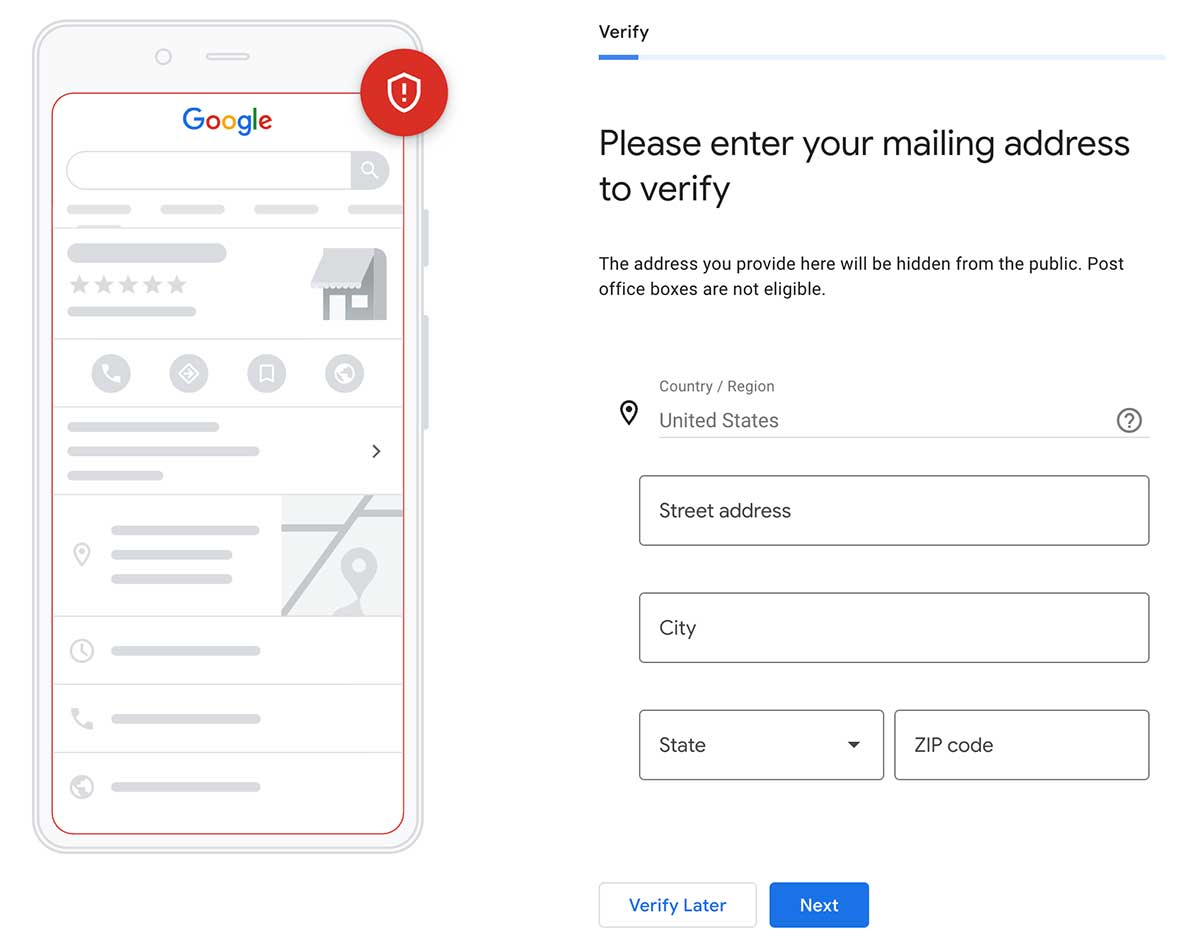
- Verify your business - Choose a verification method (postcard, phone, or email) and follow the prompts. Verified businesses are more likely to be trusted by both Google and AI systems, making this step critical if you want to appear in AI Overviews and local packs.
Complete Every Section (And Keep It Updated)
Fill out every field available in your profile. Google uses this information to match your business with relevant searches. A complete profile increases your chances of being recommended by AI tools like SGE (Search Generative Experience) and AI Overviews.
- Business Name: Use your real-world name, exactly as it appears across your signage, website, and social accounts. Don't add extra keywords as stuffing can lead to penalties.
- Business Type & Category: Choose a category that accurately reflects your primary service (e.g. "Emergency Plumber" not just "Plumber"). Google uses this to determine what searches to show your business for.

- Service Areas and Region: If you travel to customers, list your service areas. Also, confirm the region where your business is based, as this helps localize results.
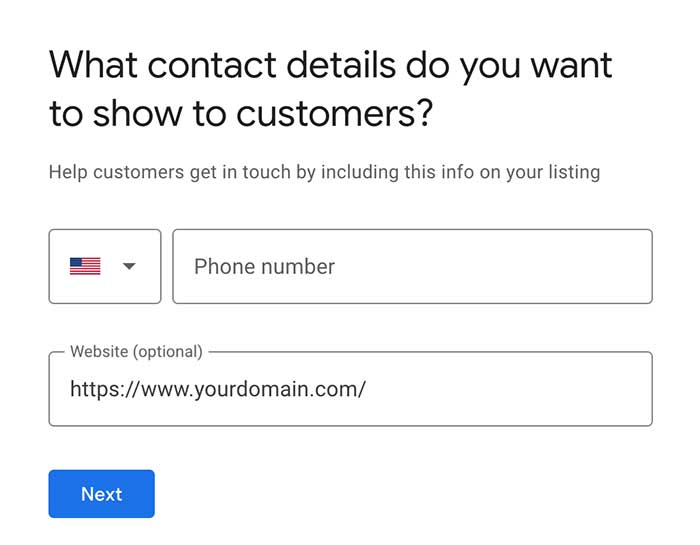
- Contact Info: Add your main phone number and a backup if possible. Include a website link. Make sure your NAP (Name, Address, Phone Number) details match across your site, directory listings, and social media. Even small inconsistencies (like "Street" vs "St.") can create confusion and harm trust.
- Services or Products: Select the services or products you offer. If applicable, use the "Custom" option to describe niche offerings in your own words. These terms help search models understand what you actually do.
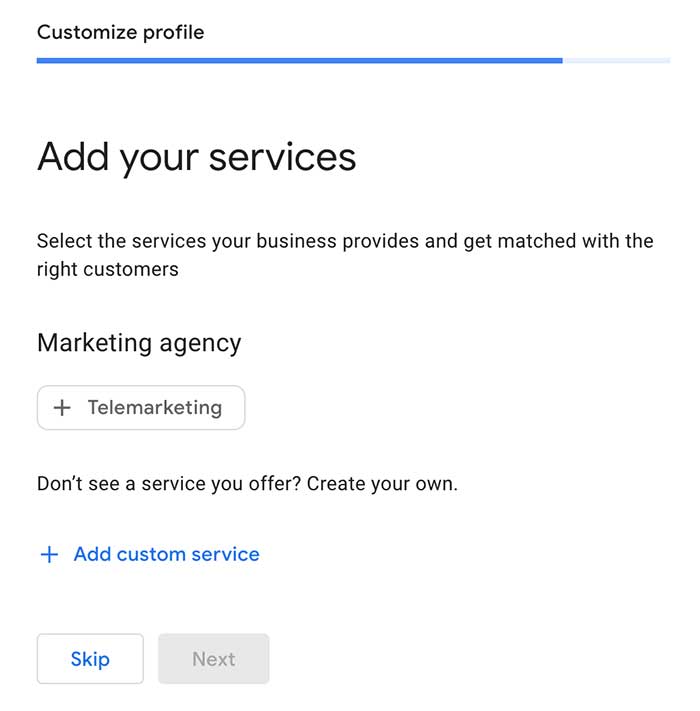
- Business Hours: Set your standard hours and use the "Special Hours" option for holidays or short-term changes. Businesses with accurate and updated hours are more likely to be surfaced in AI-generated answers, especially for local intent.

- Business Description: Use all 750 characters, but front-load the most important details in the first 250 — that's what Google often shows in previews and AI summaries. Talk about what you do, who you serve, and what makes you different. Mention key services and locations naturally (don't stuff keywords).
Good example:
"At GreenLeaf Lawn Care, we provide eco-friendly lawn maintenance, seasonal fertilisation, and landscape design services for homes and businesses across Westbrook."Bad example:
"We cut grass."A clear, specific description helps LLMs and Google's AI systems understand your relevance to a given query.
- Business Location: If you have a storefront or physical location, add the full address and use the map pin to mark it precisely. This helps customers (and AI) find you more easily. If you operate from home or travel to clients, you can choose to hide your address and show your service area instead.
- Social Media Links: Link your active social accounts, like Facebook, Instagram, YouTube, LinkedIn, etc. These connections help reinforce your brand identity and give AI Overviews more signals to verify your business is trustworthy and engaged.

Add High-Quality Photos and Videos
This is a major trust and engagement signal for both potential customers and AI search systems.
- Profile Photo - Upload your logo or a simple, recognisable image (250 x 250 px recommended). This becomes the face of your listing.
- Cover Photo - Pick a strong hero image, like your storefront or team at work that best represents your brand (1080 x 608 px is ideal). Google often shows this in local pack results or AI snippets.
- Interior and Exterior Shots - Show customers exactly what to expect when they visit. Photos of the outside help with recognition and wayfinding. Interior shots build familiarity and trust.
- Product and Team Photos - Post real images of your products or services in action. Include friendly, professional photos of your team. This humanises your business and signals legitimacy, something AI Overviews factor in when deciding what to show.
- Videos - Short, high-quality videos showing your space, services, or team in action can boost time-on-profile and increase clicks. Google and AI tools use this content to strengthen your profile's authority and relevance.
Build Trust with Customer Reviews
Google (and AI Overviews) rely heavily on reviews as a quality signal. More positive, keyword-rich reviews = higher likelihood of being featured in AI answers. So keep these best practices in mind:
- Ask for Reviews - Use Google's built-in tool to get a shareable review link or QR code. Send it out via email, SMS, or social channels after a successful service or purchase.
- Never offer incentives - Avoid offering discounts or gifts in exchange for reviews. It violates Google's policy and can get your listing suspended.
- Respond to Reviews Promptly - Say thank you for the positive ones and address the negative ones professionally. Showing you care by doing this signals to both customers and AI systems that your business is active, responsive, and trustworthy.
Pro tip: Where it feels natural, include service keywords in your replies (e.g., "Thanks for the kind words! Glad we could help with your same-day drain repair.")
Get Listed (and Reviewed) on Third-Party Platforms
Being visible on the right review and listing sites helps build a network of signals that both customers and AI systems rely on to assess your business. Here's how to approach it strategically:
1. Choose the Right Platforms
You don't need to be everywhere; just in the right places. Focus on trusted, high-authority platforms that are commonly scraped or cited by AI tools.
Here are a few general credibility builders:
- Yelp – Popular for local businesses across categories
- Trustpilot – Commonly referenced for ecommerce and service quality
- Facebook Business Pages – Still indexed and used in Meta's AI tools
- Bing Places – Tied into Bing Copilot and Windows 11 search
- LinkedIn Company Pages – Strong for professional and B2B services
In addition to general listings, consider these industry-specific platforms to strengthen AI recognition:
- Restaurants: OpenTable, Zomato
- Healthcare: Zocdoc, Healthgrades
- Home Services: Houzz, Angi
- Tech & SaaS: G2, Software Advice
These platforms often appear in AI-generated answers and summaries. Showing up across both broad and niche directories gives AI systems stronger confidence in your business's identity, location, and offerings.
2. Claim and Optimize Each Listing
Once you've identified the right platforms, take control of your presence on each one.
- Search for your business on each site and claim any existing profiles
- If none exist, create a new listing from scratch
- Use the platform's verification process (email, phone, or postcard)
- If there are duplicates or outdated profiles, request a merge or removal
Example: If your landscaping company shows up twice on Houzz under slightly different names, reviews, and traffic may be split. Consolidating avoids confusion and strengthens your credibility in both human and AI eyes.
3. Keep NAP Info Consistent
Use the exact same Name, Address, and Phone Number (NAP) format everywhere, down to punctuation and abbreviations.
Even small changes like "Co." vs "Company" or "Road" vs "Rd." can cause mismatches in AI systems trying to connect your listings across the web.
4. Fill In Every Available Field
AI tools don't just scan business names. They look at every available field to understand what you do and how relevant you are to a user's query.
- Business description: Use natural, keyword-rich language that reflects what people search for
- Tags or categories: Match the platform's terms to your services
- Website and social links: Build strong, cross-referenced signals
- Photos and videos: Show off your space, products, or team
- Alt text (where allowed): Describe images clearly for extra context
For example, uploading a short video showing your team in action or adding alt text to a photo of your café's outdoor seating can help AI tools better understand your business offering.
5. Keep Listings Fresh
Update your listings regularly, even if it's just new photos or a revised description. Stale or outdated information can lead to lower visibility in search and make AI systems less likely to trust your profile.
6. Collect Reviews That Matter
AI-generated results often quote reviews directly, particularly those that include specific details about service quality, staff, or experience.
Target Informational Queries with Helpful Content
If you want to show up in AI Overviews, you can't just focus on service pages and hope your homepage does all the work. Google's AI pulls content that answers real questions clearly and quickly, so that's where your focus needs to be.
Let's say you're in HVAC or plumbing. Instead of just writing a page about your services, create supporting blog posts that solve common problems people actually search for, like "how to unclog a slow drain without using chemicals" or "why does my toilet keep running at night?" You can also add an FAQ section directly on your service pages to cover quick questions.
This kind of content gives clear, useful answers, and that's exactly what AI looks for when building Overviews. It shows that you're not just trying to push a service; you're offering real value. That builds trust and puts your business in front of people at the moment they need help.
Finding the Right Informational Queries
AI Overviews tend to show up for practical, everyday questions, like "how often should a roof be inspected" or "what's the safest way to remove mould." These kinds of queries are short, specific, and usually tied to real-world problems, which makes them a great target for supporting content.
Start by entering a broad seed term into a keyword tool such as Ahrefs' Keywords Explorer. For example, a pest control company might type in "mice" to see what people are searching for.
In the Questions tab, you'll see clusters of related searches.
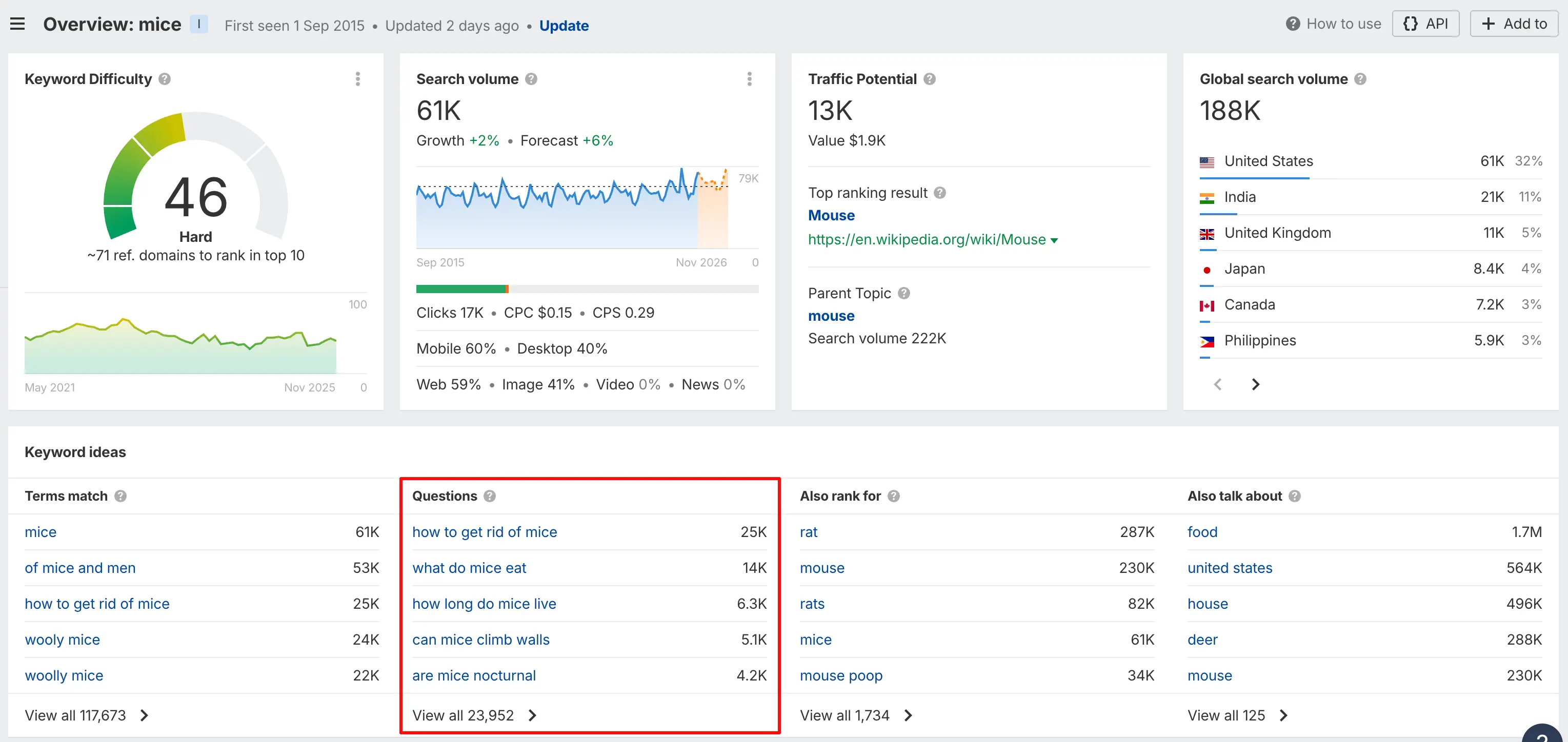
You'll see search clusters forming around topics like how to get rid of mice, what do mice eat etc.
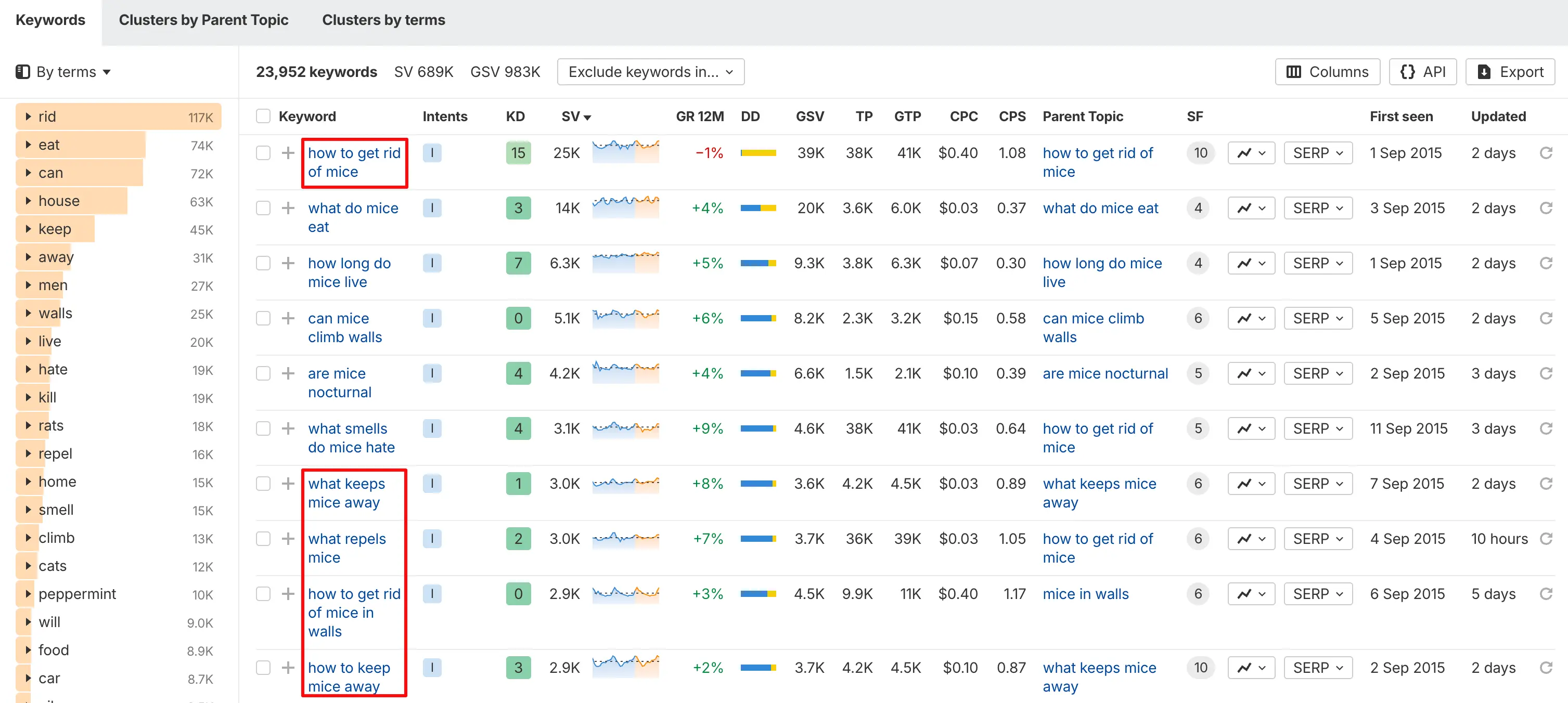
Once you've found a strong base query, use it to unlock deeper variations. For example, typing "how to get rid of mice" into Ahrefs brings up related questions that cover specific situations, like getting rid of mice in walls, in the house, or using home remedies.
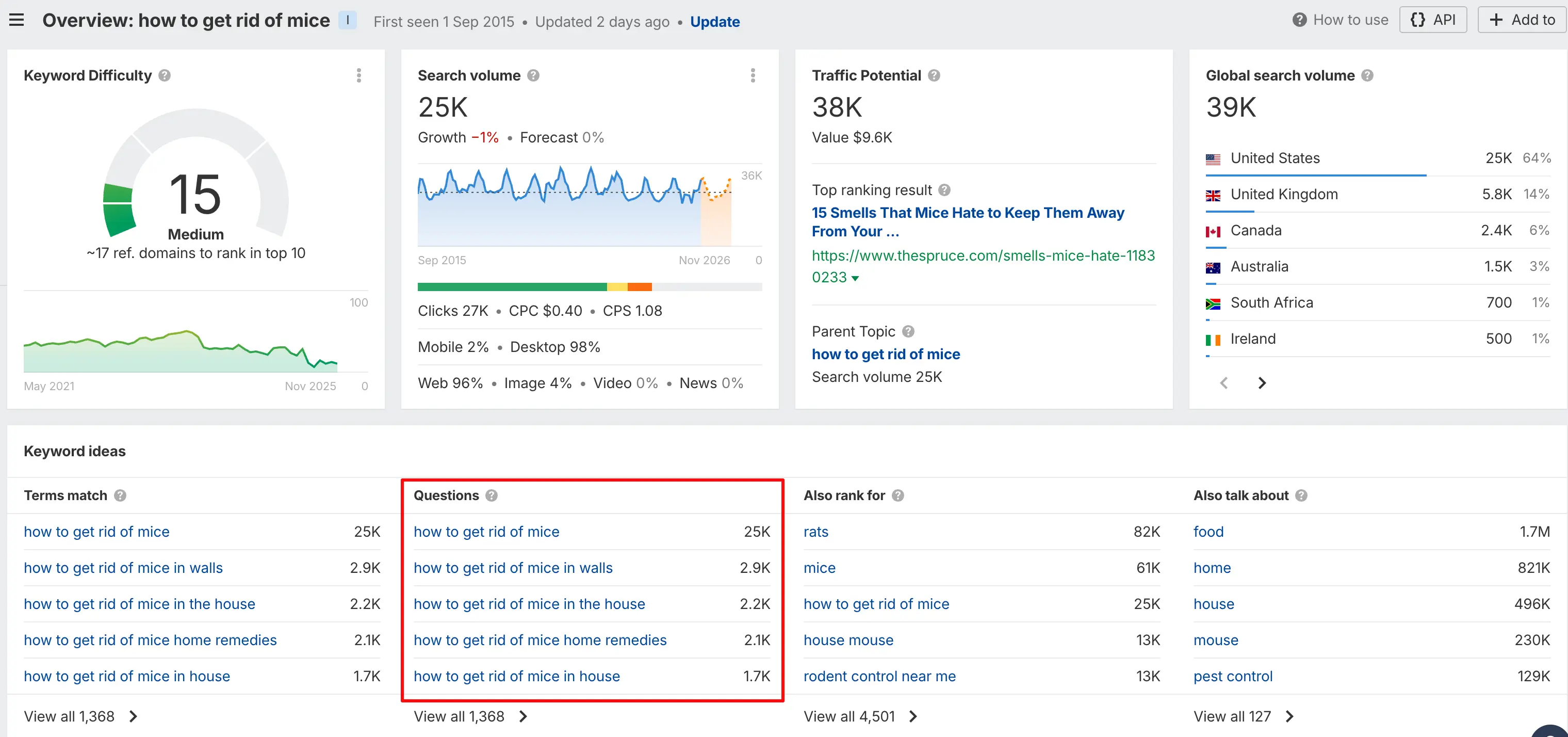
In this case, there are 1,368 related queries.
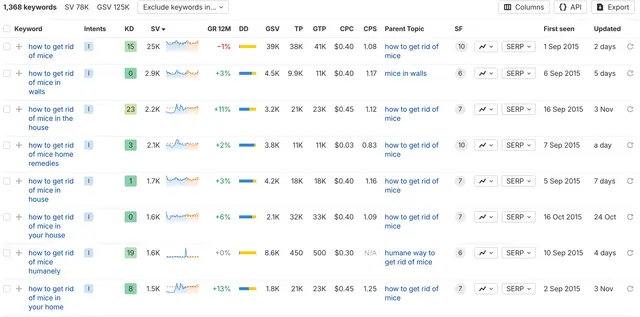
Some of these search terms may not have high volume individually, but they carry strong intent and clear relevance. They're focused, problem-solving queries that AI Overviews often mention in passing, but rarely answer in full.
That's your opportunity. By answering them clearly, you create content that directly satisfies real user needs and has a better chance of winning the click under AI-generated results.
To dig up more ideas, use tools like:
- Google's People Also Ask
- AnswerThePublic
- AlsoAsked
These can surface phrasing variations, follow-up questions, or complementary topics to build around, perfect for internal linking and expanding topical depth.
Optimizing for Informational Queries
Now that you've got the right questions, the way you answer them is just as important. Start with a clear headline that matches the query as closely as possible. Then give a short, direct answer right below it. You can follow it up with a bit more context or extra tips, but that first response should be tight and to the point.
Use bullet points when listing steps or tips, keep sentences short, and avoid filler or fluff. The goal is to give Google's AI something it can easily quote and serve at the top of the page. Remember, you're writing for real people, but also giving machines a clear path to pull from.