 The Objective
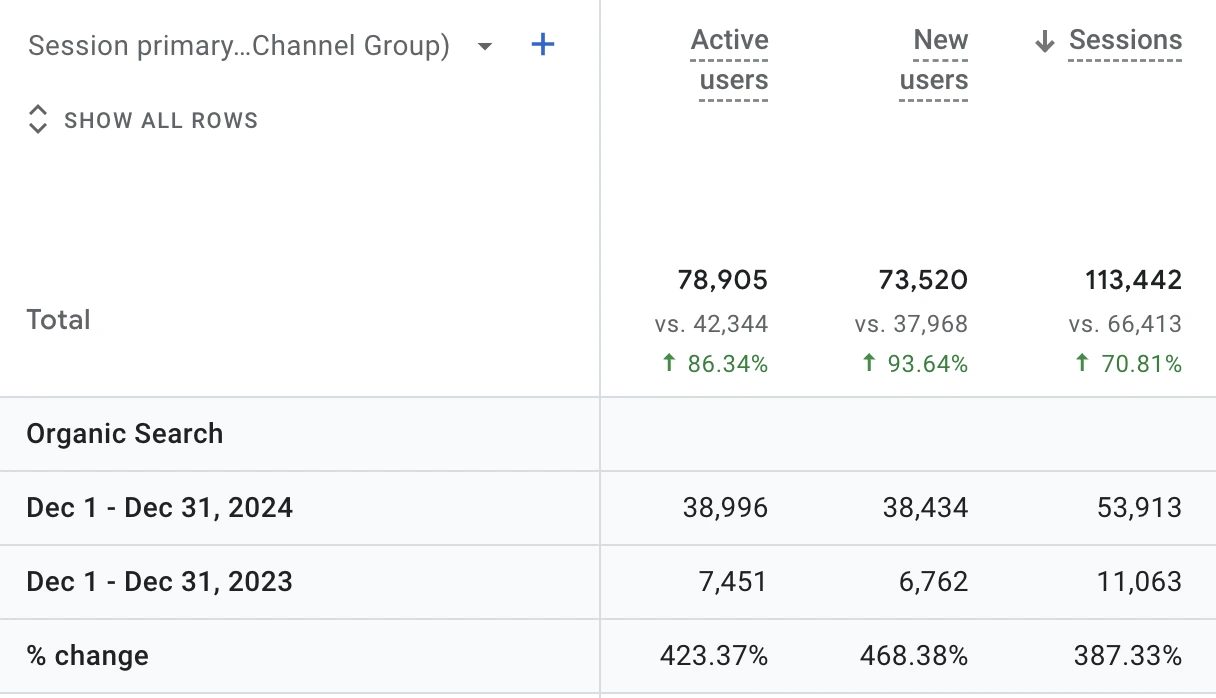
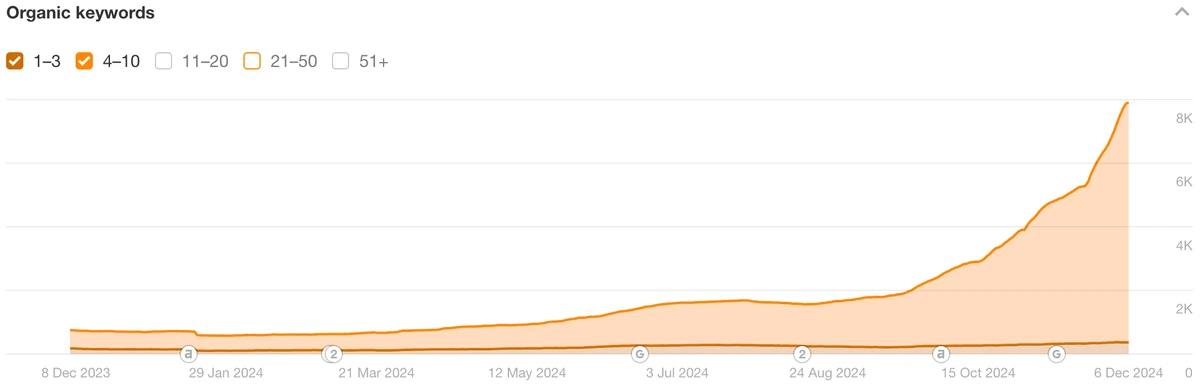
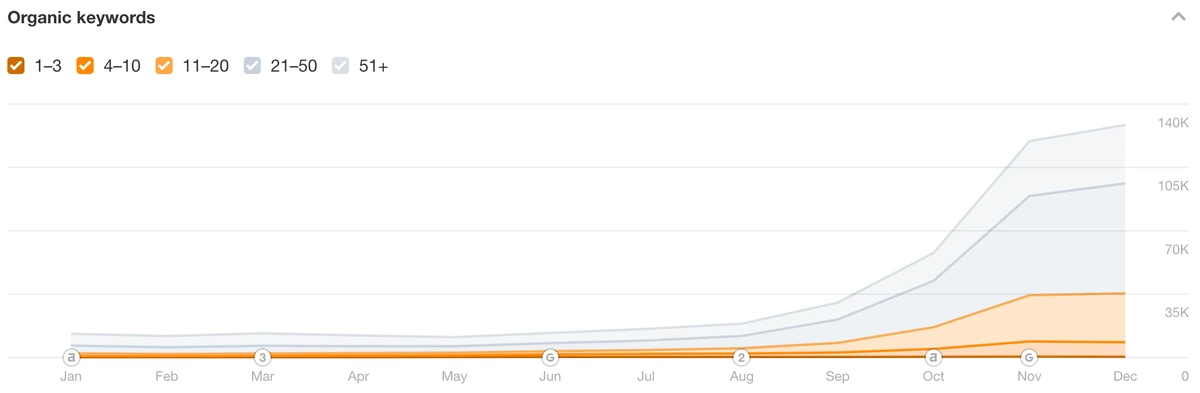
Our client was experiencing stagnant growth and low visibility for critical venture capital (VC) and investment-focused keywords. Prior to partnering with TSI, their content lacked the depth and relevance required to compete effectively in search results.
The primary objective of this campaign was to strategically revitalize their existing content, optimizing key landing pages with high-quality, valuable information tailored specifically to users’ search intent. By addressing these gaps, we aimed to significantly enhance the website’s organic visibility, drive targeted traffic, and deliver measurable improvements in overall organic performance.
The Website History
Our client operates a global investment platform, offering comprehensive financial insights, investment opportunities, resources, and services tailored to venture capital.
The Issues
After auditing the client’s website thoroughly, our SEO specialists identified several key factors that impeded the site's performance in organic search:
- Stagnant Keyword Visibility: The website struggled to gain traction for high-value VC and investment-related keywords, restricting its ability to reach and attract the right audience effectively.
- Insufficiently Optimized Content: Many of the website’s key pages lacked the high-quality, valuable, and informative content necessary to align with user intent and Google's latest guidelines on helpful content and E-E-A-T.
- Scale and Manual Auditing Limitations: Given the extensive size of the client’s website - with hundreds of pages - the sheer volume of content made manual auditing impractical. We needed a more efficient, scalable solution to systematically identify issues and opportunities for optimization.
Course Of Action
We developed a comprehensive, integrated SEO strategy built on four key pillars designed to resolve each challenge effectively:
- AI-powered auditing for content helpfulness and E-E-A-T compliance
- Rapid content indexing using Google's Indexing API
- Conversion-focused CTA optimization
- Authority-building through high-quality white papers
We'll outline each of these strategies in detail and explain how you can replicate them for your business.
AI-Powered Content Auditing for Helpfulness & E-E-A-T Compliance
The Context
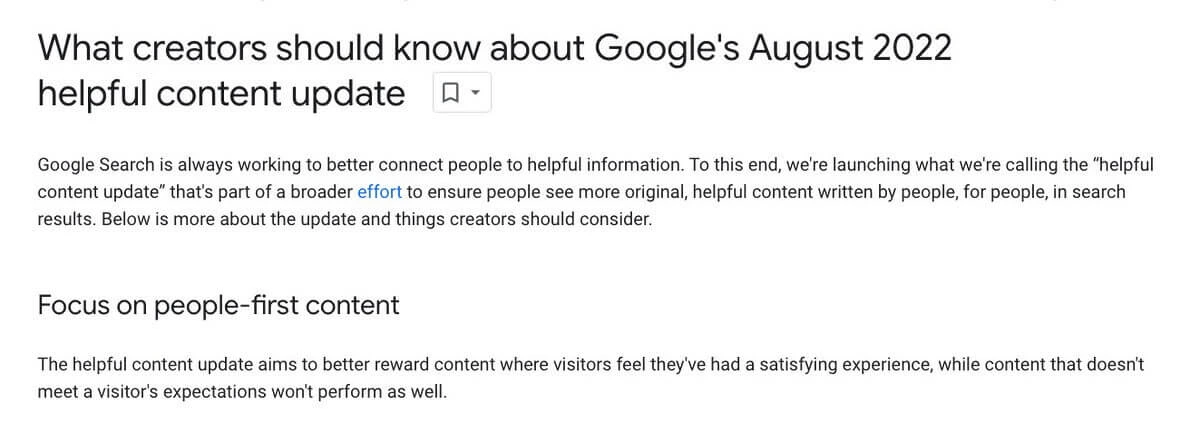
What is Helpful Content?
Helpful content refers to content designed with the users’ interests and needs in mind. Such content provides clear value, directly answers queries, solves problems, or delivers practical insights based on genuine expertise.
To align with Google’s Helpful Content guidelines, your content must demonstrate authority, reflect your expertise clearly, and offer authentic, detailed information that matches user intent.
Why is Helpful Content Important?
Google strongly prioritizes content created for humans rather than for search engines. The key reasons helpful content matters are:
- Better Search Rankings – Google actively rewards valuable, user-centric content with higher search result placements.
- Enhanced User Engagement – Users engage more deeply when content clearly meets their needs and solves their problems, resulting in increased conversion opportunities.
- Greater Trust and Credibility – By consistently publishing reliable, accurate, and insightful content, you build trust with both users and search engines.
- Reduced Algorithm Update Risks – Helpful content consistently aligns with Google’s evolving standards, reducing vulnerability to fluctuations from future algorithm updates.
- Competitive Advantage – Offering genuinely helpful content distinguishes your website, helping you stand out in competitive niches and attracting long-term audience loyalty.
When you focus on helpful content creation, you future-proof your website against Google algorithm updates while positioning your brand as a trusted authority within your industry.
What is E-E-A-T?
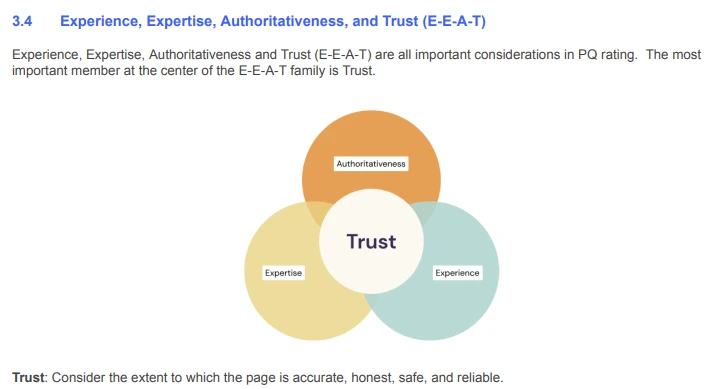
E-E-A-T stands for Experience, Expertise, Authoritativeness, and Trustworthiness, and it represents Google’s criteria for assessing content quality and website credibility.
Here’s a brief overview of each aspect of E-E-A-T:
- Experience – Demonstrates the firsthand experience of the content creator. For example, travel bloggers sharing insights from personal journeys showcase direct experience.
- Expertise – Reflects the depth of knowledge and specialised skillset the content creator has regarding a topic, indicating clear and reliable expertise.
- Authoritativeness – Indicates the recognition and credibility your site holds within its niche. Sites frequently cited by authoritative sources generally score higher in authoritativeness.
- Trustworthiness – Crucial in sensitive content areas (known as YMYL, or 'Your Money or Your Life,' categories), trustworthiness refers to the accuracy, honesty, and reliability of your content.
E-E-A-T is particularly critical in sectors such as finance, health, and safety - areas where users rely heavily on accurate and credible content to make informed decisions.
Checking Content Compliance with Google's Guidelines
Create Your Custom GPT Agent (Prompt Engineering)
Creating your own customized GPT agent allows you to quickly assess how well your content aligns with Google's guidelines. As a result, your website will consistently deliver valuable, authoritative, and user-focused content that ranks effectively in search results.
Keep in mind that creating your own GPT agent is only available to users with a paid ChatGPT subscription. If you're using a free account, you can instead use the general-purpose GPT agent we've already prepared for you.
- Go to the GPTs Editor (or click your profile, then “My GPTs”).
- Click “Create a GPT.”

- Switch to Configure mode. Here, you choose the tasks your GPT agent will perform.
- Name your GPT and save your settings.
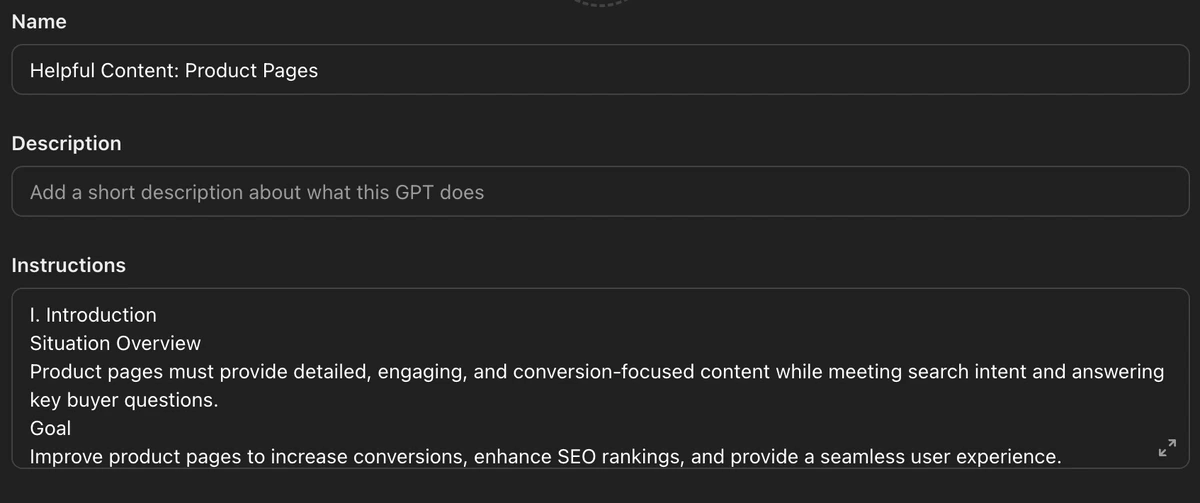
- Enter clear instructions based on your content type.
Blog Posts
- Situation Overview - If you want to boost your organic rankings, increase user engagement, and strengthen your authority online, high-quality blog posts are the way to go.
- Goal - Optimize blog content to rank higher, engage readers effectively, and encourage action.
- Blog post analysis
- Paste your blog content link or text into GPT.
- Scoring the Blog Post
- Quality: Relevant, clear, concise writing
- Relevance: Matches user search intent
- Engagement: Compelling headings, visuals, readability
- SEO: Effective headings, keywords, and internal linking
- CTA: Clear action step included
- Add Improvement Suggestions: Apply GPT-generated recommendations to enhance the content structure, depth, keyword optimisation, and multimedia usage.
Homepages
- Situation Overview - Your homepage is the entry point to your website. It showcases your brand, builds immediate trust, and directs visitors to the most important content.
- Goal - Optimize your homepage to enhance user experience, establish credibility, and clearly guide visitors toward key pages.
- Homepage analysis
- Paste your homepage link or the homepage content directly into GPT.
- Evaluate Key Areas
- Headline Clarity: Does the headline clearly communicate value?
- Navigation: Are essential pages accessible and intuitive?
- Trust Signals: Testimonials, awards, and key statistics.
- SEO Optimization: Meta descriptions, headings, keyword usage, and internal linking.
- CTAs: Clear, compelling paths encouraging visitors to act.
- Add Improvement Suggestions - Use GPT to suggest improvements in headlines, trust signals, SEO optimisation, and CTA placement to enhance the effectiveness of your homepage.
Service Pages
- Situation Overview - Service pages clearly outline your offerings, demonstrate your expertise, and convert visitors into customers by addressing their specific needs.
- Goal - Optimize service pages to effectively communicate value, address user intent, and drive conversions.
- Service Page Analysis
- Paste your service page URL or text into GPT.
- Evaluate Key Areas
- Clarity of Offer: Does the page clearly explain the service and highlight user benefits?
- User Intent: Does the content effectively address customer needs and pain points?
- Trust and Credibility: Inclusion of testimonials, reviews, or relevant case studies.
- SEO: Effective keyword usage, structured headings, and internal linking.
- CTAs: Clear calls-to-action encouraging the user’s next step.
- Add Improvement Suggestions - Ask GPT for recommendations on how to strengthen service descriptions, enhance trust signals, optimise SEO, and create compelling CTAs.
Product Pages
- Situation Overview - Product pages provide detailed information, highlight benefits, and persuade visitors to become customers. As such, they’re the key to your page’s success.
- Goal - Optimize product pages to clearly communicate value, differentiate from competitors, and increase conversions.
- Product Page Analysis
- Paste your product page content or link directly into GPT.
- Evaluate Key Areas
- Product Descriptions: Clear, informative, and compelling.
- Unique Selling Points (USPs): Clearly highlighted benefits and differentiators.
- SEO Optimisation: Effective use of relevant keywords, metadata, and internal linking.
- Trust Signals: Presence of reviews, ratings, or credibility markers.
- CTAs: Clear, persuasive actions guiding the user towards conversion.
- Add Improvement Suggestions - Prompt your GPT agent to provide suggestions to enhance descriptions, highlight unique benefits clearly, optimise keywords effectively, and create stronger calls-to-action to overcome any barriers to purchase.
Audit Your Content
Once you've set up your GPT agent, you’re ready to audit your content effectively.
Simply paste your page content directly into the GPT, or provide the URL to the page you want to audit.
The GPT agent will analyze your content and give you actionable recommendations. Remember to ask GPT for a downloadable link to easily access your content audit report.
With your analysis complete, you're now ready to start implementing the recommended improvements.
Implement Recommended Changes
After running the audit with your GPT agent, you'll receive clear, actionable recommendations to align your content with Google’s Helpful Content and E-E-A-T guidelines. Here’s how to implement these suggestions effectively:
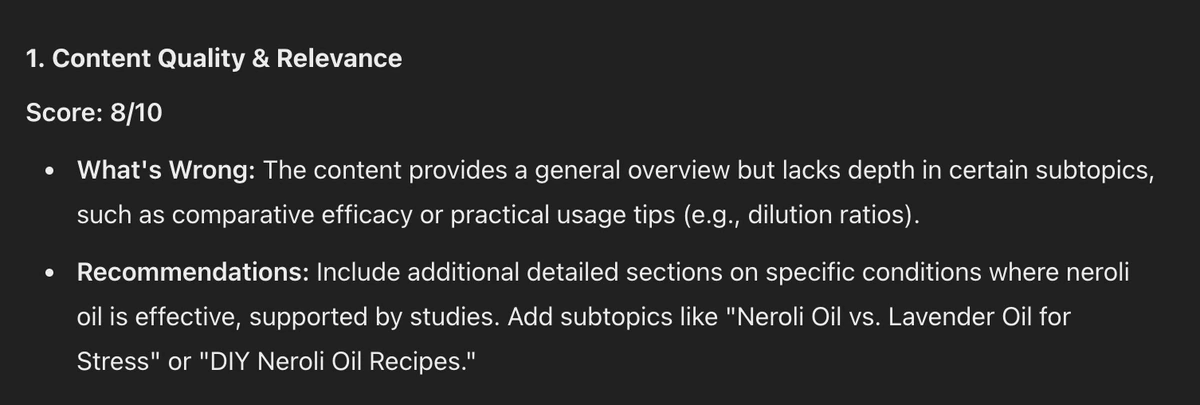
Enhance Content Quality and Relevance
- Expand Descriptions - Clearly detail your products or services by highlighting their unique benefits, specifications, and how they solve user problems.
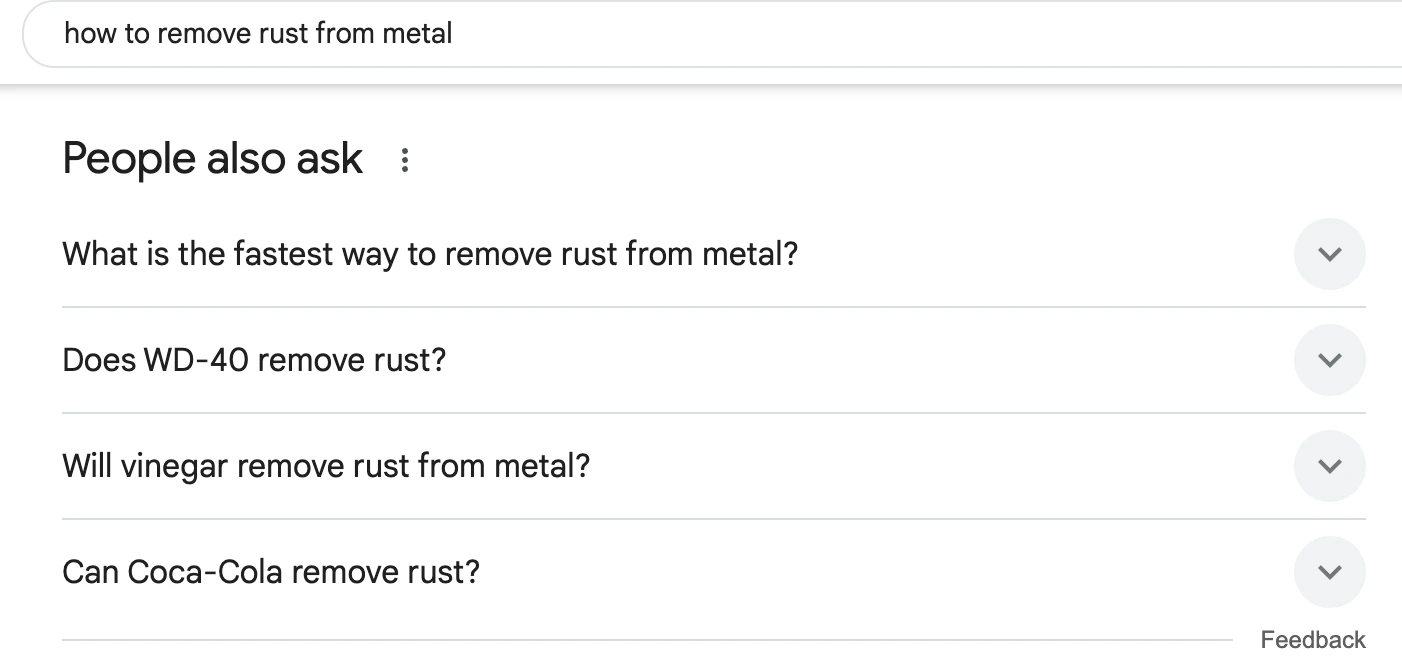
- Include Related Topics - Address commonly searched questions or related subtopics that competitors overlook, increasing your content’s depth and relevance. We recommend using People Also Ask section in Google Search.
Strengthen Trust and Credibility
- Build Credibility and Authority - Add original insights, case studies, or industry-specific data to build trust and prompt readers to see you as a reliable source.
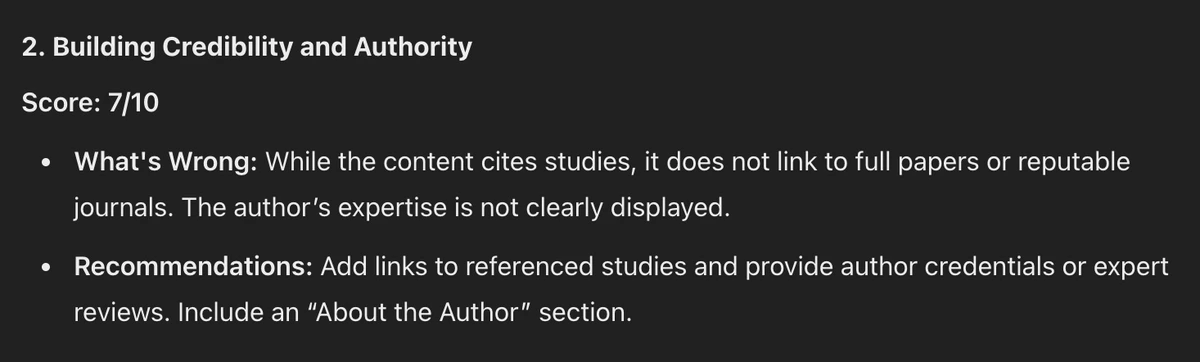
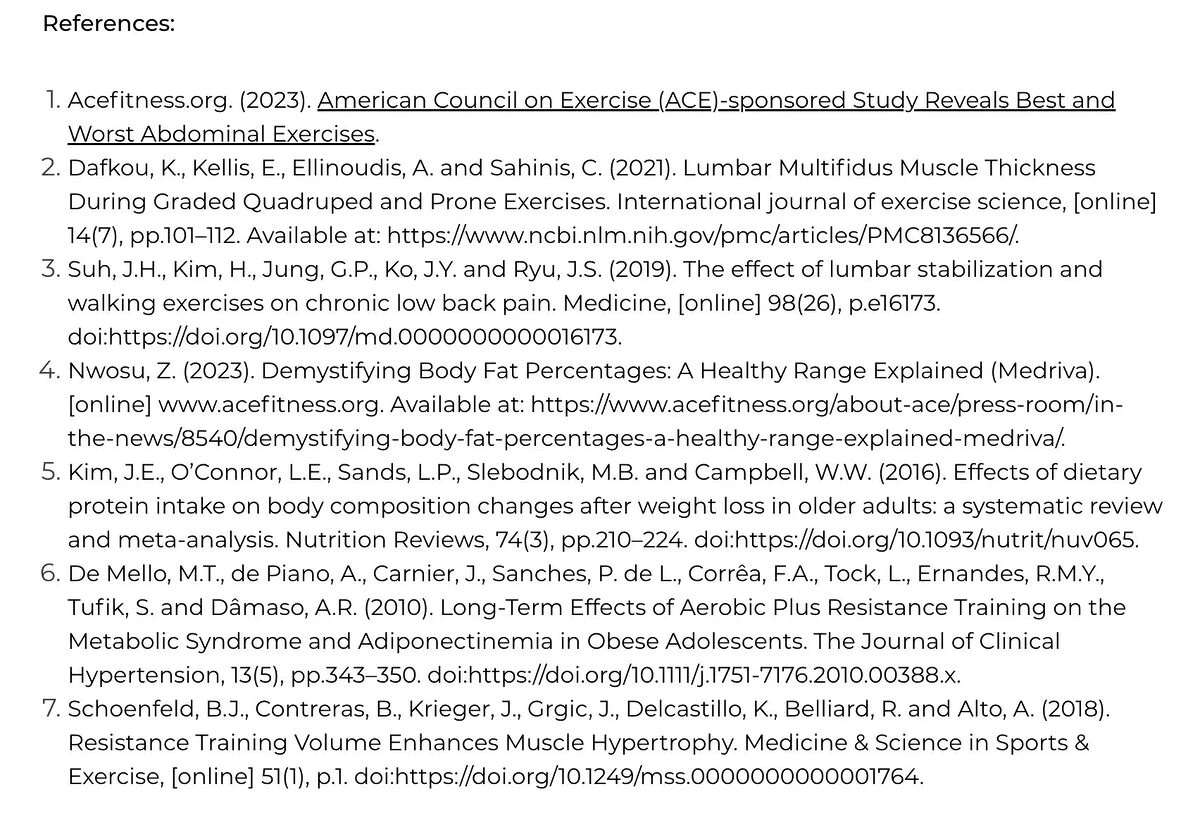
- Cite Credible Sources - Incorporate reputable studies, authoritative statistics, and trustworthy sources to back up claims and enhance credibility.
- Include Expert Quotes - Use quotes or insights from recognized specialists to reinforce your authority and demonstrate reliability.

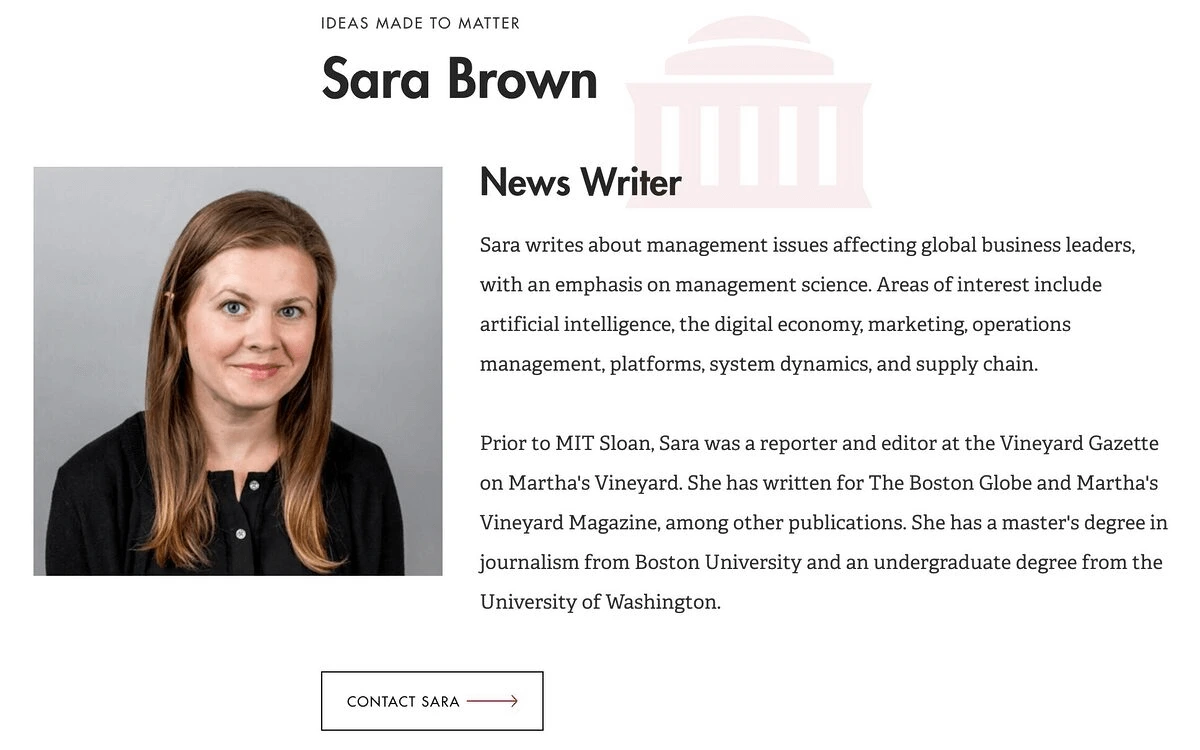
- Display Author Credentials - Include a clear author byline highlighting relevant qualifications and expertise. Link the author’s name to a detailed bio or profile page that outlines their professional experience, background, and certifications.
Boost User Engagement
Engaging content grabs readers' attention, maintains their interest, and motivates interaction or sharing. It’s crucial for delivering a positive user experience and fostering long-term audience loyalty.
-
Use Visual Elements - Break up your content using relevant images, infographics, charts, or videos to enhance readability and encourage user interaction.
Take a look at the example below - describing a workout routine in words alone is far less effective than illustrating it visually. Clear images or demonstrations significantly improve understanding and user engagement.

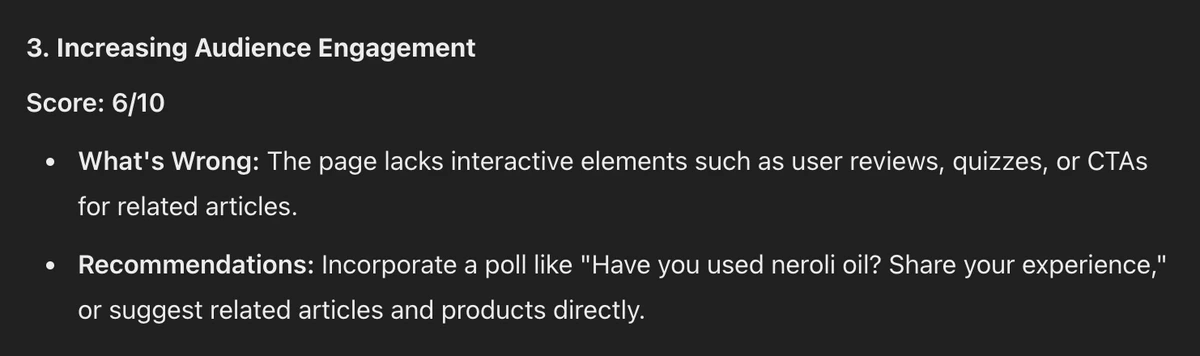
- Encourage Clear Actions Through CTAs - Add compelling, concise calls-to-action prompting users to subscribe, comment, inquire about services, or share your content.
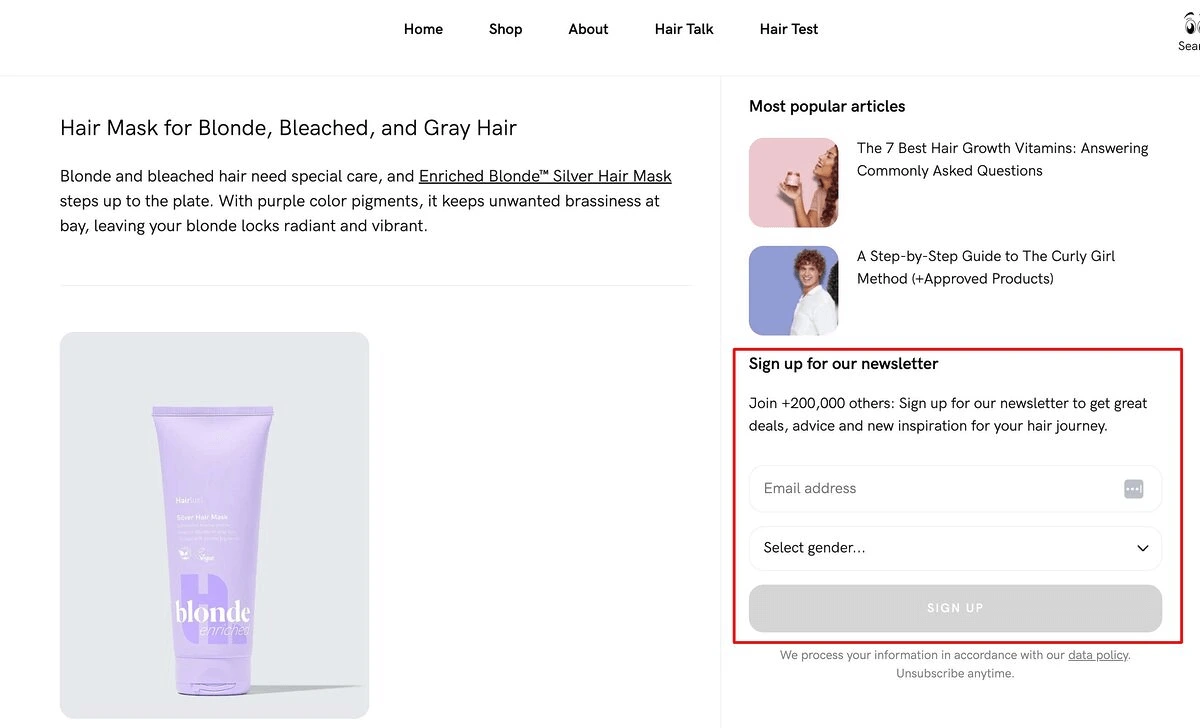
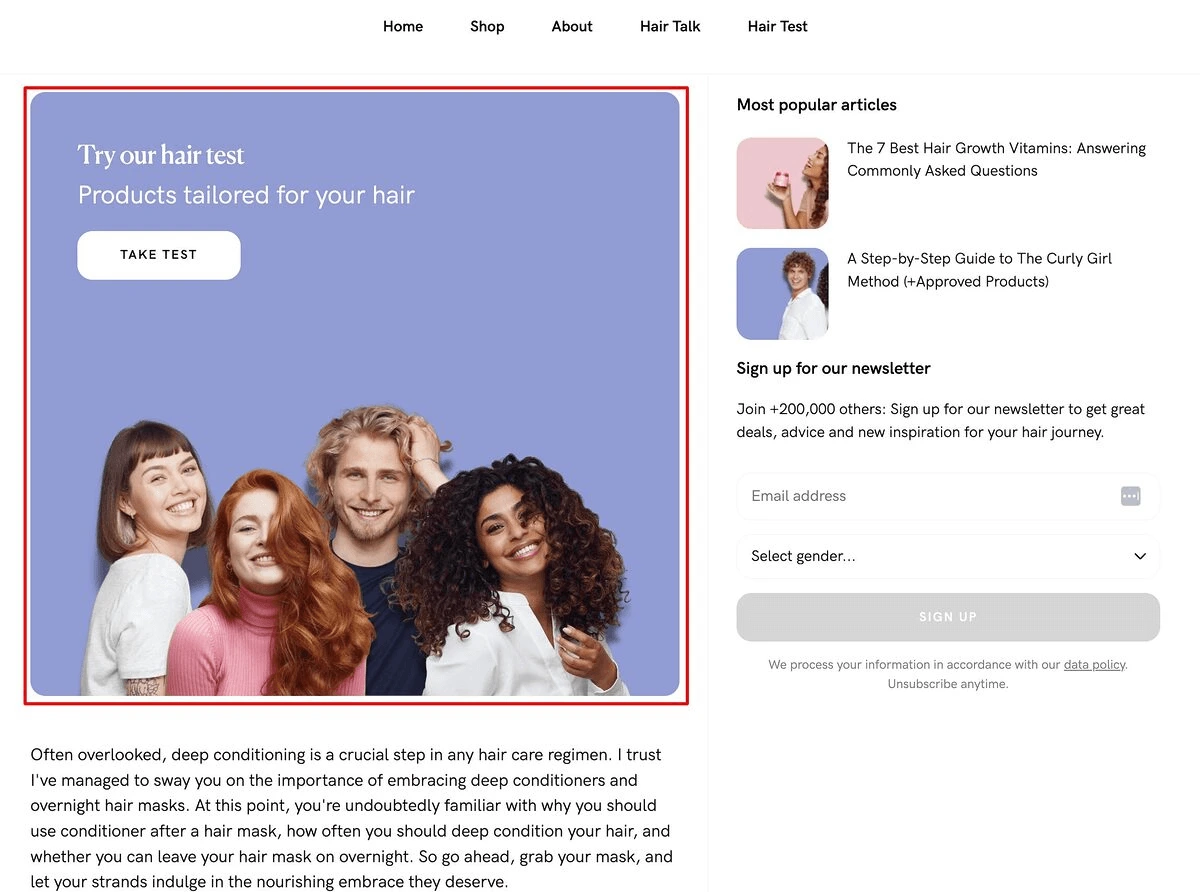
- Include Interactive Tools - Use interactive elements like quizzes, calculators, or product recommendation tools to boost user engagement.
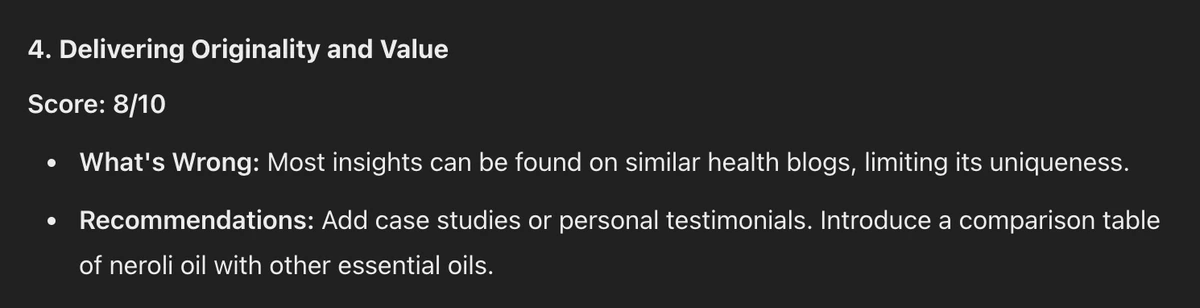
Deliver Unique Value and Originality
Original content sets your site apart from competitors, giving users a compelling reason to bookmark, share, and revisit your website.
-
Offer Fresh Insights - Provide original perspectives, personal experiences, or exclusive data that your audience cannot easily find elsewhere.
For example, instead of focusing on popular tourist hotspots, a travel blog could highlight lesser-known sustainable destinations, offering readers fresh, original insights.
- Solve Unique Problems - Identify and address content gaps or underexplored topics within your niche, positioning yourself as an industry leader.
Improve the Structure and Readability
Well-structured content helps readers quickly find information, enhancing their overall experience.
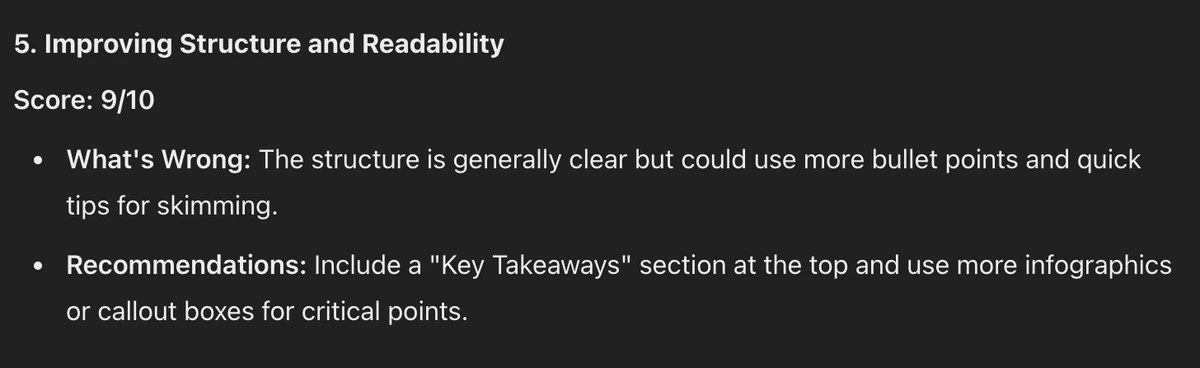
- Use Clear Headings - Organize content into logical sections with clear, meaningful headings and subheadings. Naturally include relevant keywords to boost SEO visibility.
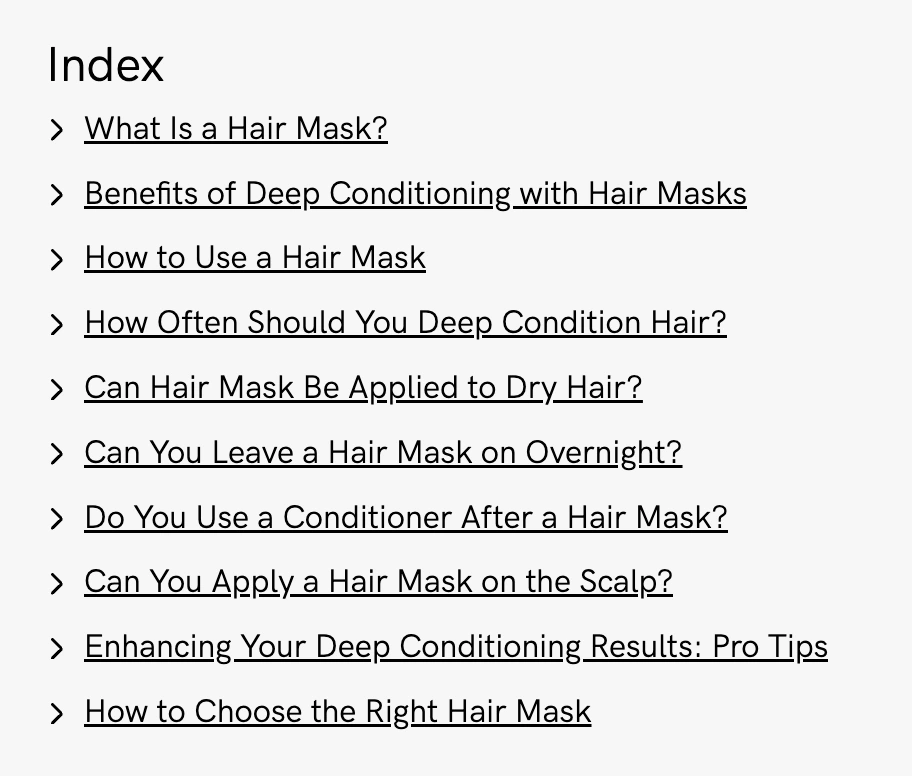
- Format Content Using Lists - Break down complex ideas, instructions, or grouped points into bullet points or numbered lists to improve readability.
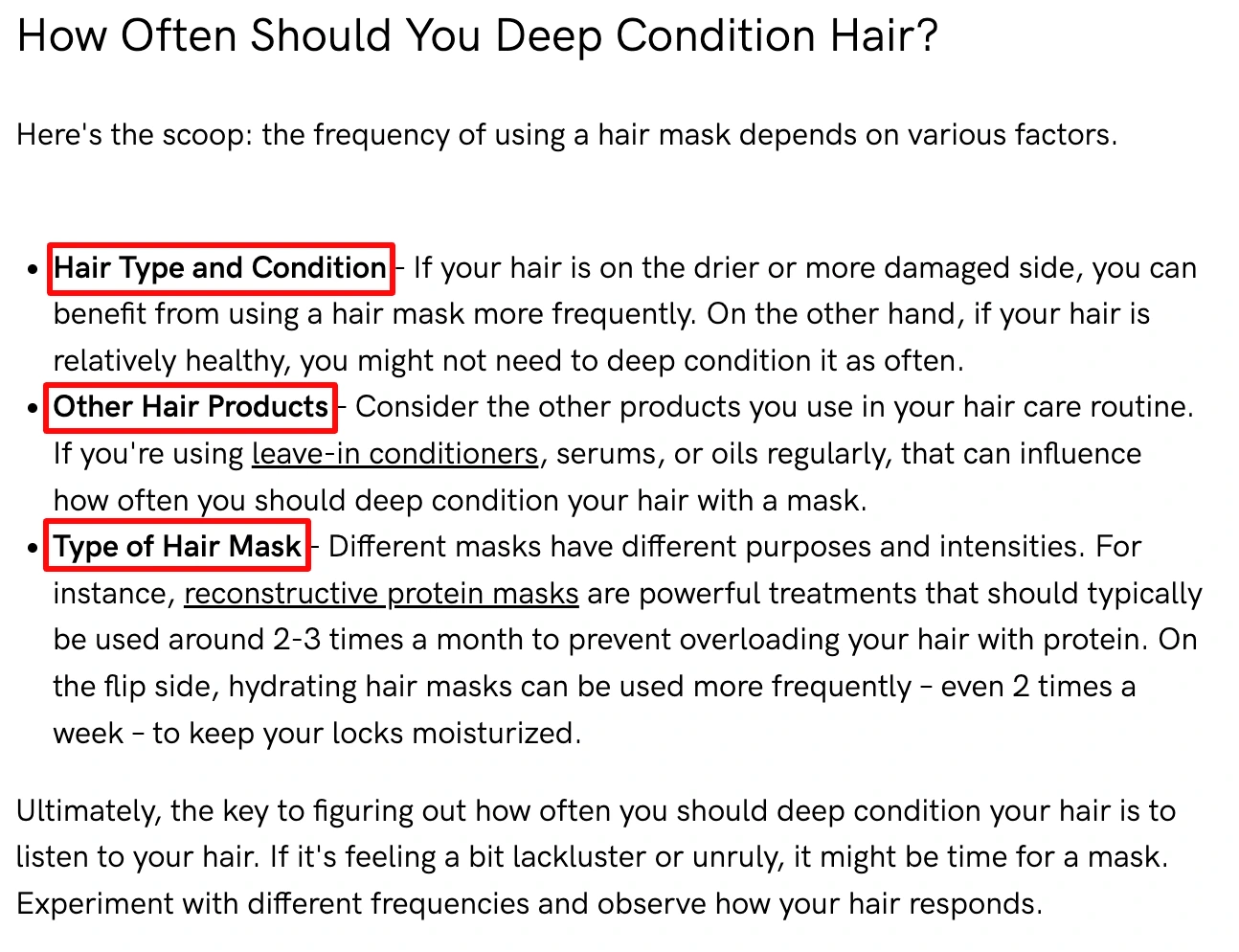
- Highlight Key Information - Use bold or italic formatting to emphasise essential terms or phrases, helping readers easily identify important information.
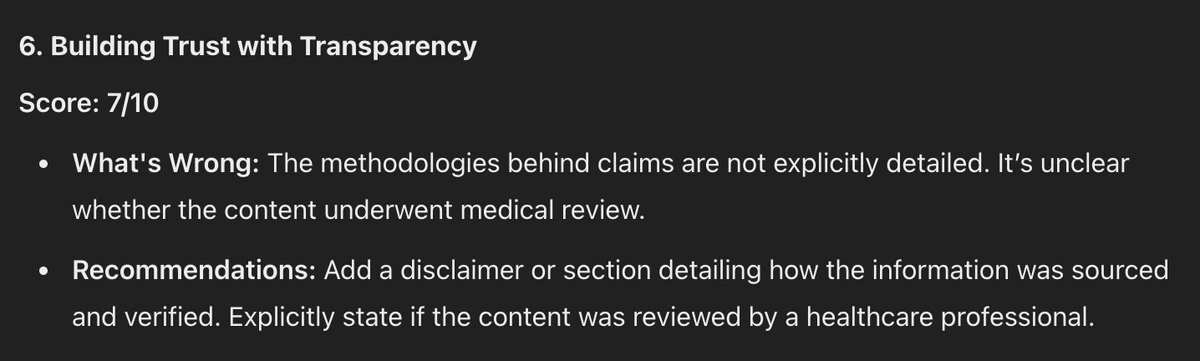
Ensure Transparency and Trust
This way, you’ll become an authentic and accurate source in the eyes of your readers.
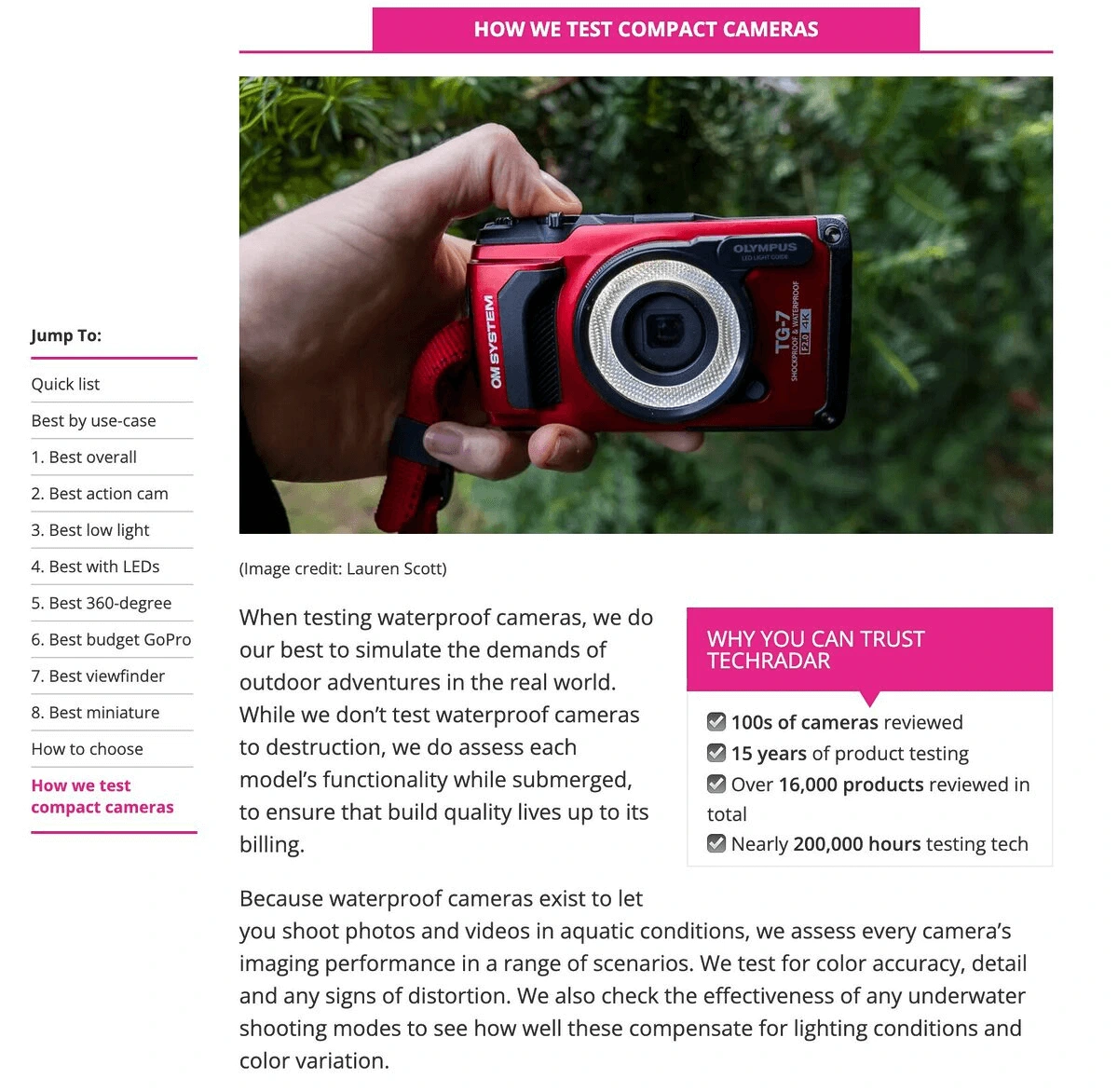
- Explain Methodologies and Processes - When creating product reviews or comparisons, clearly explain your testing methods and include original visuals - like photos or videos - showing the products in real-life use.
-
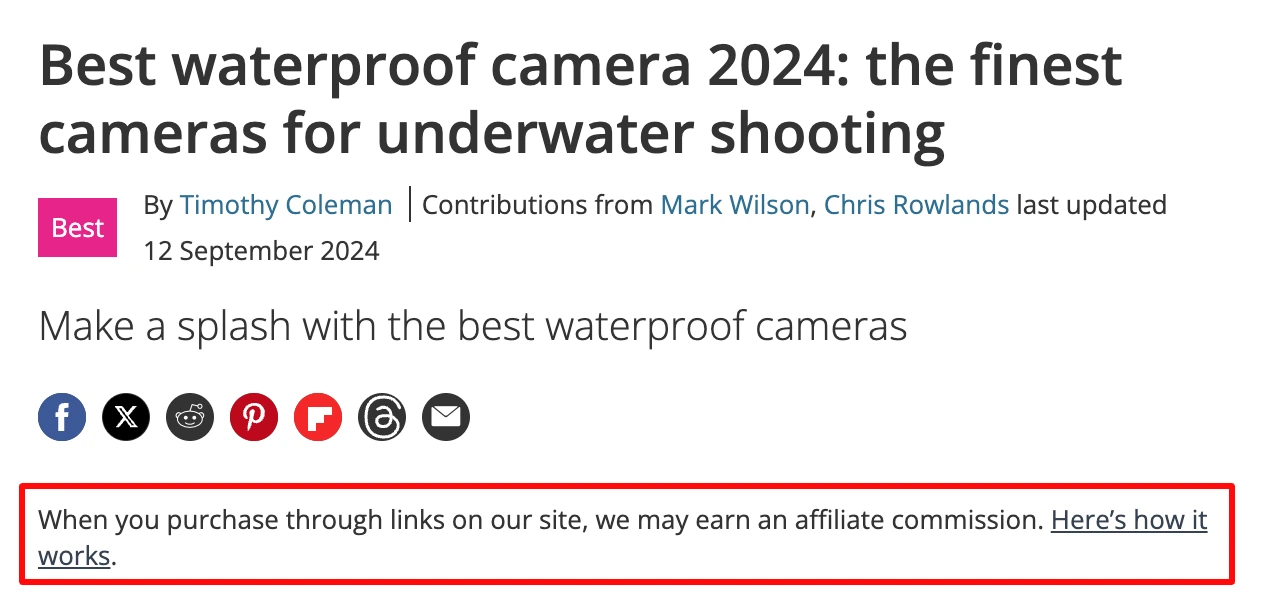
Explain Clearly Any Sponsorships or Partnerships - Clearly disclose sponsored content or affiliate links to build transparency and trust, such as including statements like:
“This article contains affiliate links. We may earn a commission if you purchase through these links, at no additional cost to you.”
Optimize for SEO and Visibility
- Craft Strong Titles - Write clear, concise, keyword-optimised titles that directly convey your content’s purpose.
- Create Engaging Meta Descriptions - Produce enticing meta descriptions to summarise your content and encourage user clicks.
- Optimize URLs - Ensure your URLs are short, clear, and keyword-rich to enhance both readability and SEO performance.
Good Example: example.com/best-wireless-earbuds/
Bad Example: example.com//12345-category-bestwirelessearbuds2024-reviews/
The 'Bad Example' URL is overloaded with irrelevant numbers, characters, and extra words, reducing readability and negatively impacting user trust.