 The Objective
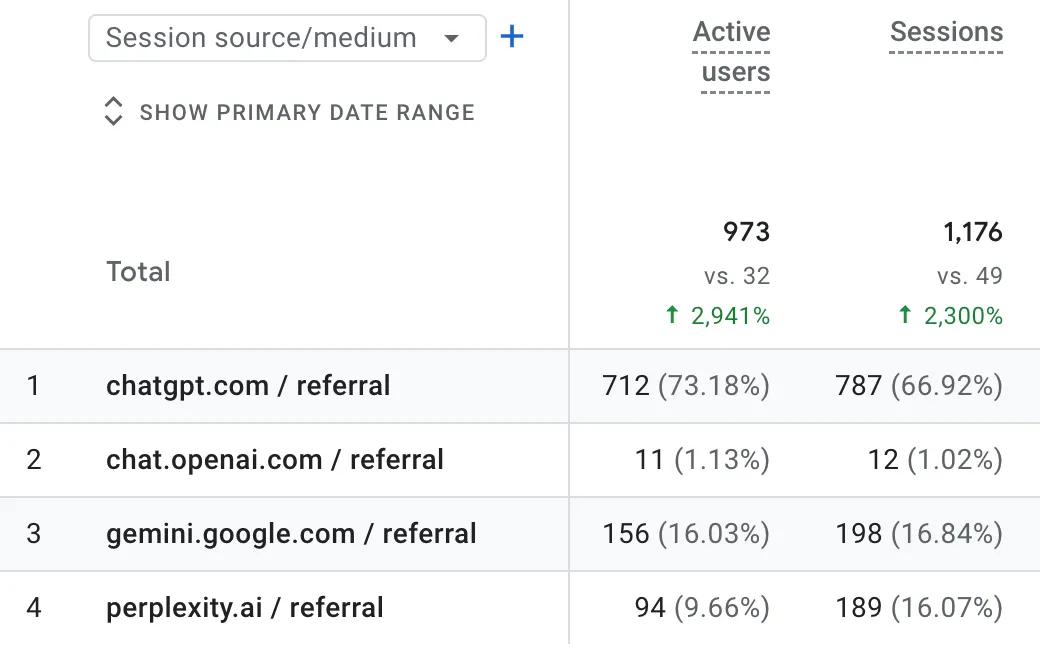
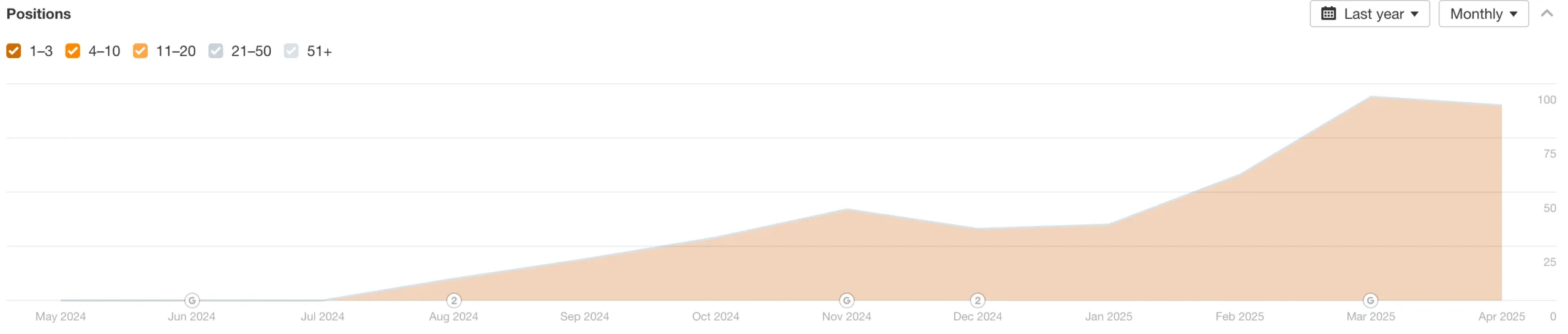
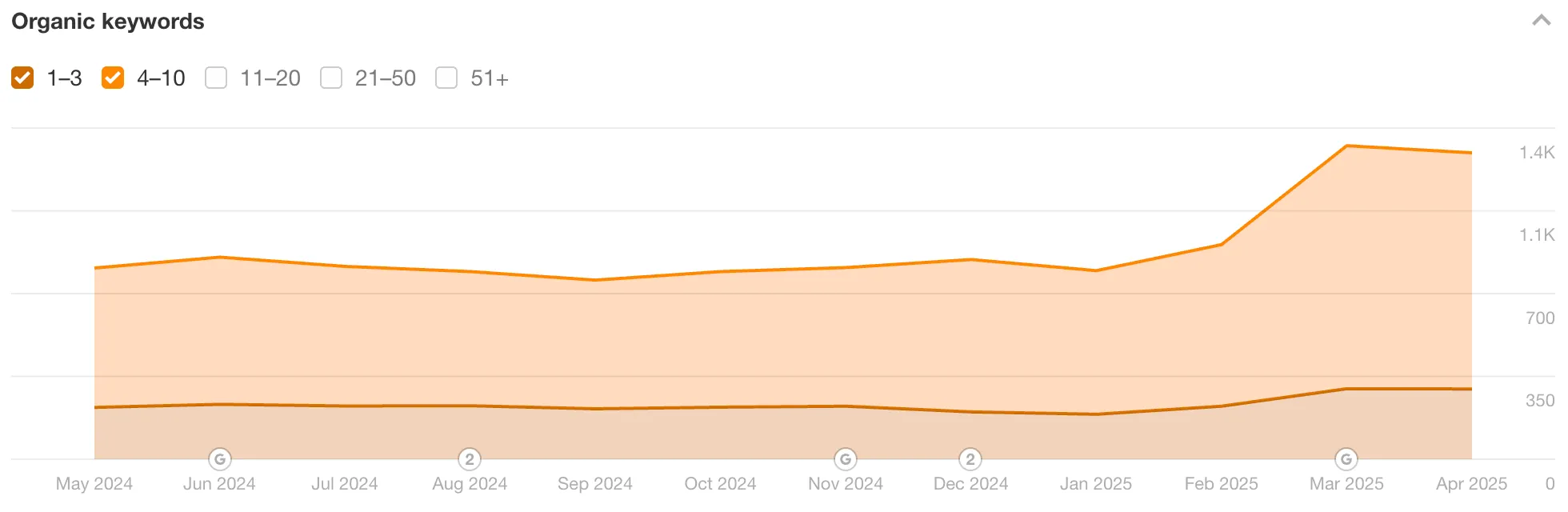
The objective of the campaign was to grow the client's presence within AI-driven search results, specifically aiming for inclusion in Google's AI Overviews and increased visibility across platforms like ChatGPT and Gemini, thereby capturing missed opportunities for traffic, credibility, and brand awareness.
The Website History
The client is a manufacturer of industrial products and a provider of software solutions.
The Issues
Despite strong performance in traditional search, the client's website faced specific hurdles that prevented its visibility and recognition in AI search results:
- Lack of AI Overview Visibility: The client's content was not being summarized, cited, or shown in Google's AI Overviews for relevant informational queries.
- Competitor Dominance in AI Search: Competitors, even those with perceived lesser product offerings, were successfully appearing in and being cited by AI-driven platforms.
- Missed Opportunities in AI-Driven Spaces: This lack of visibility translated into missed opportunities for traffic, establishing credibility, and building brand awareness in AI platforms.
- Expertise Not Recognized by AI: The client's established expertise and authority in their field were not being accurately reflected or leveraged by AI-driven search algorithms.
Course Of Action
Below, you'll find a quick breakdown of our strategy for this campaign.
Understanding AI Overviews
What are Google AI Overviews?
AI Overviews are AI-generated summaries displayed at the top of Google search results, often superseding traditional organic listings.
They aim to provide quick answers to queries by consolidating information from various sources.
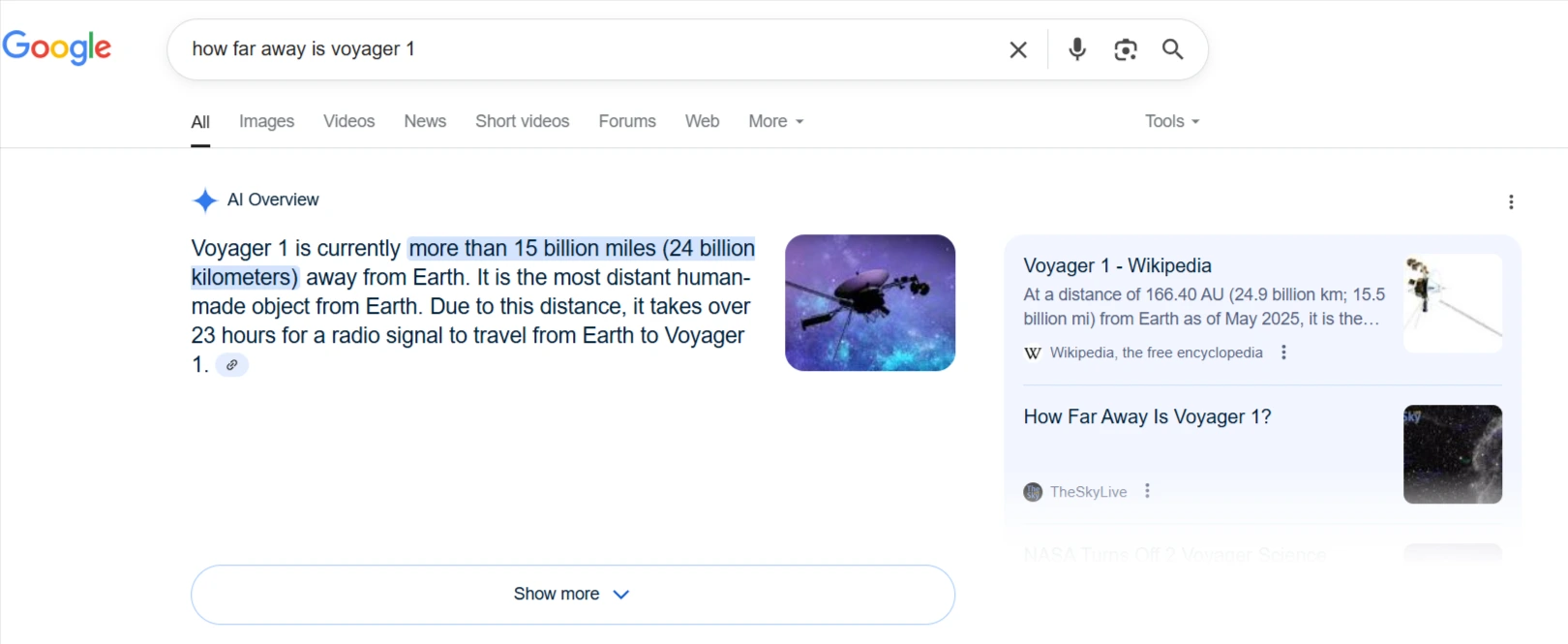
Each overview includes an AI-generated answer (powered by Gemini) and links to the corroborating source websites.
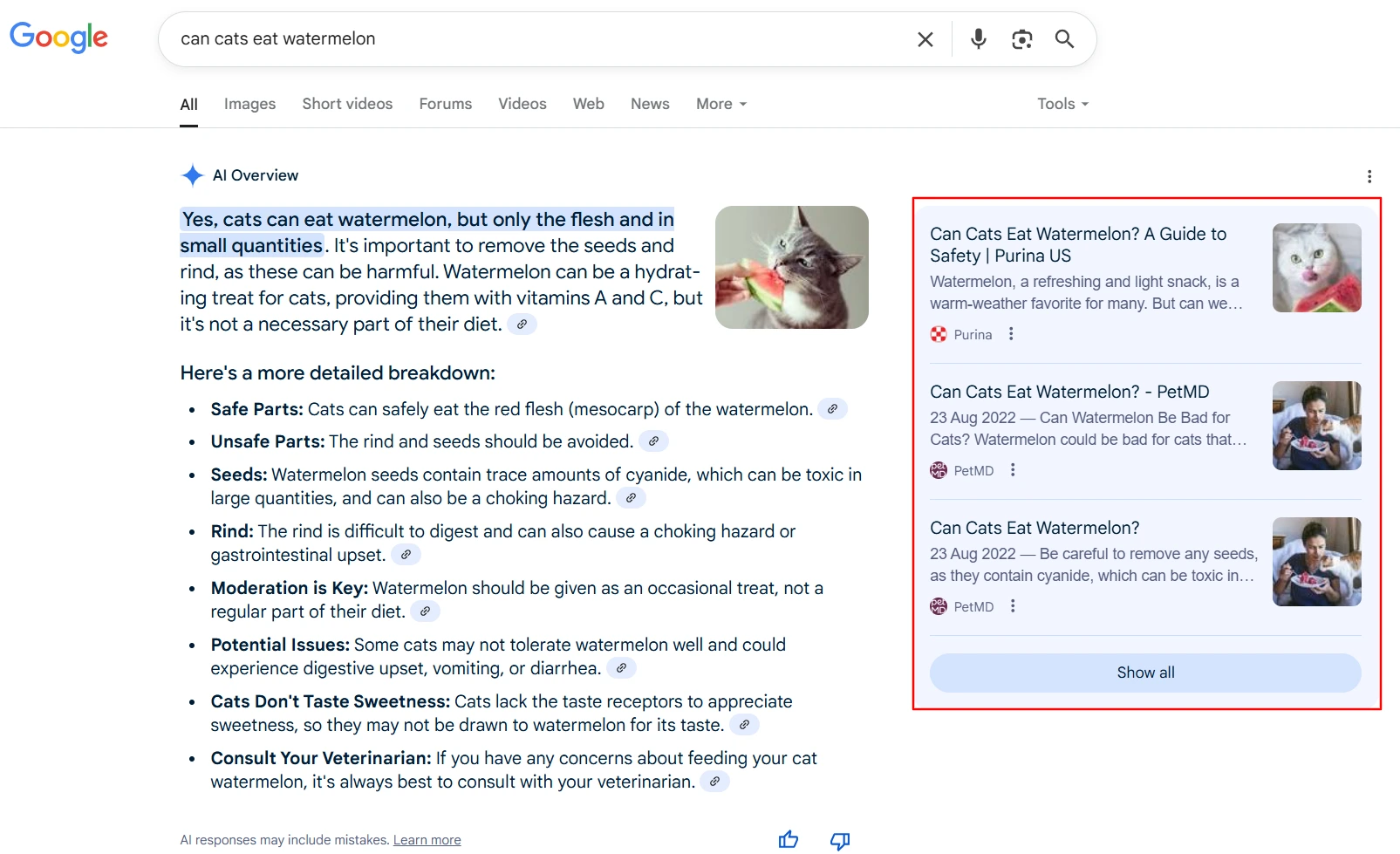
How Do AI Overviews Work?
The process involves a few crucial steps:
- Google's AI interprets the search query intent.
- It selects a small set of high-quality, relevant, and trustworthy documents.
- Then Google generates a draft response, fact-checking it against the selected sources.
- Finally, it displays the verified summary.
Analyzing AI Overview Visibility in Your Industry
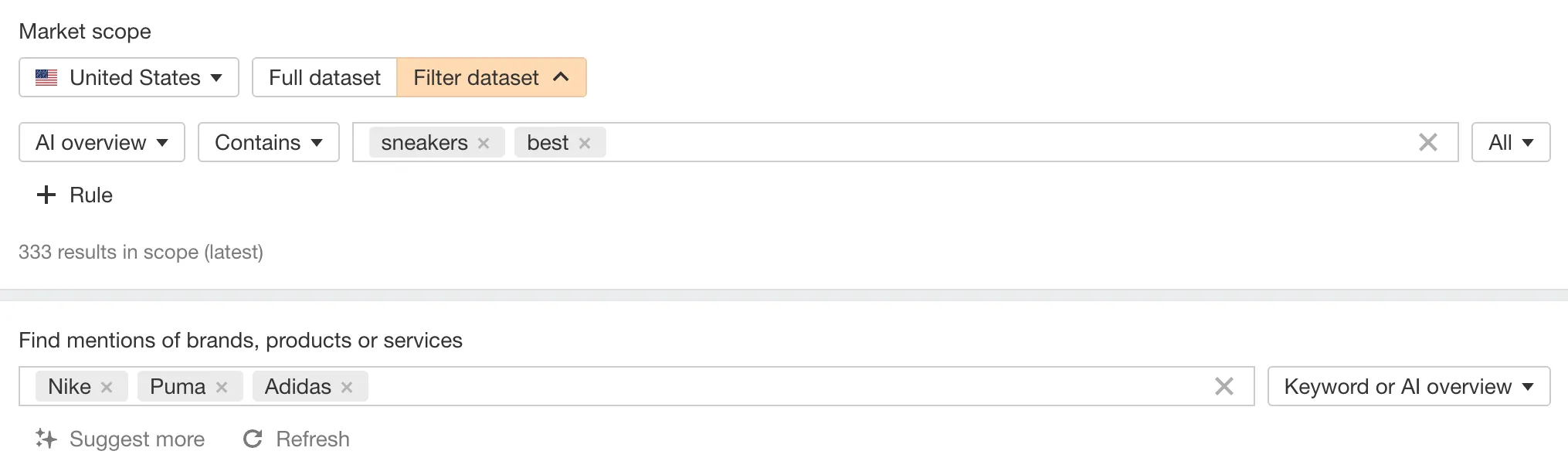
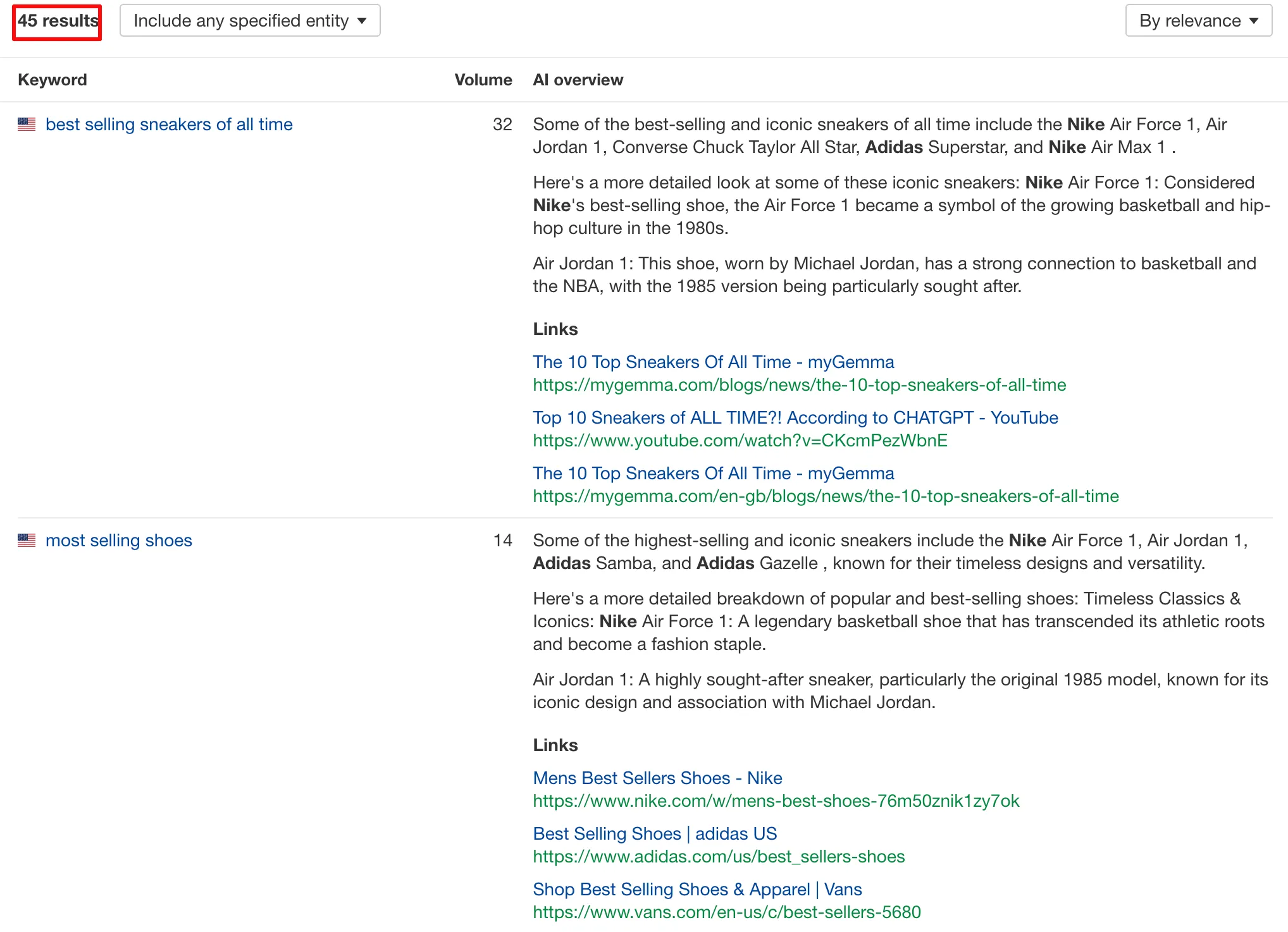
Ahrefs' Brand Radar is a tool designed to help businesses track and analyze their visibility within AI-driven search results, such as Google's AI Overviews, ChatGPT, and Perplexity.
You can use it to:
- Discover the number of AI Overviews in a target location.
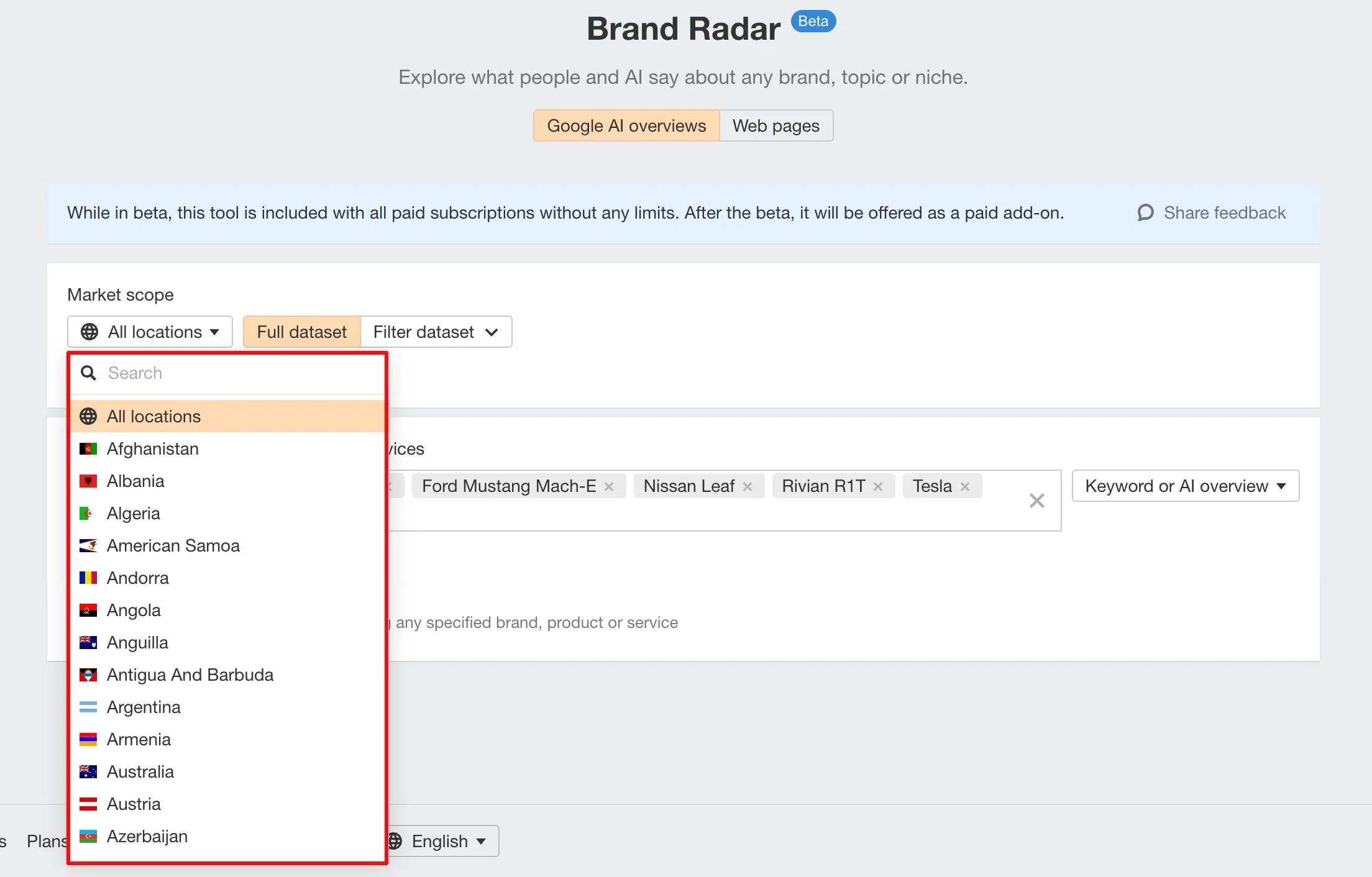
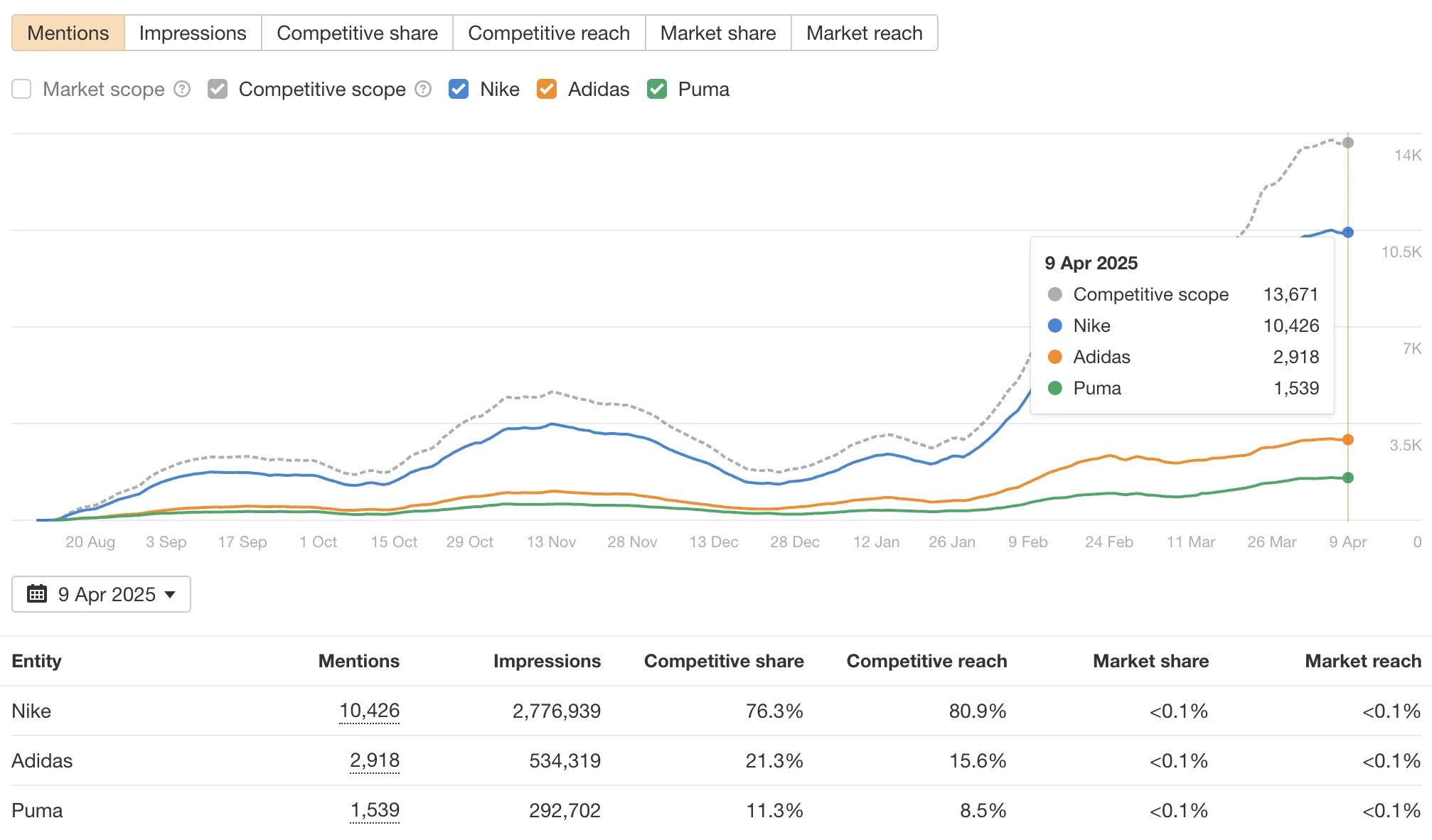
- Compare your brand's mentions in AI Overviews against competitors.
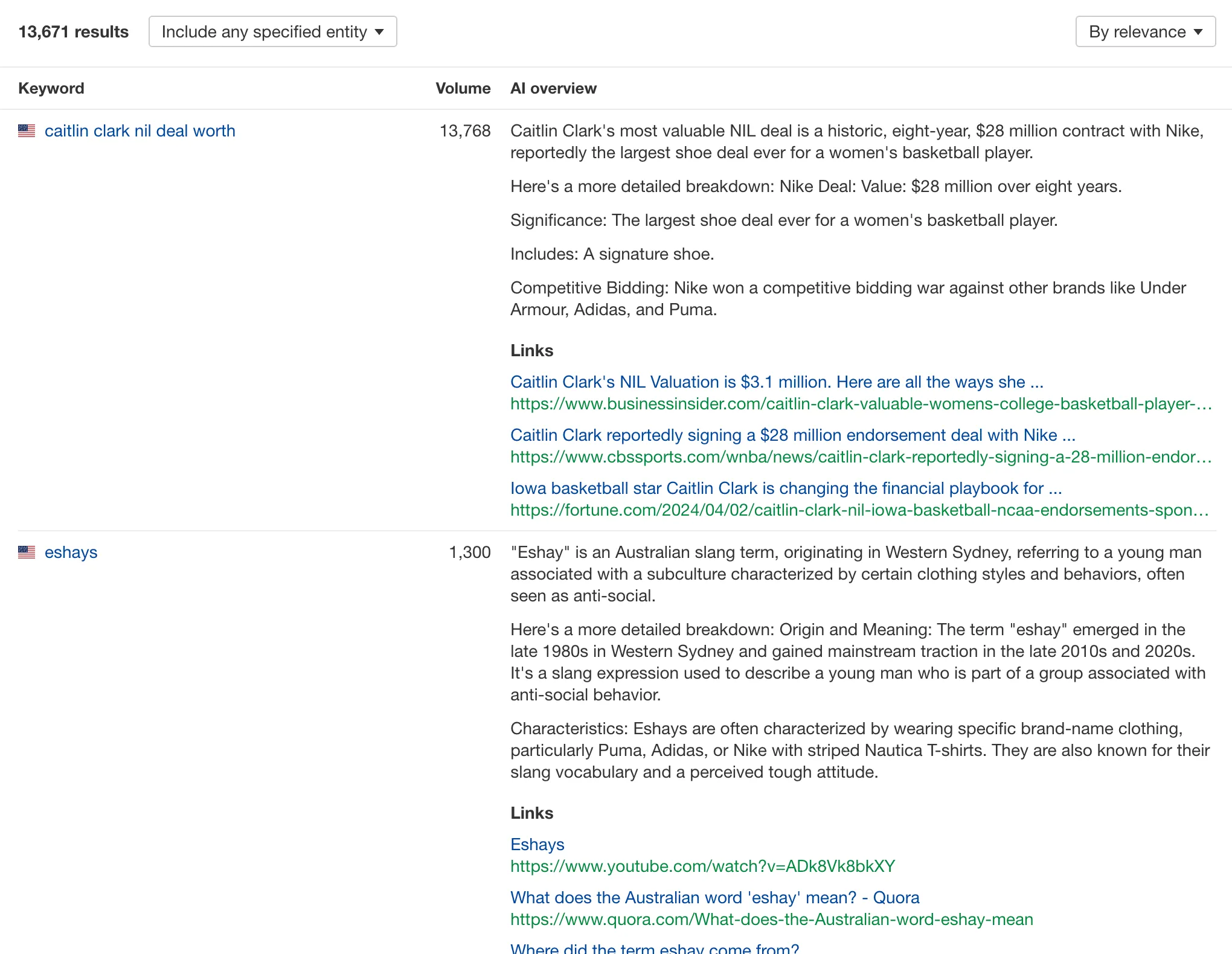
- Identify specific keywords where your brand or competitors are appearing (or not appearing) in AI Overviews.
- Filter results to narrow down the analysis to specific products, services, or topics.
Monitoring Your Current AI Overviews' Visibility
You can also use Ahrefs' Site Overview feature to monitor the keywords you already rank for that trigger an AI Overview.
Ahrefs' Site Explorer, specifically the Organic Keywords report with the "AI Overviews" SERP feature filter, lets you:
- See all keywords for which your site ranks that trigger an AI Overview.
- Identify keywords where your site actually appears within the AI Overview.
- Pinpoint keywords where your site doesn't appear in the AI Overview, even if it ranks for the query.
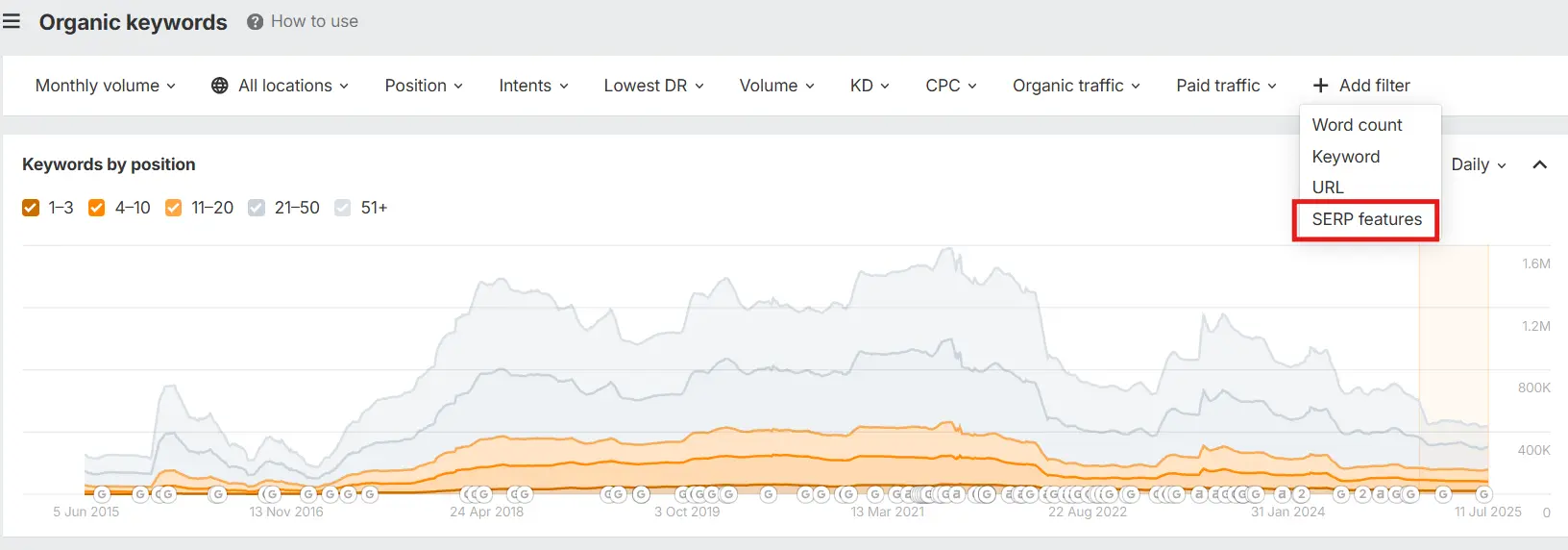
Here's how you can do it:
- First, enter your domain into Site Explorer and open the Organic Keywords report.
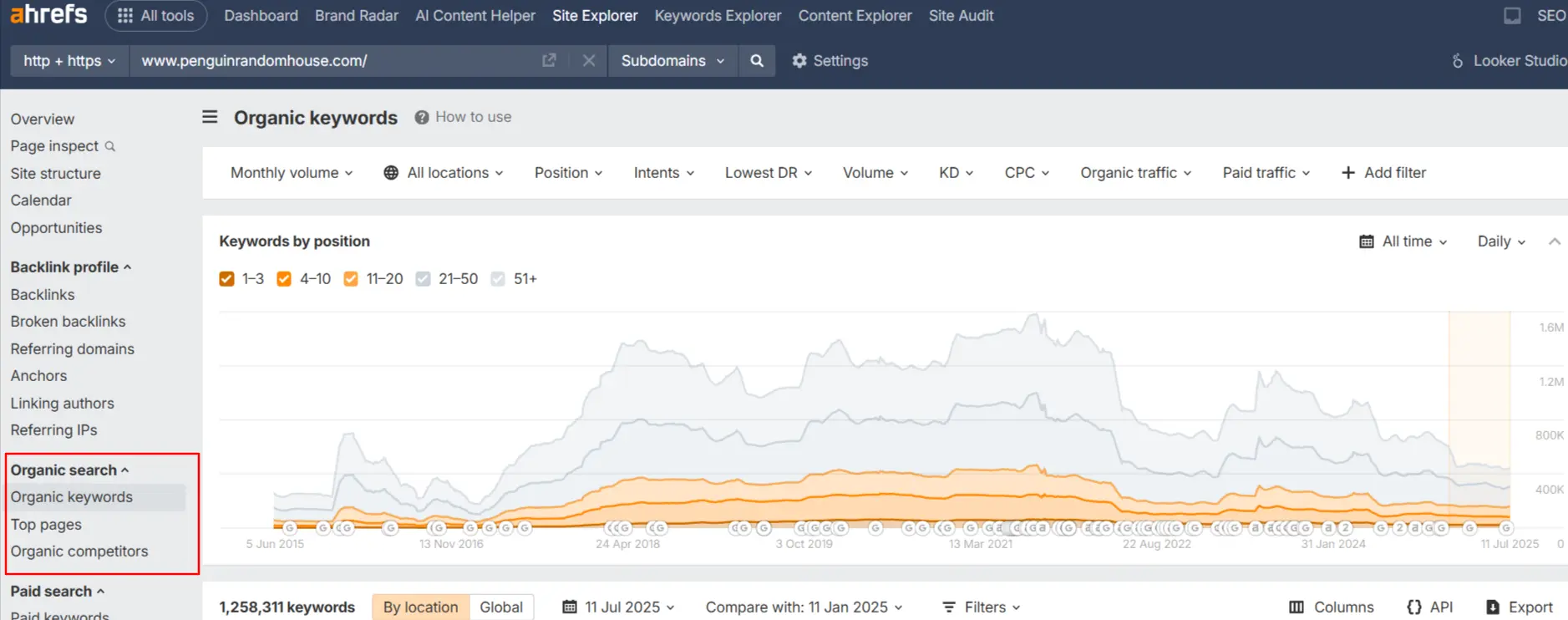
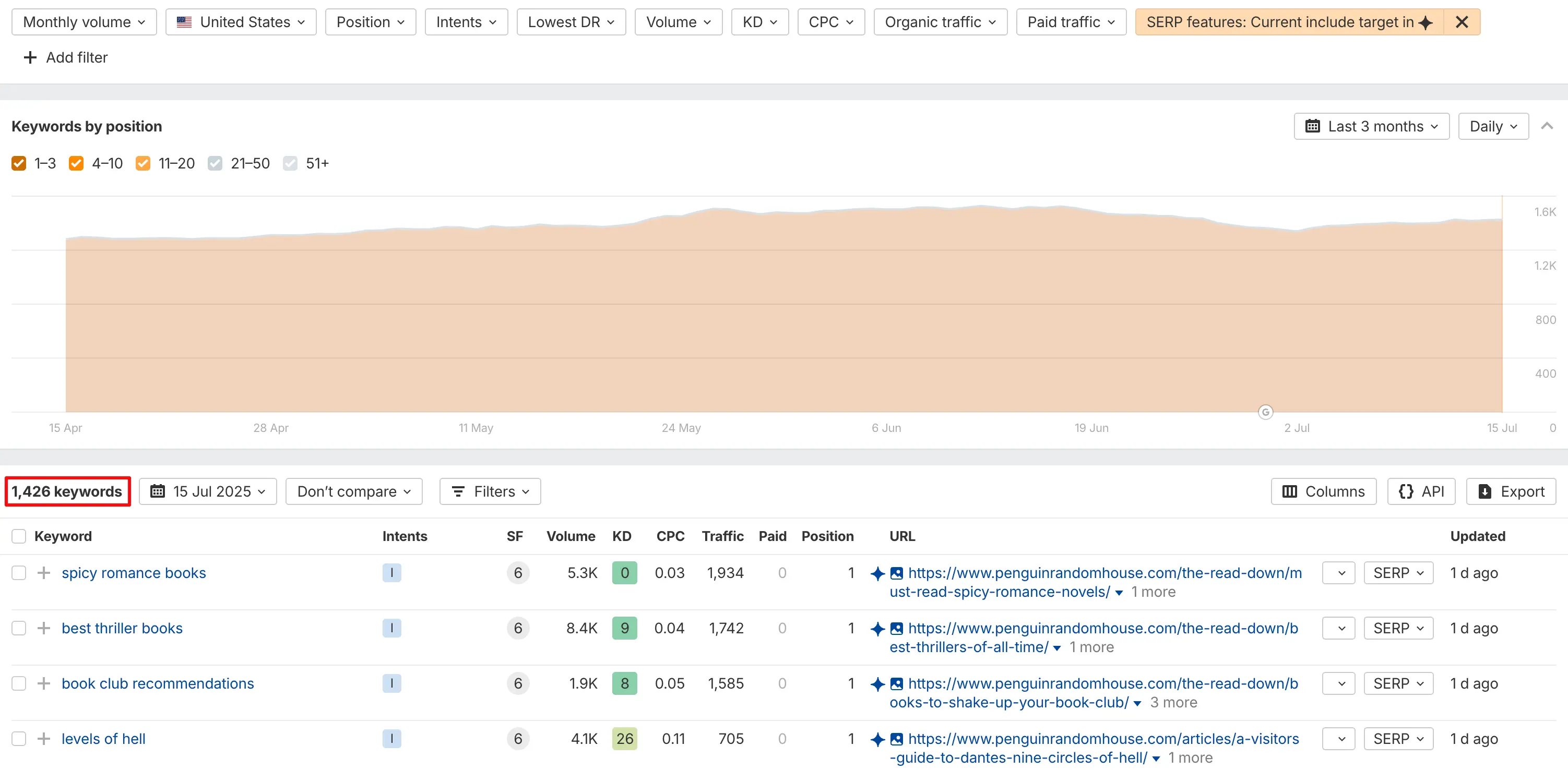
- Open the filters and select "SERP Features," then choose "AI Overviews" from the dropdown menu and ensure that "Current" and "Include target in" are selected.
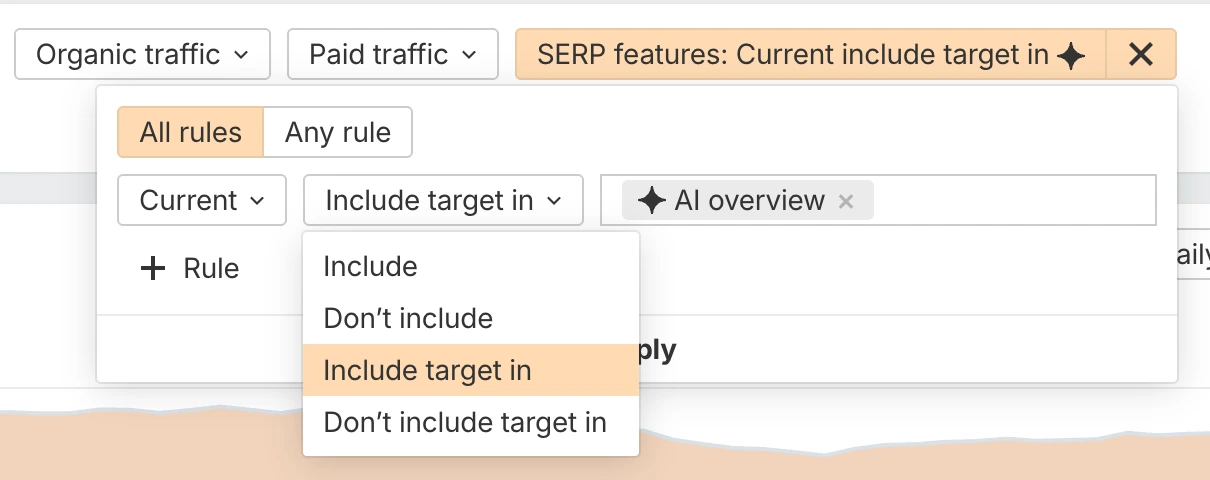
- This'll show you all of the keywords that your site is appearing within AI Overviews for.
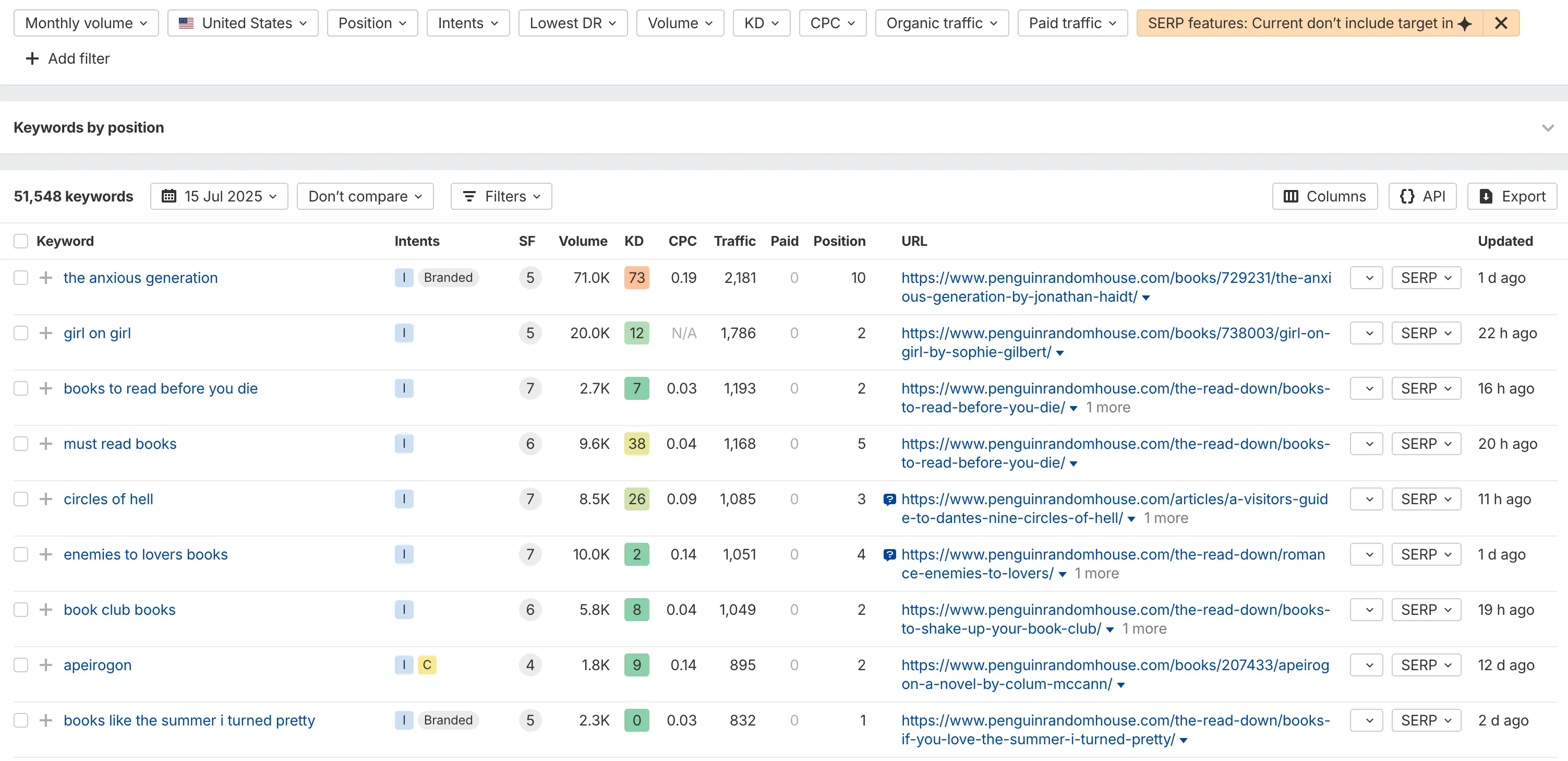
- To find missed opportunities, where an AI Overview exists but your site isn't featured, simply change the filter to "Don't include target in".
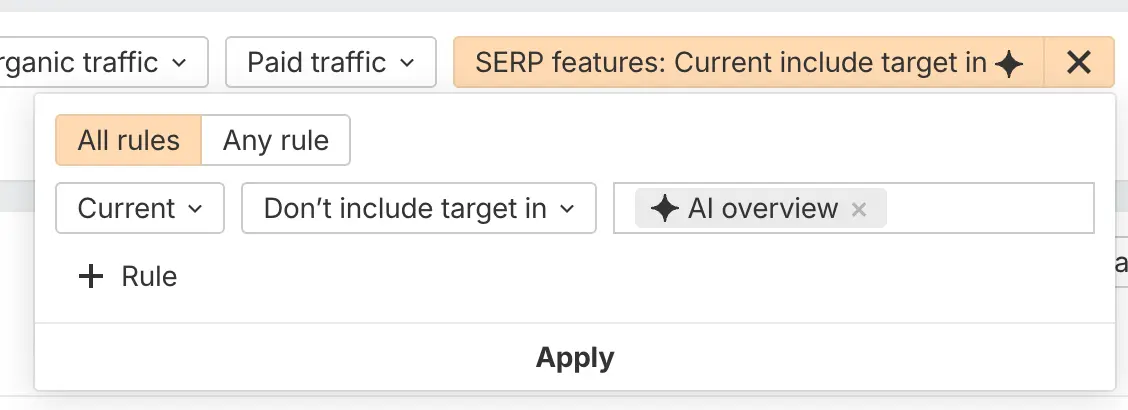
- These are all of the keywords that you're ranking for that surface an AI-generated answer, but where you don't appear as a citation.
Tracking AI Traffic in GA4
While not straightforward, you can track traffic originating from AI platforms in Google Analytics 4 (GA4):
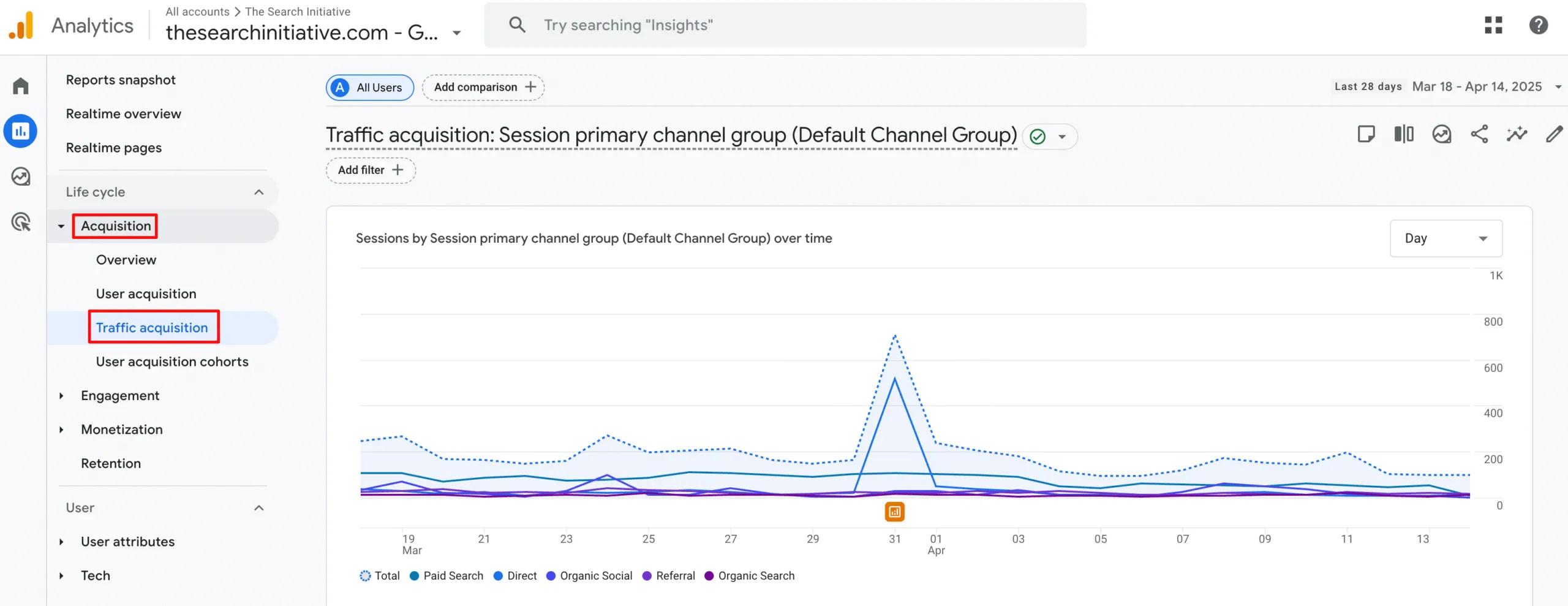
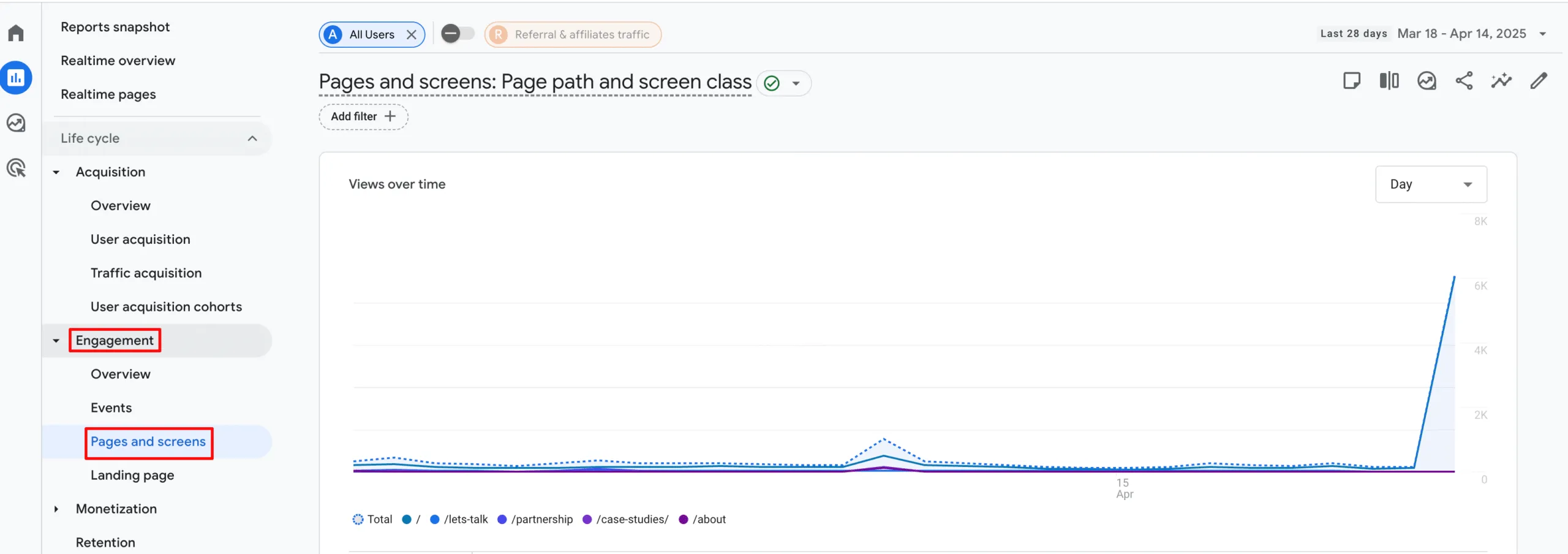
- Navigate to Reports > Acquisition > Traffic Acquisition.
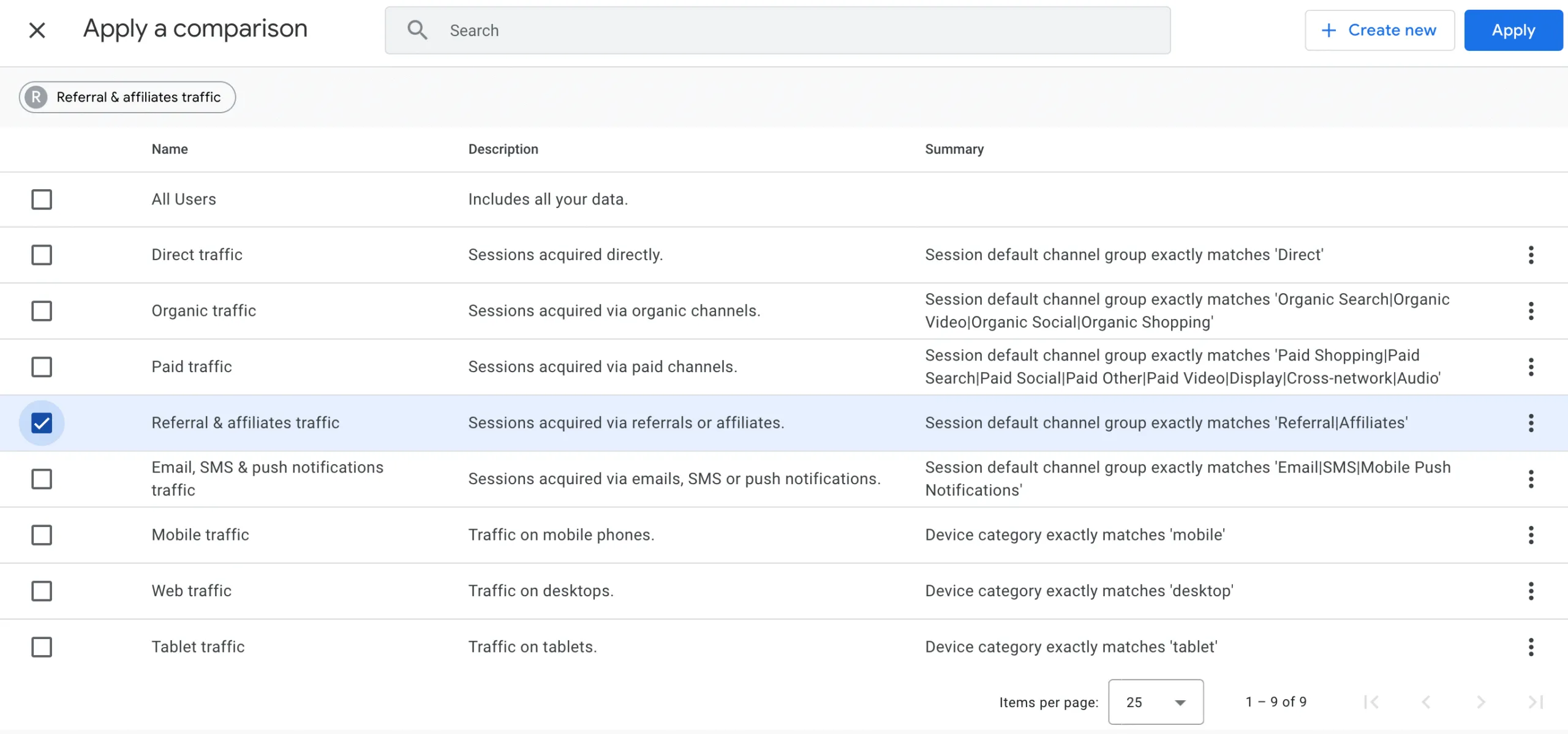
- Add a comparison filter for "Referral & affiliate traffic."
- Add a filter at the top of the page.

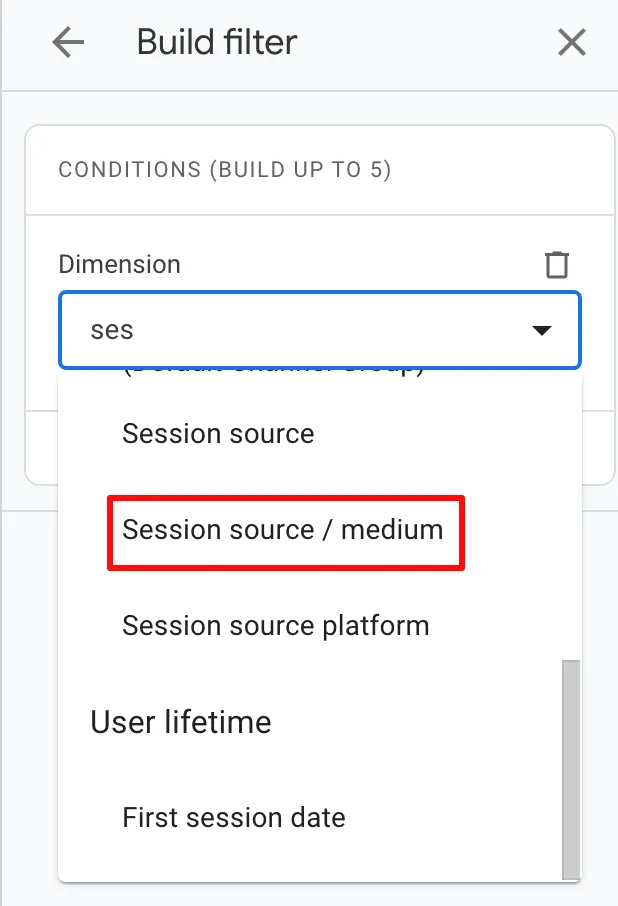
- Under Dimension search "Session Source/Medium".
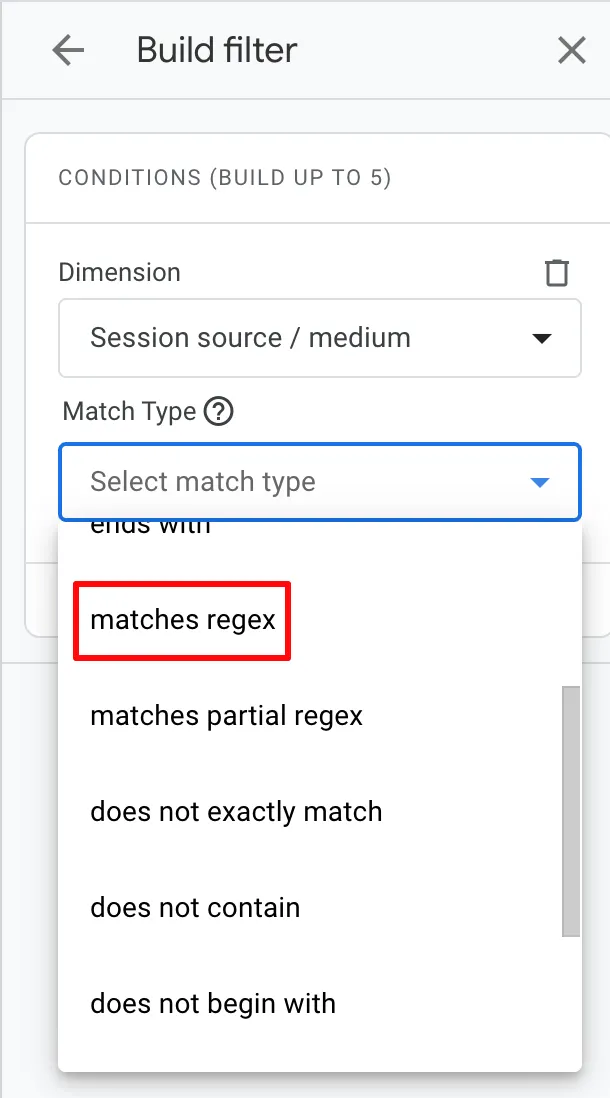
- Under Match Type, select "matches regex".
- Paste this regular expression into the Value field, then click Apply:
(.*(gpt.*|.*chatgpt.*|.*openai.*|.*neeva.*|.*writesonic.*|.*nimble.*|.*outrider.*|.*perplexity.*|.*google.*bard.*|.*bard.*|.*edgeservices.*|.*gemini.*google.*))to capture common AI referral domains. - Further analyze which specific pages are attracting users from these AI clicks in the Engagement > Pages and screens report, with the same filters.
How To Optimize for AI Overviews?
After the analysis, it's time to take action. In this section, we'll share some verified tips on optimizing your page's content to improve your visibility in AI searches.
Structure Content for AI Readability
Be Direct & Concise: Long-winded explanations or vague phrasing won't cut it. Write in a way that's sharp, focused, and easy to follow. This not only helps your readers, but also gives AI a better chance of understanding what your content is about.
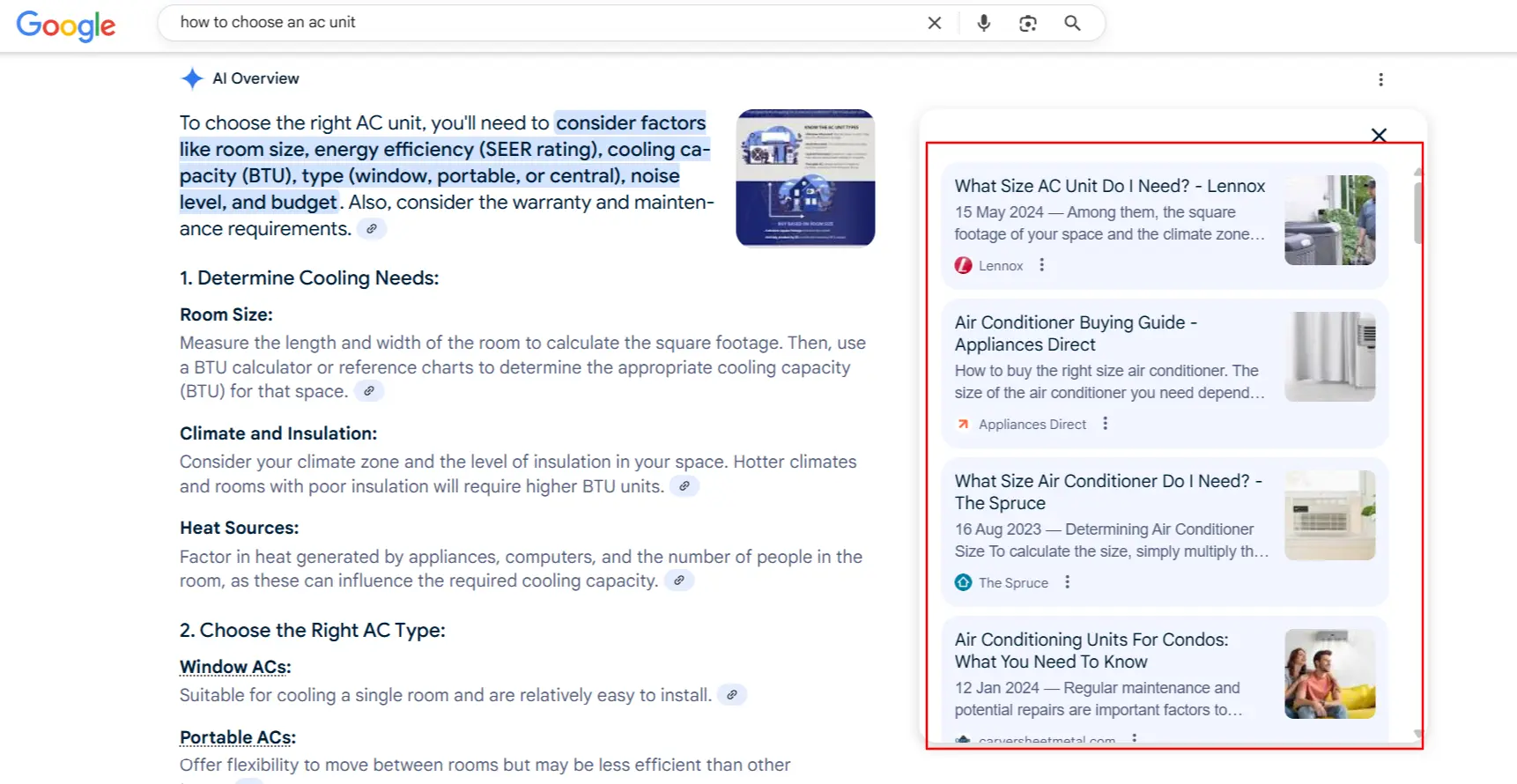
Notice how the top organic search results are not the sources AI is pulling from:
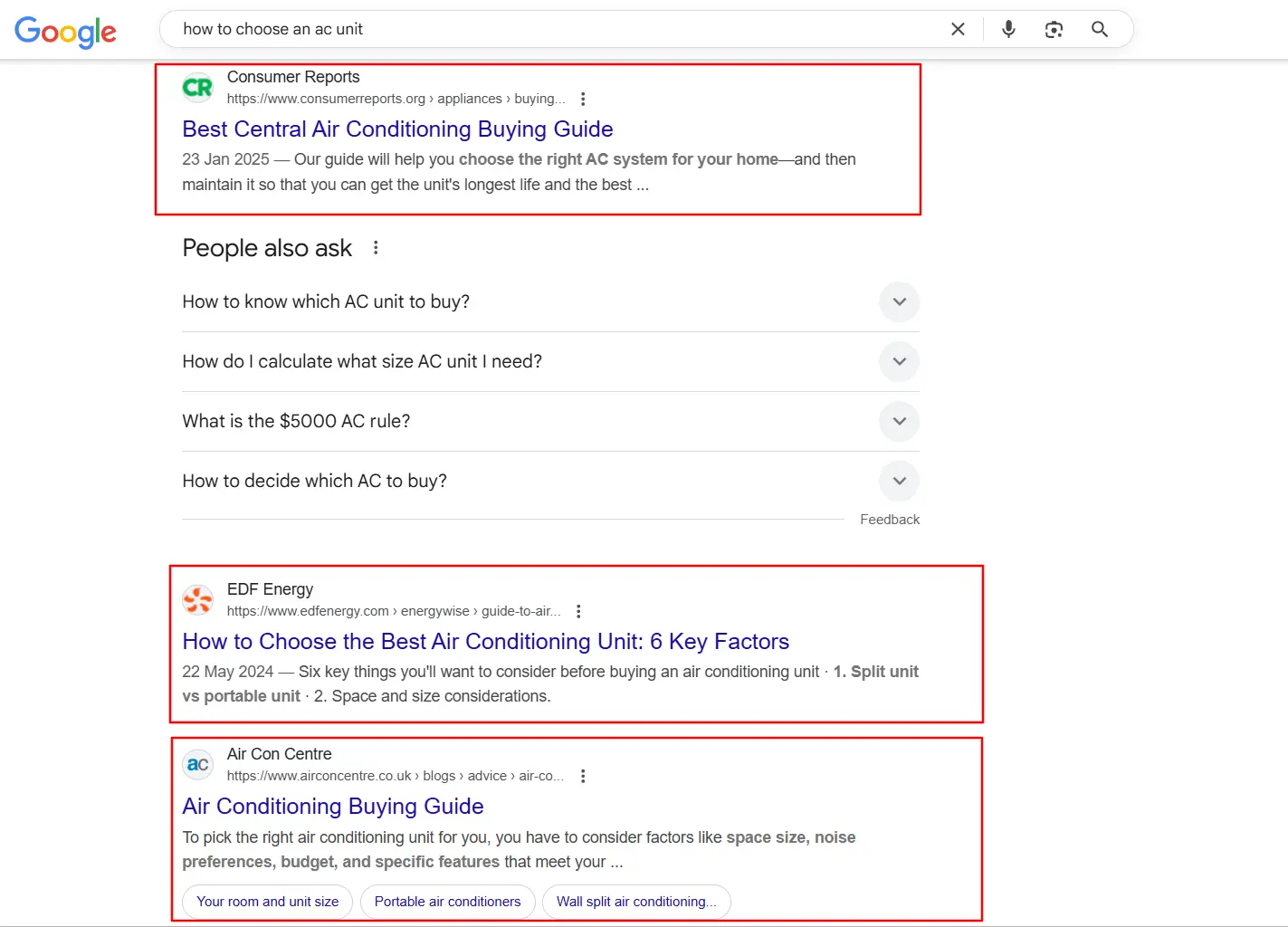
This signals to us that there might be some opportunities to optimize the content to be more direct, digestible, and valuable to users.
Use Clear Headings (H1, H2, H3): Employ a logical hierarchy of headings to break down content, helping AI understand the main themes and extract key information.
Utilize Google's 'People Also Ask' (PAA): Incorporate answers to PAA questions into content to align with user intent and increase the likelihood of being cited in AI Overviews for both the main query and related sub-questions.
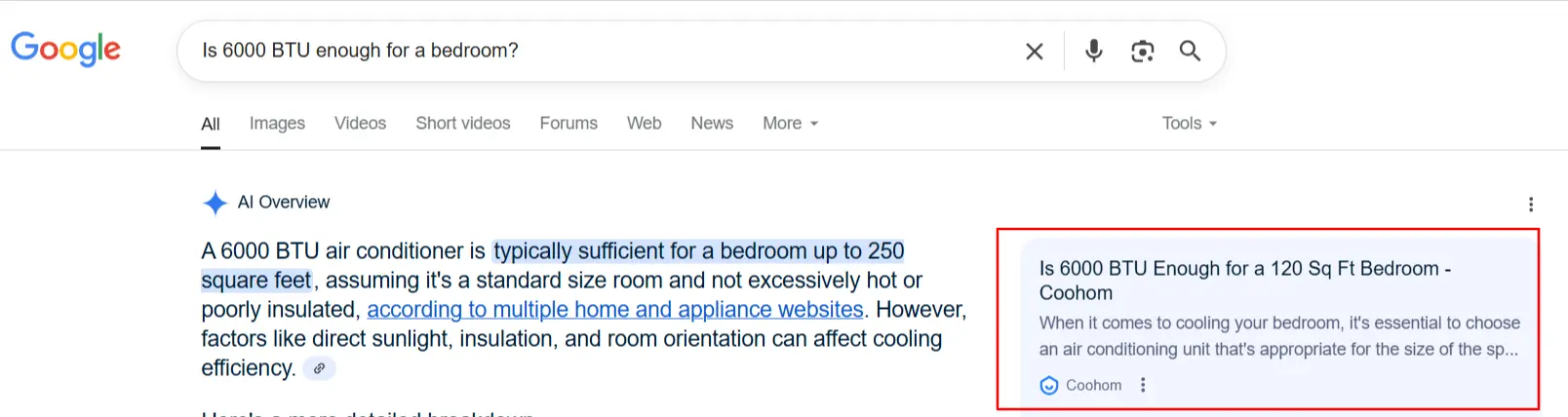
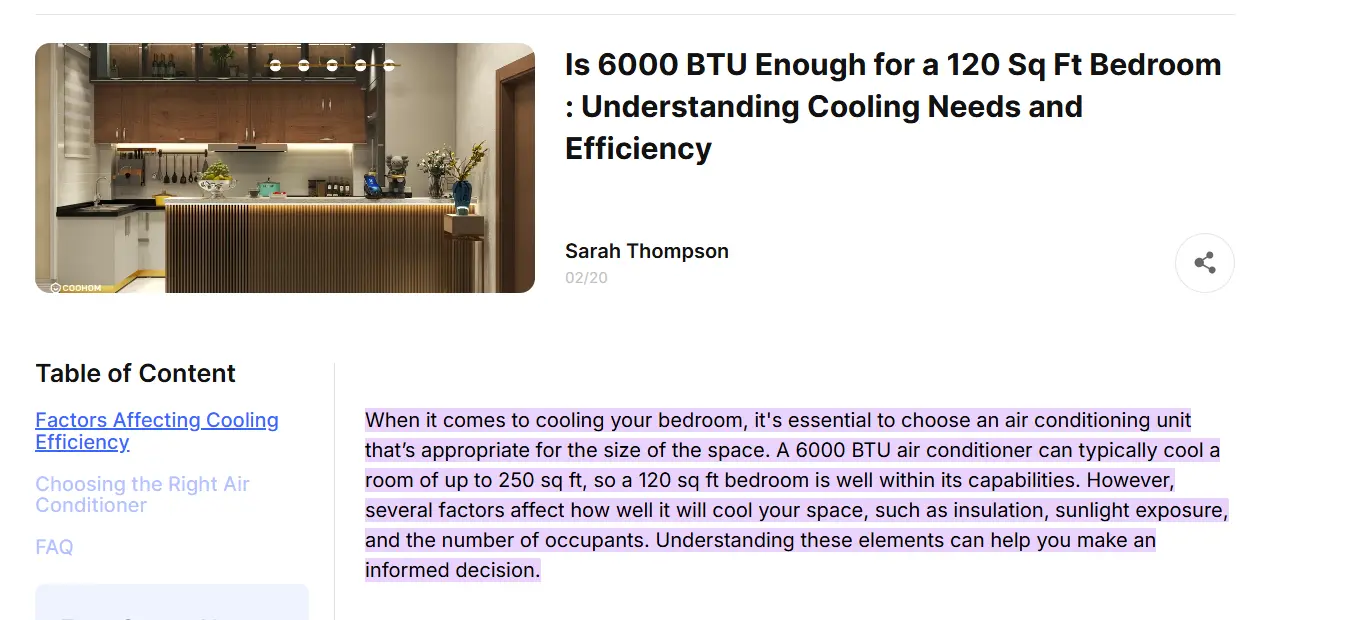
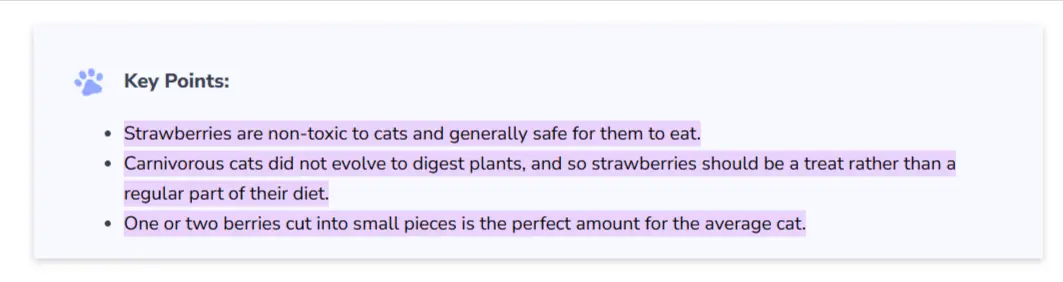
Enhance Readability with Summaries & Key Insights: Include "TL;DR" summaries or "Key Takeaways" sections at the beginning of articles to quickly convey main points to both AI and human readers.
Manage AI-Generated Reputation and Brand Awareness
Monitor AI Search Results for Your Brand: Regularly check AI platforms (ChatGPT, Gemini, Copilot, Google AI Overviews) to see how your brand is described, ensuring accuracy and alignment with your brand narrative.
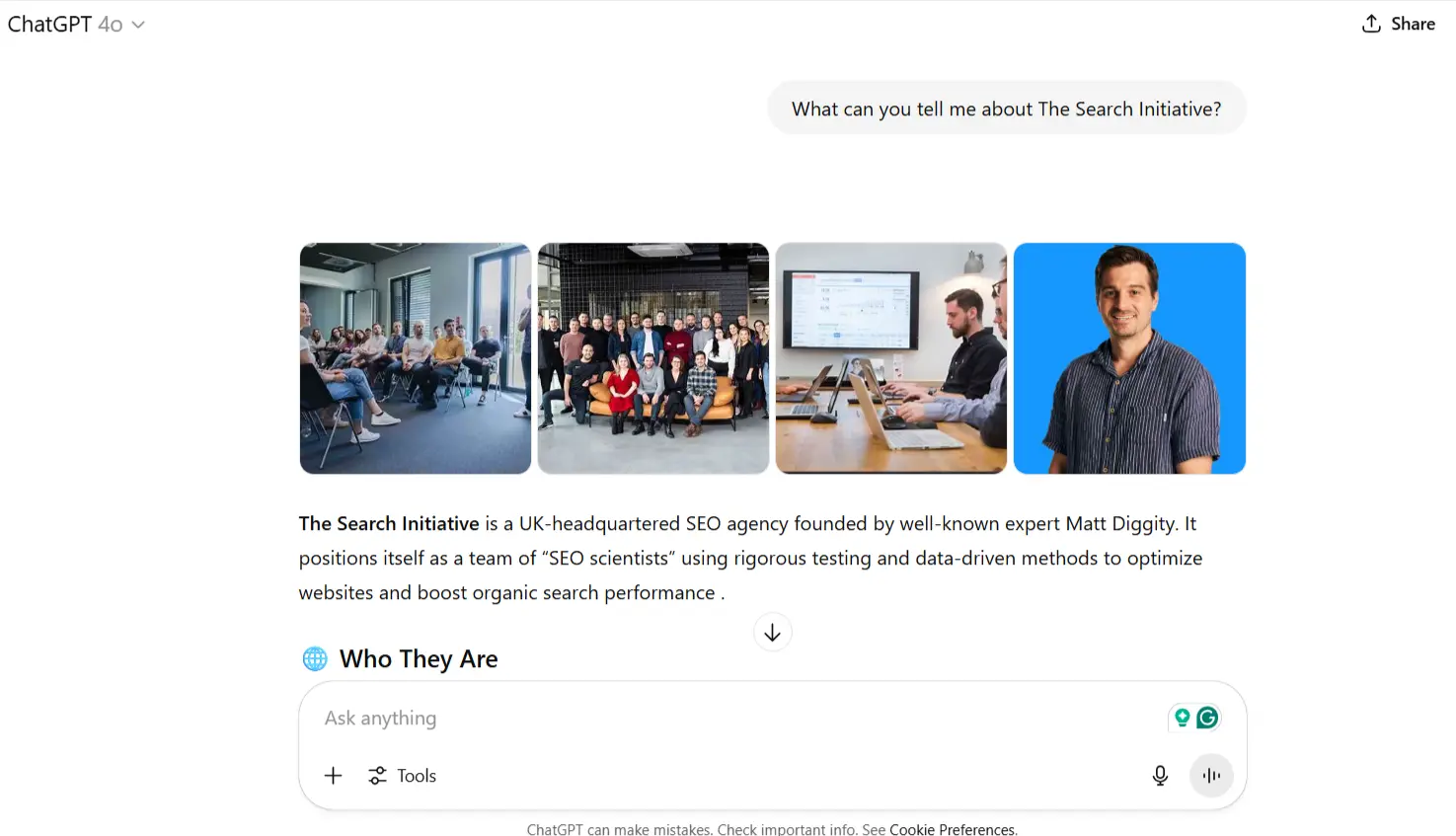
Take Control of Your Brand Narrative: Make sure your official profiles (Google Business, Trustpilot, LinkedIn, etc.) are up to date. And double-check that your About page and FAQs are accurate, clear, and consistent with your brand's tone.
Develop Authoritative Backlinks: Secure high-quality backlinks from reputable and relevant domains, as these act as strong trust signals for AI systems, strengthening credibility and increasing the likelihood of being cited.
Establish Content Trustworthiness (E-E-A-T)
AI-driven search results favor content demonstrating Experience, Expertise, Authority, and Trust.
Demonstrate Authority: Publish expert-driven content with author bios and credentials, showcase industry certifications and awards, and use case studies and data to prove expertise and first-hand experience.
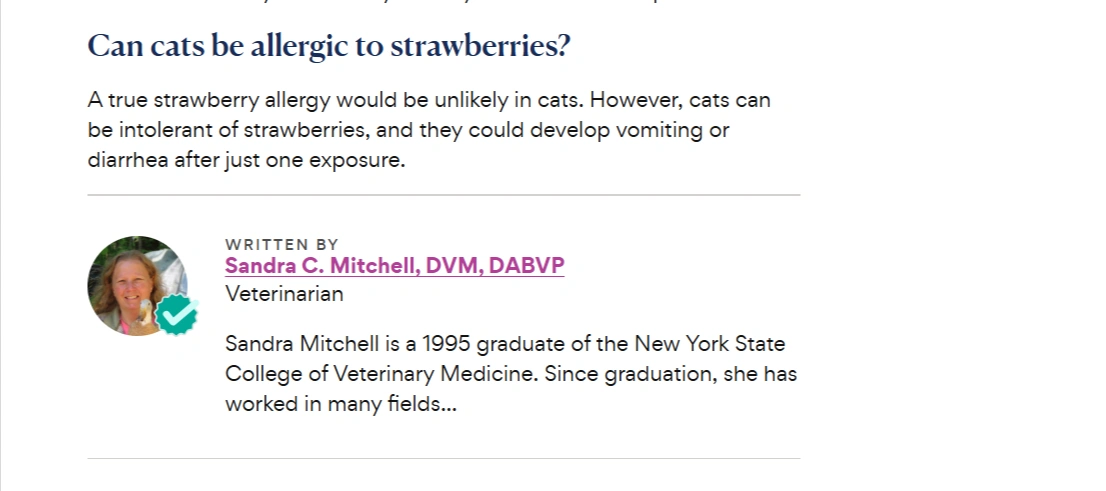
Maintain Content Accuracy and Transparency: Cite credible sources for facts and statistics, and avoid clickbait or misleading content, as AI platforms prioritize factual, honest, and reliable information.
Encourage User Engagement & Reviews: Collect and display reviews (on Google, Trustpilot, etc.), reply to comments, and engage with your audience. It signals that you're active, trusted, and worth surfacing in search.